Attribution and source correction
The official House hearing page and submitted testimony identify Michael Shellenberger—not Luis Elizondo—as the witness whose written record presented the “Immaculate Constellation” allegation. The testimony attributes the claim to an unnamed current or former government official and records the Department of Defense response that it had no record of a program by that name. Neither the testimony nor the hearing establishes the alleged program as fact.
You’ve probably watched this movie a dozen times: a grainy clip trends, cable panels heat up, social media declares “disclosure,” and then everything evaporates into vibes and vague statements. The whiplash is the worst part. You want to take it seriously, but you also don’t want to get played by another hype cycle where “big news” turns into nothing you can actually verify.
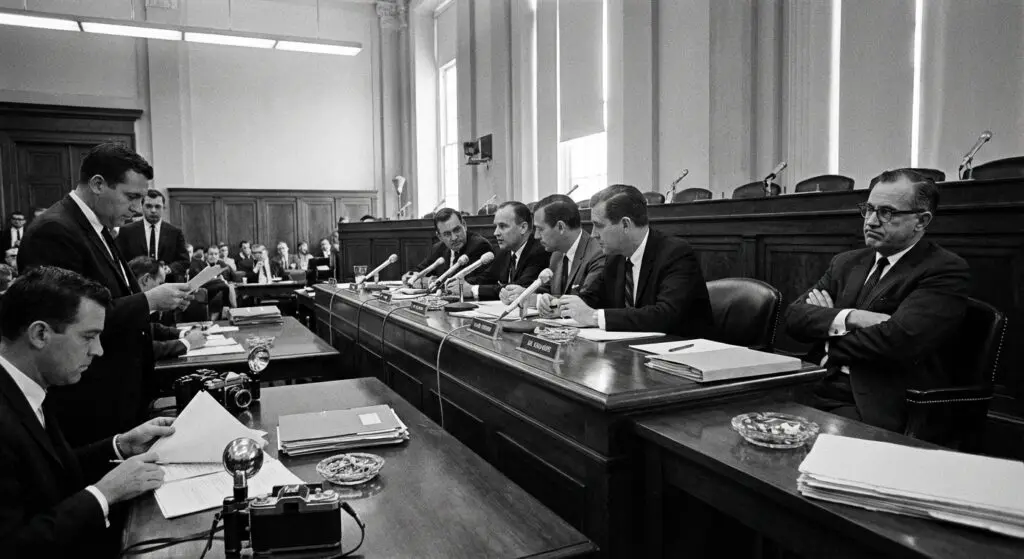
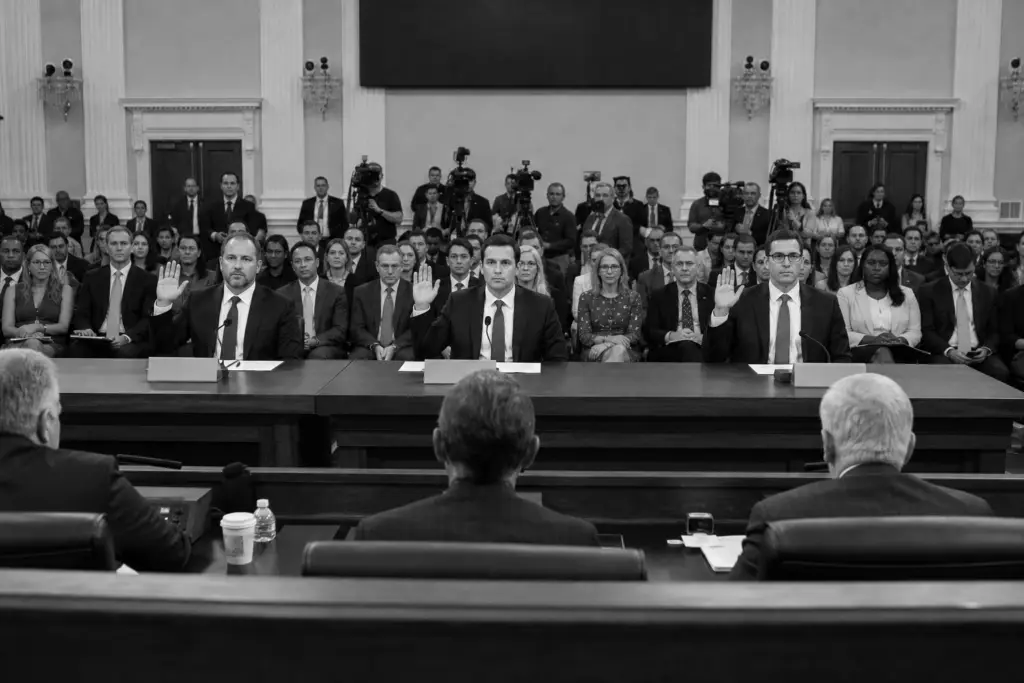
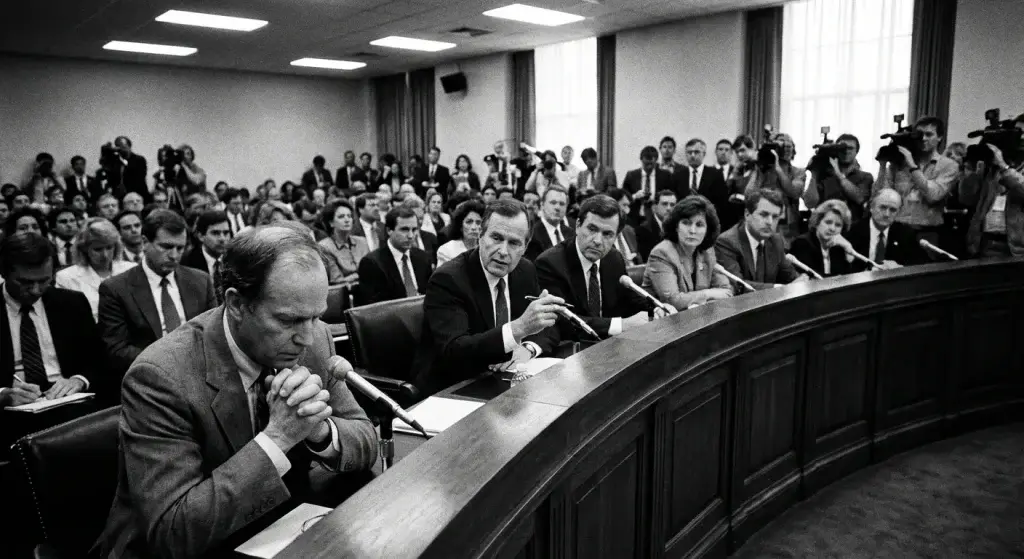
That’s why the November 2024 spike felt different. On November 13, 2024, a joint subcommittee hearing under the House Committee on Oversight and Accountability took up Unidentified Aerial/Anomalous Phenomena (UAP). “UAP” isn’t a cute rebrand for UFOs; it’s the government’s umbrella label for anomalous observations that stay unidentified after initial review, and that wording matters when lawmakers put it on the record. Hearings don’t magically produce truth, but they do change incentives. People choose their words differently when they’re speaking in an oversight setting instead of chasing clicks.
Here’s the real shift: this wasn’t just “sightings chatter.” The tone was accountability. Oversight energy sounds like questions about programs, documentation, who authorized what, what got reported, and what never made it into official channels. That’s a higher-stakes conversation than arguing over a single video, because it moves the focus from “what did someone see?” to “what does the government do with reports like this, and can anyone outside a closed loop check the work?”
The hearing record identifies Michael Shellenberger as the witness who submitted the “Immaculate Constellation” allegation. His written testimony attributes the name and program description to an unnamed current or former U.S. government official. The same testimony records the Department of Defense response that it had no record, present or historical, of a special-access program by that name. A named allegation creates a checkable oversight question; it does not establish the program as fact.
You’ll walk away knowing how to read this hearing as a signal about process and evidence, not as instant “alien disclosure.”
What Happened and Who Was There
The Nov. 13, 2024 hearing was aimed at public accountability: lawmakers asked on the record who knows what, who documented what, and where that documentation is supposed to go. The hearing’s official title was “Hearing on Unidentified Anomalous Phenomena” and the committee notice and materials are available from the House Committee on Oversight and Accountability. The full hearing video and archived coverage can also be found in public video archives such as C-SPAN.
Here is the clean, high-level sequence that matters for tracking what the hearing actually did.
- Opening statements framed the hearing as oversight, not entertainment, with members signaling they wanted clarity on where UAP-related claims should be routed and how Congress can validate them.
- Witness testimony put concrete-sounding allegations into the public record, which is exactly what triggers the next step in an oversight cycle: demands for dates, offices, documents, and custodians.
- Questioning focused on documentation more than vibes: members pressed for what exists in writing, what was reported through official channels, and what could be provided in a classified setting versus what cannot be discussed publicly.
- Reporting pathways became the choke point because that is where accountability lives: if someone claims a program exists, the next question is where they reported it and what the government office of record did with it.
- References that sparked headlines landed because they were framed as named claims tied to alleged internal structures, which is catnip for news coverage but still not the same thing as publicly released evidence.
Witnesses and claimants: Michael Shellenberger matters here because his submitted testimony is the traceable public source for the named allegation and the appended report. Luis Elizondo was a separate witness at the hearing. Their testimony should not be merged: each claim must be attributed to the person and document that actually made it.
Lawmakers as oversight actors: Rep. Tim Burchett and Rep. Anna Paulina Luna are important in this story less because of “belief” and more because of what they were trying to pry loose in a public forum. Their lane in a hearing like this is to pressure for accountability: identify responsible offices, clarify why prior reports did or did not move, and create a record that justifies follow-up inquiries.
Institutions, not vibes: the committee setting, the hearing record, and the executive-branch offices being referenced are the real “characters” to watch. That is where claims either harden into a paper trail or dissolve into “we cannot discuss that here.”
To keep your bearings, anchor everything to the one office that is explicitly in the middle of the government’s UAP intake and analysis workflow: the All-domain Anomaly Resolution Office (AARO). That mandate shapes why witnesses and members keep pointing back to process, not just stories.
AARO publicly states it accepts reports of U.S. Government programs or activities related to UAP from current or former U.S. Government employees, service members, or contractors. In AARO’s own words, “AARO accepts reports of U.S. Government programs or activities related to UAP from current or former U.S. Government employees, service members, or contractors.”
AARO and the Department of Defense also use mission language that bakes in a specific operating assumption: individuals are asked to “convey their accurate recollection of their perceptions of events they observed or heard.” That line underscores the boundary condition: intake can include personal recollections, while validation still depends on corroboration, documentation, access, and classification rules. See AARO’s mission and reporting pages for the source of these lines.
The hearing can surface claims and apply pressure. It does not automatically produce proof. The clean way to track what is real as this develops is to tag every headline to three things: who said it, in what forum, and what office is actually supposed to receive and verify it.
Immaculate Constellation Explained
The strongest public record is Shellenberger’s written testimony submitted to the House committee. It says an unnamed current or former government official described “Immaculate Constellation” as an unacknowledged special-access program and supplied a report to Congress. Those statements are allegations relayed through the witness; the public document does not independently authenticate the source’s identity, access, imagery, or asserted chain of custody.
The same testimony includes an explicit denial attributed to a Department of Defense spokesperson: the department said it had no present or historical record of a special-access program called “Immaculate Constellation.” That denial and the whistleblower allegation are both part of the public record. The record does not resolve the conflict.
The official House hearing page supplies the date, committee context, video, witness list, and submitted documents. The Shellenberger testimony is the primary source for the named claim. Readers should distinguish what those records prove—the hearing and the submission occurred—from what they only allege.
How It Fits the Disclosure Puzzle
Even without clean, checkable sourcing for that specific exchange, the shape of the allegation still matters because it mirrors how modern disclosure narratives tend to work. The name is what gets shared, but the mechanism being implied is what drives the governance fight.
The “Immaculate Constellation” allegation does not land in an empty room. It snaps into the same broad pattern you have already seen in the modern disclosure narrative: someone names a mechanism (a program, a compartment, an approval channel), then argues the mechanism itself blocks normal oversight.
First overlap: the bottleneck story. A recurring theme across UAP disclosure claims is that compartmentalization and need-to-know rules create safeguarding and access barriers beyond standard classified protocols. That is the connective tissue between a named allegation like “Immaculate Constellation” and the wider argument that even cleared people can be kept out of the loop.
Second overlap: the oversight failure implication. These narratives are not just “something weird happened,” they are “the system that is supposed to supervise this cannot see it.” If a UAP-related program is hidden from lawful oversight, the headline implication is not aliens, it is governance: who can audit, who can brief, who can say no.
Third overlap: belief and inference travel faster than public proof. David Grusch has publicly stated he has never personally seen non-human intelligence. He has also publicly expressed belief that humans are not alone. That split, belief stated plainly versus direct observation denied plainly, is exactly how a lot of this discourse stays coherent even when hard evidence is scarce.
| Item in the public narrative | Claim type | Source posture | Public evidence level | If true, the big implication |
|---|---|---|---|---|
| “Immaculate Constellation” allegation | Named program and oversight barrier claim | Advocated/alleged in public discussion | No publicly released documents tied to the name | Classification used to defeat supervision |
| David Grusch (public statements) | Second-hand retrieval and oversight allegations plus personal belief | Public witness: distinguishes belief from what he has personally seen | Public testimony/interviews; no primary artifacts made public | Serious allegations exist without public chain-of-custody proof |
| Christopher Mellon (public record) | Oversight and transparency advocacy | Former Deputy Assistant Secretary of Defense for Intelligence; Former Minority Staff Director, Senate Select Committee on Intelligence | Public advocacy, not a released dossier | Push to normalize scrutiny and reduce secrecy friction |
| Knapp and Corbell (WEAPONIZED themes) | Reporting themes around reverse-engineering and allied angles | Media framing, not sworn first-hand testimony | Episode titles and discussion; titles are not evidence | Attention concentrates on dramatic specifics before verification |
The sharpest divergence is evidentiary standard. A named program label feels concrete, but concreteness is not documentation. Likewise, public listings for WEAPONIZED include an episode titled “Allied UFO Reverse-Engineering Programs Confirmed,” and George Knapp and Jeremy Corbell do co-host the podcast. An episode title can signal a reporting theme, not prove the underlying claim.
- Separate first-hand observation from belief and second-hand reporting. Grusch’s “never personally seen non-human intelligence” matters as much as his stated belief humans are not alone.
- Reward claims with a public hook you can interrogate: documents, on-the-record testimony, or a clearly stated oversight mechanism. Specific names without artifacts stay lightweight.
- Track incentives and access limits. Media thrives on specificity, oversight advocates push process, and compartmentalization can keep even senior people out. Multiple, partially overlapping narratives persist because people are working with different evidence thresholds, different access, and different reasons to speak.
The Laws Driving UAP Transparency
Those evidence thresholds do not just live in podcasts and hearings-they get baked into law through reporting requirements, deadlines, and who is allowed to see what. If you want to understand how “UFO disclosure” actually moves, ignore the online arguments and watch the paperwork. Disclosure only gets real when a system is forced to collect records, report what it has, and submit those records to a review process that has deadlines and accountable recipients.
Congress cannot personally declassify a file or walk into a secure program office and start copying binders. Classification authority lives in the executive branch, and agencies can lawfully keep specific sources, methods, and capabilities classified.
What Congress can do is use governance levers that change incentives and create audit trails: mandate that agencies inventory UAP related holdings, set reporting deadlines, require briefings to specific committees, demand written explanations for noncompliance, and tie certain activities to appropriations language. Those levers matter even more if the information is compartmented, because compartmentation thrives on silence and narrow access. Forcing cross agency reporting, standardized definitions, and named recipients makes it harder to keep everything isolated in separate stovepipes.
The National Defense Authorization Act (NDAA) is the annual defense policy law Congress uses to set priorities and conditions for the Department of Defense. In practice, it is also where Congress regularly parks mandatory reporting and briefing requirements, because it is one of the few must pass vehicles that touches defense wide governance.
For UAP, the NDAA style toolset is straightforward even when the topic is contentious: require a recurring report, define what counts as relevant information, specify who receives briefings, and push agencies toward consistent collection. The catch is that “mandatory” does not automatically mean “public.” A lot of NDAA driven transparency is transparency to oversight, meaning classified briefings to committees and inspectors general rather than a document dump to the internet. If you’re evaluating a headline about “disclosure language,” the first practical question is: does it create a repeatable obligation with a deadline and a defined audience, or is it just a sense of Congress statement that can be ignored?
The Schumer UAP Disclosure Act is a different kind of move: a framework proposal associated with Sen. Schumer aimed at centralized UAP records collection and a structured review process for potential disclosure. Instead of relying only on scattered agency reports, the concept is to build a single lane where UAP records are identified, gathered, and then evaluated through an organized declassification review.
That structure matters because most “nothing to see here” outcomes come from process gaps, not just denial. If one office says it has nothing, another says it cannot search, and a third says it cannot share across compartments, you end up with no complete picture. A centralized records and review approach tries to solve that by making “find it and route it” the default, and “withhold it” something that has to be justified inside a defined process.
Even then, the friction point is predictable: the more a record intersects with sensitive collection, operational tradecraft, or special access handling, the more the system leans toward withholding or heavy redaction. The question is not whether that happens, it is whether the law forces a documented decision trail and oversight visibility when it does.
Word choice is one of the few windows you get into how government frames the issue. Some statutory or official language describes UAP as seemingly “transmedium,” meaning movement across different environments such as air and water. That is a governance signal, not an alien conclusion. It tells you lawmakers and agencies are trying to describe observable behavior in operational terms that can be tasked, tracked, and briefed.
Edits also tell you where the pushback is. NewsNationNow reported that two key provisions were deleted from the Department of Defense spending bill’s UAP disclosure requirements. I have not verified that against the underlying bill text here, so treat it as reporting about edits, not confirmed legal fact. Still, the pattern is familiar: disclosure language can be narrowed late, moved to classified channels, or stripped of enforcement teeth.
One more caution flag: you may see references to proposals like the “UAP Transparency Act, H.R. 8424.” Treat that as a lead only. Verify the sponsor, status, and actual text on Congress.gov before believing any summary of what it does.
The practical way to read future “bill” headlines is to look past the rhetoric and hunt for enforceable obligations: required records collection, concrete deadlines, named oversight recipients, and a real declassification review path. Process beats hype every time.
What to Watch in 2025 and 2026
All of that can sound abstract until you translate it into a simple habit: follow the outputs that leave a trail. If you want to know whether big UAP allegations ever become “real,” you watch paperwork and oversight outputs, not viral clips. The catch is that even the best signals arrive slowly, show up in fragments, and sometimes land heavily redacted. Your job is to track the parts that are verifiable anyway.
- Official AARO updates that change scope or methods: AARO maintains an official website where it publishes its own mission language and products. When AARO posts new material, pay attention to what it says about data sources, case-handling process, and any shifts in what it will or will not evaluate.
- Inspector General (IG) reporting that names offices, systems, or programs: An Inspector General (IG) is an independent oversight office that audits and investigates, then publishes public reporting like semiannual reports. That paper trail is concrete: it can corroborate that an oversight question is being formally worked, even if the underlying facts remain classified.
- DoD OIG report titles and summaries that explicitly mention UAP/AARO: DoD OIG public outputs include audit reports, evaluation reports, and management advisories. Even without details, a titled audit or evaluation can confirm what is inside the oversight lane versus what is stuck in internet lore.
- Subpoena activity, closed-door briefings, and hearing notices (as “watch for” items): These are meaningful only when you can verify them through official committee notices, Congress.gov entries, or on-the-record member statements. Screenshots and anonymous “staffer said” posts do not count.
AARO is useful for one thing: a stable, official channel where the government says what it is doing on unidentified anomalies, in its own words, on its own site. Use it to confirm what products exist, what terms AARO is using, and whether it acknowledges specific datasets or partner organizations.
AARO cannot answer what it does not publish. If a claim hinges on classified compartments, access lists, or collection systems, silence on the website is continued ambiguity, not confirmation or debunking. Treat AARO posts as bounded disclosures, not an omniscient scoreboard.
IG work scales, which is exactly why keyword searching works. The DoD OIG submits semiannual reports summarizing activities as required by the Inspector General Act of 1978, and it produces a steady stream of audits, evaluations, and management advisories. In one semiannual period alone (Apr 1 through Sep 30, 2022), DoD OIG issued 60 audit and evaluation reports and management advisories. See the DoD OIG Semiannual Report to the Congress, Apr 1 through Sep 30, 2022 (PDF) for the listing of issued audit and evaluation reports and management advisories.
Where to look and what to search: DoD OIG “Semiannual Report to the Congress,” plus the audit and evaluation report libraries. Keywords: “unidentified anomalous phenomena,” “UAP,” “AARO,” “anomaly,” “special access program,” “SAP,” “controlled access,” “classification,” “compartment,” “whistleblower reprisal.”
- Sightings chatter equals program proof: “UFO sightings 2025/2026” content is not evidence of a government program unless it is tied to verifiable datasets or official acknowledgement.
- “A document exists” with no record locator: If there is no report number, docket entry, agency posting, or official letterhead you can source, it is noise.
- Claims that promise imminent subpoenas/briefings: Treat predictions as entertainment until a hearing notice, official schedule, or member statement appears.
- Check AARO’s official site monthly for new publications and wording changes.
- Search DoD OIG semiannual reports and report libraries with the keywords above.
- Verify any “subpoena/briefing” talk against Congress.gov and official committee postings.
- Classify what you find: confirmation (named oversight product exists), movement (new scope/method language), or ambiguity (nothing verifiable yet).
Why Immaculate Constellation Matters Now
All of those watch-items point back to the same theme the hearing elevated: if something is real, it should leave a trail someone in oversight can follow. The Nov. 13, 2024 hearing did not “solve” UAP, but it narrowed what serious questions look like: named institutions, formal oversight, and a paper trail you can actually audit.
That context matters because this was an oversight setting under a House Oversight joint subcommittee, not another spike of UFO chatter. House Oversight materials keep pushing the same governing frame: “accountability and transparency.” That frame sets expectations for process and proof, but it does not validate any specific UAP allegation by itself.
The “Immaculate Constellation” moment lands the same way. The point is the on-the-record naming and the immediate pressure it creates to produce documentation, not a guarantee that the underlying claim is true. This is where the laws and oversight tools you read about start to matter: records requests, declassification review, and enforceable review mechanisms are the difference between a dramatic assertion and a corroborated public fact.
Whistleblowers are the bridge between claims and records, and that bridge collapses without protection. The Whistleblower Protection Act protects federal employees and applicants from retaliation for qualifying disclosures, and it is codified at 5 U.S.C. § 2302(b)(8). If people think careers get torched for raising concerns through proper channels, they self-censor, and the system never generates the documentation that oversight depends on.
Stay curious but stay disciplined: momentum is real, and the standard is still corroboration and documentation, so if you want clean updates as oversight outputs land, subscribe to our newsletter.
Frequently Asked Questions
What is a UAP and how is it different from a UFO?
UAP (Unidentified Aerial/Anomalous Phenomena) is the government’s umbrella label for anomalous observations that remain unidentified after initial review. The article frames it as more than a rebrand because the term is used in oversight settings and tied to formal reporting and documentation.
When was the November 2024 UAP hearing and what committee ran it?
It took place on November 13, 2024, as a joint subcommittee hearing under the House Committee on Oversight and Accountability. The article says the hearing’s purpose was accountability-pinning down reporting pathways, documentation, and custodians-rather than proving claims on the spot.
Who were the key people mentioned in the Nov. 2024 UAP hearing coverage?
The official hearing page lists Tim Gallaudet, Luis Elizondo, Michael Gold, and Michael Shellenberger as witnesses. Shellenberger’s submitted testimony is the public source for the named “Immaculate Constellation” allegation; Elizondo testified separately.
What is AARO and why does it matter for UAP reporting?
AARO is the All-domain Anomaly Resolution Office, described as the office “explicitly in the middle” of the government’s UAP intake and analysis workflow. The article states AARO says it accepts reports of U.S. Government UAP-related programs or activities from current/former government employees, service members, or contractors.
What did the article confirm (and not confirm) about the ‘Immaculate Constellation’ program claim?
The official record confirms that Shellenberger submitted written testimony presenting the allegation and that the Department of Defense denied having a record of such a program. It does not independently verify the unnamed source, the program’s existence, or the reported imagery and intelligence holdings.
What should I track in 2025-2026 to verify UAP claims instead of relying on viral clips?
The article recommends watching verifiable oversight outputs: official AARO website updates, Inspector General reporting, DoD OIG report titles/summaries that mention UAP/AARO, and confirmed subpoena/briefing activity via official committee notices or Congress.gov. It also gives specific search keywords for DoD OIG libraries and semiannual reports, including “UAP,” “AARO,” “special access program,” “SAP,” “compartment,” and “whistleblower reprisal.”
Sources and records
These official records establish the hearing, identify the witnesses, preserve the submitted allegation, and document the government position. They do not independently prove the alleged program exists.
- U.S. House Oversight Committee: November 13, 2024 hearing page, video, witnesses, and documents
- Michael Shellenberger: written testimony submitted to the House committee
- All-domain Anomaly Resolution Office: Historical Record Report, Volume 1