UFO disclosure headlines have a way of turning repetition into “proof.” You read the same claim in enough UAP news cycles, watch the same clipped clip, hear the same official-sounding phrasing, and suddenly the story feels settled even when the record is not. The result is a specific kind of frustration: you are asked to accept certainty without being shown what is documented, what is inferred, and what is simply echoed.
That decision point matters. If you treat every unresolved incident as a cover-up, you train yourself to distrust institutions by default. If you dismiss every report as noise, you ignore the real-world consequences, including deaths, careers, and public accountability. The only defensible middle ground is disciplined: demand the baseline facts first, then interrogate how the narrative got built on top of them.
The Mantell incident forces that discipline because it starts with an unambiguous human cost tied to a specific timestamp: Wednesday, 7 January 1948 at 15:18, as recorded in contemporary USAF accident and Project Sign / Project Blue Book case files (see the Project Blue Book case file PDF linked in Primary sources below). Captain Thomas F. Mantell Jr., of the 165th Fighter Squadron, Kentucky Air National Guard, died on January 7, 1948 when his fighter crashed during or after a pursuit of an object.
That is why the case became an early flashpoint that still feeds “government UFO cover-up” talk. “UFO,” meaning an unidentified flying object, invites the public to picture a physical craft, then argue over who knew what and when. “UAP,” meaning unidentified anomalous phenomena, widens the frame beyond a single “object,” and that shift in language changes what people count as evidence while keeping the same emotional charge. Mantell’s death is real; the identity of what he chased is not settled in the public record, and the gap between those two facts is where loud narratives thrive.
You will walk away able to separate what is documented about 15:18 from what is repeated about it, and to judge modern disclosure claims with the level of proof a fatal incident deserves.
What Happened Over Kentucky
The popular retellings of the Mantell incident read like a continuous chase, but the usable timeline is tighter than that. The most stable way to reconstruct it is to treat 15:18 on 1948-01-07 as the reference point that later summaries repeatedly orbit: a mid-afternoon window when reports over Kentucky were active, base personnel were reacting, and the pursuit was underway. Working outward from that anchor produces a sequence of claims with different confidence levels, rather than one seamless story.
The constraint matters because several details people treat as settled, especially exact altitudes and exact decision points, come from later narration rather than from a single contemporaneous, minute-by-minute log you can line up cleanly against the clock. A disciplined timeline keeps the emphasis on what was observed and acted on in real time, and flags where the story shifts into later reconstruction.
By that point, multiple observers in Kentucky had already reported an unusual object in the sky, and those reports had reached military channels. In the most conservative reconstruction, the sequence is: civilians and local officials observe something, those observations are relayed to a nearby base, and base personnel treat the reports as operationally relevant enough to respond.
The friction in this phase is that “initial sighting” gets flattened in retellings into a single, crisp first report. In reality, it is a cluster: different observers, different locations, and descriptions that are consistent only in the broad sense that something was seen and considered unusual. The actionable takeaway is to treat the pre-15:18 period as a buildup of reports that prompted action, not as a single definitive observation that fixed the object’s identity or flight behavior.
From the 15:18 reference point, the next event that holds across serious accounts is coordination at the base level and the decision to put aircraft in the air to visually identify the reported object. This is the portion of the story where the record is strongest in structure even when the fine detail varies: a scramble or launch occurs, aircraft head toward the area of the sighting, and the situation becomes an airborne pursuit in the sense that pilots are attempting to close distance and get eyes on the object.
Where later narration overreaches is in turning that pursuit into a clean, linear intercept with exact headings and neatly timed radio calls. You can describe the operational reality without inventing parameters: the pilots are looking for a target that is visually hard to judge for range and altitude, they are navigating toward a reported location that is itself moving in the reports, and the chase becomes as much about keeping contact as it is about gaining it.
Performance context belongs here only insofar as it keeps the timeline plausible. The P-51’s reputation as a high-altitude-capable fighter makes a sustained climb above 20,000 feet a credible operational choice in general terms, even though that does not supply an exact profile for this incident. General aviation lore about later Mustang refinements and occasional near-transonic anecdotes also belongs in a separate bucket: it describes the platform’s broader envelope under specific test conditions, not something you can responsibly import into this specific pursuit.
The pivotal mid-story decision in most reconstructions is the choice to continue climbing. Later accounts state that Mantell initially intended to end the chase around 20,000 feet because he carried no oxygen, but then climbed on toward roughly 25,000 feet anyway. Treated correctly, that is not a contemporaneous, instrument-verified altitude trace; it is a later-attributed decision narrative attached to an altitude estimate, used to explain why the pursuit ended the way it did.
The complication is that even the oxygen detail does not stay consistent across sources. One influential line of discussion holds that hypoxia is still a plausible factor even if oxygen equipment was present, because the failure mode is not limited to “no oxygen on board.” Equipment can run out, or a mask can fail, producing the same physiological outcome at altitude. That nuance changes how you read the later “no oxygen” phrasing: it may be shorthand in retelling for an oxygen limitation, not a literal inventory statement.
NICAP’s summary explicitly frames hypoxia as plausible while stating Mantell had oxygen, with failure possibilities including supply running out or a mask malfunction. Other contemporaneous USAF summaries and accident analyses concluded Mantell likely climbed into an oxygen-critical regime without sufficient oxygen or suffered oxygen-system failure leading to hypoxia.
Modern high-altitude operations reinforce the broader point that oxygen-system design and failure modes matter: the U.S. military’s discussion of OBOGS in contemporary fighters underscores how central oxygen delivery is to preventing hypoxia.
The practical takeaway is narrow and strong: whatever the exact hardware on board that day, the timeline’s decisive transition is “climb continues into an oxygen-critical regime,” and the oxygen constraint should be treated as an operational risk factor, not as a tidy binary fact.
From the 15:18-centered window forward, the end-state is clear: the pursuing aircraft is lost, and the incident concludes with a crash or in-flight breakup. The firmer part of the timeline is the sequence of outcomes: pursuit continues, the aircraft does not return, and wreckage is eventually located. The softer part is the exact chain of airborne events in the final minutes, which is where later accounts tend to become more detailed than the underlying record can support.
Two versions of the same ending often get merged. One is a restrained description that the aircraft went down after the high-altitude chase. The other is a more specific narrative of pilot incapacitation followed by loss of control and structural failure, presented with confident altitude numbers and precise decision points. The second version might be directionally consistent with a hypoxia scenario, but the timeline still has to label it properly as reconstruction rather than as a contemporaneous, time-stamped sequence.
The actionable way to read “what happened over Kentucky” is as a map with confidence levels. Treat 15:18 on 1948-01-07 as the central anchor for the active response window, treat the climb-above-20,000-feet decision as plausible within the aircraft’s broader capability, and treat the “reported climb toward 20,000-25,000 feet” claim as later-attributed narration that must be kept separate from what is firmly recorded. That separation is the difference between a usable timeline and a story that only feels complete.
Witness Reports and Missing Data
The Mantell incident persists because the “proof points” people repeat most often are not the same thing as what the surviving reports actually document. In the material available here, descriptions are primarily visual and qualitative: an object that stood out from the background, drew attention because of its brightness, and invited size and altitude guesses based on how prominent it looked in the sky.
Those witness-style observations cluster around three reportable features: appearance (shape and contrast), brightness (how intense it looked relative to the sky), and motion (whether it seemed steady, to drift, or to change position). What is notably scarce in the provided record is the kind of information that would let you convert those impressions into measurements: a consistent angular size, an instrumented altitude, a tracked ground speed, or timed bearings taken from fixed points.
Brightness is the biggest trap in aerial observation because humans convert “bright” into “close” and “large” without realizing it. A small object that reflects sunlight efficiently can look like a much larger object farther away, and the visual system has no built-in rangefinder for the sky. Without a known reference size, apparent size is just angle, and an angle alone cannot tell you distance or altitude.
Motion judgments break the same way. An object moving directly toward or away from you can look nearly stationary, while something far away can appear to “pace” an aircraft because the line-of-sight angle changes slowly. Haze and thin cloud layers also flatten depth cues, making altitude separation hard to read. This is where weather documentation matters, not as an explanation by itself, but as a way to constrain what the eye plausibly could and could not resolve.
NOAA and the Weather Bureau maintained archived surface and upper-air observation programs that historians use for retrospective analyses. That archival infrastructure means visibility, cloud layers, winds, and pressure patterns can sometimes be reconstructed after the fact, but this section is not claiming those conditions have already been reconstructed for Mantell using the provided sources.
When a case is built mostly on what people remember seeing, the evidentiary ceiling is low. Instrumentation is what raises it, and in 1948 the documentation trail is the real constraint: the provided sources contain no explicit information establishing radar coverage for Godman AFB or Fort Knox in 1948, and they contain no explicit record or assertion of radar confirmation in official case files for the 1948 incident.
That absence matters because corroboration changes confidence. A claim of “radar confirmation” requires an independent radar track that matches the reported time, location, and movement of the sighting, and the provided record does not document it for this case. What you get instead is a narrative space where later retellings can harden into “everybody knew” facts even when logs, plots, or contemporaneous instrument records are missing, incomplete, or disputed.
One provided source mentions a separate radar event on 31 May 1963: four radar returns were reported, and radar film was submitted for analysis. That contrast is the point. Radar evidence exists in some cases, and when it is preserved it tightens the argument. It just is not documented here for 1948.
Those gaps do not point to a single answer by themselves; they set the terms any explanation has to satisfy, because qualitative observation alone cannot carry precise identity claims.
- Locate primary logs showing what radar, if any, covered the area and its operating status that day.
- Produce contemporaneous radar plots or film tied to timestamps and positions (radar confirmation).
- Recover timed witness bearings from fixed locations to compute angular motion.
- Reconstruct visibility and cloud layers from archived Weather Bureau surface and upper-air observations.
- Preserve chain-of-custody for every record so later summaries cannot replace the data.
Balloon, Planet, or Something Else
Most arguments about the Mantell incident fail because they grade explanations on vibe and drama instead of necessary conditions. A cleaner method is simple: for each hypothesis, list what must be true in physics, procedure, and human performance, then ask which of those conditions are actually supported and which are assumed.
A balloon explanation fits the strongest constraint in the case: the object was described as bright and apparently stationary or slow relative to an interceptor, which is exactly how a distant, high-altitude target presents to a pilot climbing hard. A high-altitude balloon, meaning a large balloon built to operate in the stratosphere carrying instruments or payloads above normal aircraft altitudes, is also historically plausible in 1948. Project Skyhook program histories record early cluster balloon flights in 1948 and document Skyhook balloons reaching into the stratosphere and carrying scientific payloads such as ozone instruments and cosmic-ray detectors. For program-level detail see the Skyhook program summary and archival technical reports linked in Primary sources below.
The friction is identification, not aerostat capability. “Balloon” only stays explanatory if the geometry works: the balloon has to be far enough away to look like a compact, metallic or glowing object, yet close enough to draw repeated attention across multiple observers. It also has to be present in the right region without relying on hindsight to invent a launch. Skyhook’s documented scale later in the program does not automatically place a specific balloon over Kentucky on a specific afternoon.
To strengthen or falsify the balloon category, you need provenance, not adjectives: a documented launch schedule, payload logs, flight-path predictions, or recovery reports that intersect the sighting area. You also want an altitude and wind profile that produces the reported apparent motion from the ground and from an aircraft climbing through layers with different wind directions.
A celestial-object explanation earns attention because it solves “brightness” cheaply. Venus can present as an unusually bright point in daylight under the right geometry, and a pilot under workload can mistake a distant, fixed light for a nearby object with structure, especially during a climb where relative motion cues get weird.
The catch is that “Venus” is not a label you can paste on after the fact. For this to be the right answer, the bright object must be above the horizon from central Kentucky at the relevant time, in the reported general direction, with an elevation that matches the visual description, and bright enough to compete with haze and daytime skyglow. Without a Kentucky-specific time and position check tied to the observation window, “it was Venus” remains a generic possibility, not a demonstrated match.
To test it properly, you need an ephemeris reconstruction: latitude and longitude, time bounds, and the azimuth and elevation of candidate objects (Venus first, then Jupiter, bright stars, and the Moon if applicable). Pair that with meteorological visibility data, because extinction and haze decide whether a planet is obvious, barely detectable, or invisible in daylight.
“Anomalous craft” is not a mechanism; it is an interpretation that becomes attractive when the target stays unidentified and the outcome is fatal. The supporting fit point is psychological realism: when you cannot anchor the object to a known category and a pilot dies in pursuit, people reach for an agentive explanation because it feels proportionate to the stakes.
The complication is that the “what must be true” bar is high and specific. If the object was a craft with controlled performance, it must have displayed unambiguous capabilities that rule out balloons and astronomy, such as rapid acceleration with consistent geometry across independent observers, or maneuvers incompatible with wind drift and line-of-sight illusions. Thin or inconsistent data does not strengthen the anomalous framing; it weakens every claim that depends on precise kinematics.
To strengthen or falsify the anomalous-craft interpretation, you need discriminating measurements: calibrated photographs with known focal length, triangulated bearings from separated observers, instrument records with metadata sufficient to reconstruct altitude and range, and a chain-of-custody that prevents later narrative drift. Without that, the hypothesis remains a story-shaped container for uncertainty.
One throughline survives every object-identity argument: oxygen and human performance. Some summaries, including NICAP, state Mantell’s aircraft was equipped with oxygen, though USAF accident files and other contemporary accounts concluded he climbed without adequate oxygen or that an oxygen-system failure likely caused hypoxia. That makes hypoxia, meaning a state where the brain and body are deprived of adequate oxygen, central to evaluating the chase: impaired judgment, degraded vision, and fixation are exactly what turn a difficult intercept into an unrecoverable sequence.
The aviation lesson stays actionable even if the object never gets named. Pressure-test any Mantell-style explanation by listing necessary conditions first, then asking which are documented. The most direct safety takeaway is the one that does not depend on identifying the object: high-altitude pursuit turns oxygen limits into life limits.
Those evaluation standards do not just shape technical debates; they also explain why the case became a lasting argument about what institutions said, when they said it, and what they could actually support.
Air Force Messaging and Public Fallout
The Mantell legacy is as much about institutional communication under uncertainty as it is about a sky object. A military pilot died during a high-visibility intercept, and that immediately turned an aviation event into a national credibility test: the public wanted an answer, commanders needed a safety narrative that discouraged copycat risk-taking, and the service had to show it could distinguish rumor from reportable hazard without over-committing to facts it did not yet have.
The hard part was that early UFO-era incidents collided with two realities at once: incomplete data and high stakes. In 1948, the Air Force did not always have clean radar tracks, preserved radio logs, or standardized report formats across bases, which meant public-facing explanations were often built from partial, fast-moving inputs. The incentive structure under those conditions is predictable and institutional, not conspiratorial: stabilize public attention, protect operational confidence, and keep the investigative aperture open until better information arrives.
The institutional response hardened quickly into process. The United States Air Force activated Project Sign on January 22, 1948 to examine unidentified flying objects, and the timing matters because it marks the point where “flying saucers” moved from ad hoc press handling to formal intake, triage, and case-file management. In that frame, the Mantell case is described as one of the earliest cases investigated by the newly established U.S. Air Force project created to investigate reported “Flying Saucers.”
That early move also explains why later readers encounter multiple layers of “the Air Force view.” A young organization builds procedures while it works cases, and procedure changes how language lands in public. Project Sign created a mechanism to record, compare, and close reports, but it also created a paper trail that people would later treat as a single, coherent storyline, even when the record reflects iterative updates and internal uncertainty.
The arc did not stop there. Project Blue Book was established in 1952 and became the longest-running official U.S. government inquiry into UFO sightings; upon termination, the Air Force regulation establishing and controlling the UFO investigation program was rescinded. That matters for public memory: a long-running program becomes the lens through which earlier incidents are retroactively interpreted, even if the earliest messaging happened before those later norms settled.
“Cover-up” narratives thrive on structural friction, not just sensational claims. First, inconsistent statements are an expected byproduct of evolving assessments: as new witness accounts, internal memos, or external identifications arrive, public explanations shift, and the shifts read like backtracking even when they reflect ordinary revision.
Second, missing or incomplete records turn uncertainty into suspicion. When a file is thin, delayed, or uneven across agencies and units, the absence becomes a story of its own, especially decades later when audiences assume modern standards of logging and retention applied in 1948.
Third, public explanations age poorly. What was initially framed for immediate reassurance later gets judged against a larger cultural narrative about “disclosure,” and the original caution reads like evasion.
The practical takeaway is simple: separate (a) what an agency investigated, (b) what it said publicly at the time, and (c) what later culture remembers. When the evidence base is incomplete, that three-way split is the difference between analyzing an institutional response and inheriting a legend.
That same friction-partial records, durable messaging, and later reinterpretation-is why Mantell continues to get pulled into modern debates about what “serious documentation” should look like.
Why Mantell Matters in 2025-2026
Mantell keeps resurfacing in UFO news and UAP news for one reason: it is a high-stakes, data-poor case that forces a modern question about institutional trust and standards of evidence. The argument in 2025 to 2026 is not really about what one pilot chased in 1948. It is about whether the government can be trusted to collect, preserve, and publish enough primary documentation for outsiders to evaluate claims, including headline-grabbing talk of “alien disclosure” or “non-human intelligence” that circulates far beyond the underlying records.
AARO released an unclassified public UAP report on November 14, 2024 that consolidated recent case reporting and included hundreds of new reports; public summaries and the Consolidated Annual Report note 757 reports received in the referenced reporting period. See the AARO/ODNI consolidated annual report and the Department of Defense summary linked in Primary sources below. AARO officials also briefed Congress and issued several related releases outlining the increasing DOD caseload of UAP investigations. A later summary of a workshop-style review of UAP record systems and research was published in a report hosted by the AUI site; that report is linked in Primary sources below. Those touchpoints matter because they represent a repeatable pipeline: intake, categorization, and documentation that can be audited over time, even when conclusions stay limited.
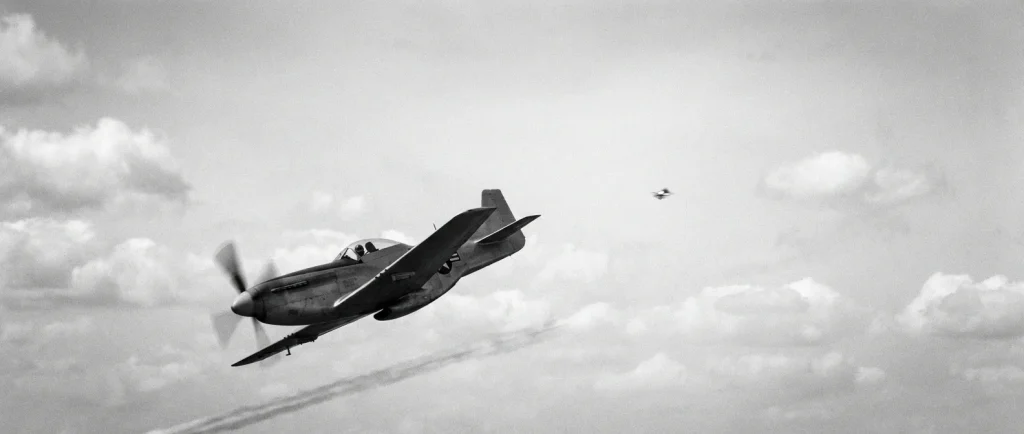
Mantell is often invoked without the discipline of primary sourcing, and the retellings drift. One easy tell is terminology: some sources describe the aircraft as an F-51 while others call it a P-51, and even basic listings can default to a generic P-51 silhouette. When the naming is unstable, readers are not arguing from a shared record; they are arguing from a story shaped by popular media and online discussion.
- Insist on primary documents and clear provenance, not summaries that cannot be traced.
- Require consistent terminology across releases so cases can be compared without semantic drift.
- Look for explicit uncertainty labels, including what data is missing and why it cannot be recovered.
- Prefer case-level artifacts (sensor metadata, timelines, chain of custody) over narrative conclusions.
What We Can Conclude Responsibly
The Mantell incident is a documented tragedy whose central mystery remains evidentially unresolved: Capt. Thomas F. Mantell Jr. of the 165th Fighter Squadron, Kentucky Air National Guard, died on 1948-01-07 after pursuing an object, with the event anchored at 15:18 as recorded in USAF/Project Sign and Project Blue Book files (see Primary sources). The article’s defensible takeaway is narrow but solid: a real pilot died during a real pursuit, and the record does not carry the kind of contemporaneous sensor package that would close the identity question cleanly. Placed in its Air Force program context, it sits in the early-era churn of Project Sign and its successors, while modern AARO reporting establishes the baseline expectation for how serious UAP claims should be documented and audited.
Uncertainty persists for the same reason the story feels “settled” in headlines: the strongest-sounding claims are often downstream of later retellings, not upstream primary records. In the provided Godman AFB and Ft. Knox case file set, there is no documented radar confirmation for the 1948 incident, so the popular line “radar tracked it” is unproven here. Source hierarchy is the friction point: once a detail enters a secondary account, it gets repeated as fact, even when the underlying documentation is missing or inconsistent. A simple example is the aircraft label drift, where some tellings say P-51 and others say F-51; even basic descriptors are not stable across retellings, and one compiled record fixes the timestamp at 15:18 while depicting a generic P-51 silhouette.
The practical way forward is a repeatable reader protocol: prioritize primary records over narrative summaries, label uncertainty explicitly, and treat each claim as a hypothesis to be tested against documents, not vibes. “Meaningful disclosure” on historic cases is not another confident summary; it is the release of verifiable, timestamped primary material with provenance, including complete base operations logs, the full Project Sign case packet (with chain-of-custody notes), original communications transcripts, and any surviving sensor records or corroborating plots if they exist. Those artifacts would move confidence because they let independent reviewers reconcile timelines, terminology, and claims against the same fixed data.
Primary sources / key references
- Project Blue Book / Project Sign case packet for Thomas Mantell, compiled Project Blue Book “all files” PDF — hosted on The Black Vault: Project Blue Book – Thomas Mantell, all files (The Black Vault)
- Godman AFB and Fort Knox operations logs and related January 1948 items archived on Archive.org (labeled Godman Kentucky 1948-01): Godman AFB item 1 (Archive.org), Godman AFB item 2 (Archive.org)
- US Army/Defense retrospective article and public-facing summaries of the incident and its lasting questions: Army.mil: Questions remain 75 years after mysterious Fort Knox UFO incident
- AARO / ODNI consolidated unclassified annual report on UAP (Nov 14, 2024) and Department of Defense release summarizing reporting totals: DOD-AARO Consolidated Annual Report on UAP (ODNI PDF), DoD news release summarizing the Nov 14, 2024 report
- AARO-related workshop report hosted by the Associated Universities, Inc. (AUI) summarizing a 2025 workshop on UAP research and records: AUI: AARO releases report on Unidentified Anomalous Phenomena
- Project Skyhook program histories and technical reports describing early high-altitude balloon flights and payloads: Skyhook balloon (summary), Skyhook technical report archive (DTIC)
- NICAP analysis and summaries discussing oxygen and hypoxia possibilities in the Mantell case: NICAP: Mantell analysis (Randle)
Frequently Asked Questions
-
What was the Mantell UFO incident in 1948?
The Mantell incident was a 7 January 1948 event in which Capt. Thomas F. Mantell Jr. (165th Fighter Squadron, Kentucky Air National Guard) died when his fighter crashed during or after pursuing an unknown object. The article anchors the active response window to 15:18 on 1948-01-07.
-
What time did Capt. Thomas Mantell’s pursuit occur?
The article uses 15:18 on Wednesday, 7 January 1948 as the key timestamp that later accounts orbit. It treats 15:18 as the reference point for the mid-afternoon window when reports over Kentucky were active and the pursuit was underway.
-
Was there radar confirmation for the Mantell UFO incident?
No-within the provided Godman AFB and Ft. Knox case file set, the article states there is no explicit record or assertion of radar confirmation for the 1948 incident. It contrasts this with a separate 31 May 1963 event that did include four radar returns and radar film submitted for analysis.
-
How high did Mantell climb, and why is oxygen a key factor?
Later reconstructions cited in the article describe Mantell continuing past about 20,000 feet and climbing toward roughly 25,000 feet, a range the article flags as later-attributed narration rather than an instrumented trace. The article identifies hypoxia risk as central, noting NICAP’s summary says Mantell had oxygen but failure modes included supply running out or a mask malfunction.
-
What were witnesses actually reporting about the object over Kentucky?
The article says the surviving descriptions are mainly visual and qualitative, clustering around appearance, brightness, and motion. It emphasizes that key measurement-grade data (consistent angular size, instrumented altitude, tracked ground speed, or timed bearings) is notably scarce in the provided record.
-
Could the Mantell UFO have been a balloon or Venus?
The article says a high-altitude balloon fits reported “bright” and apparently slow/stationary behavior, and notes Project Skyhook’s first successful three-balloon cluster occurred in 1948 with balloons reaching above 100,000 feet. It also says Venus can appear unusually bright in daylight, but requires a Kentucky-specific ephemeris check (time, azimuth/elevation) plus visibility data to match the 15:18 window.
-
What should I look for to judge UFO/UAP disclosure claims using the Mantell case as a test?
The article’s decision checklist is to insist on primary documents with provenance, require consistent terminology (it notes drift like “P-51” vs “F-51”), and look for explicit uncertainty labels about missing data. It prioritizes case-level artifacts such as timestamps, sensor metadata, chain-of-custody, base operations logs, and the full Project Sign case packet (Project Sign was activated on 22 January 1948).
