You’ve probably seen the same cycle: nonstop UAP headlines, speculative “UFO disclosure” coverage, and then a Japan story drops and you’re left wondering if it’s alien confirmation or just a government finally doing basic airspace housekeeping. Here’s the clean read: Japan’s bipartisan move to stand up a UAP (Unidentified Anomalous Phenomena) research group, commonly known as UFOs (Unidentified Flying Objects), is a governance signal from a major US ally, not proof of non-human intelligence.
The tension is real, though, and it’s why this story lands. If lawmakers push for transparency, they risk amplifying speculation and feeding stigma. If they treat everything as a security issue, they risk looking like they’re hiding something. Meanwhile, the public is stuck between curiosity and evidence: you want answers, but you also don’t want every blurry clip turned into “alien disclosure” by default. That’s why who’s asking the questions, and what they’re asking for, matters as much as the sightings themselves.
Japan’s tone shift is easiest to see in one contrast. In February 2018, the Japanese government’s public line on UFOs was blunt: “no confirmation has been made…” regarding them. In 2024, the framing in reporting and political discussion is much more defense and airspace focused, with lawmakers treating UAP as something the state should track, analyze, and plan around instead of shrugging off.
Reporting says the new lawmaker group is focused on investigating UAP or UFO sightings, with an explicitly practical lens: some cases might be surveillance drones or weapons, not “aliens.” I’ll help you understand what this kind of group actually is, what it can realistically do inside government, and how to place it in the broader disclosure debate without getting pulled into the hype cycle, so you can read the next headline by watching policy and process, not speculation.
Who Formed the Group and Why
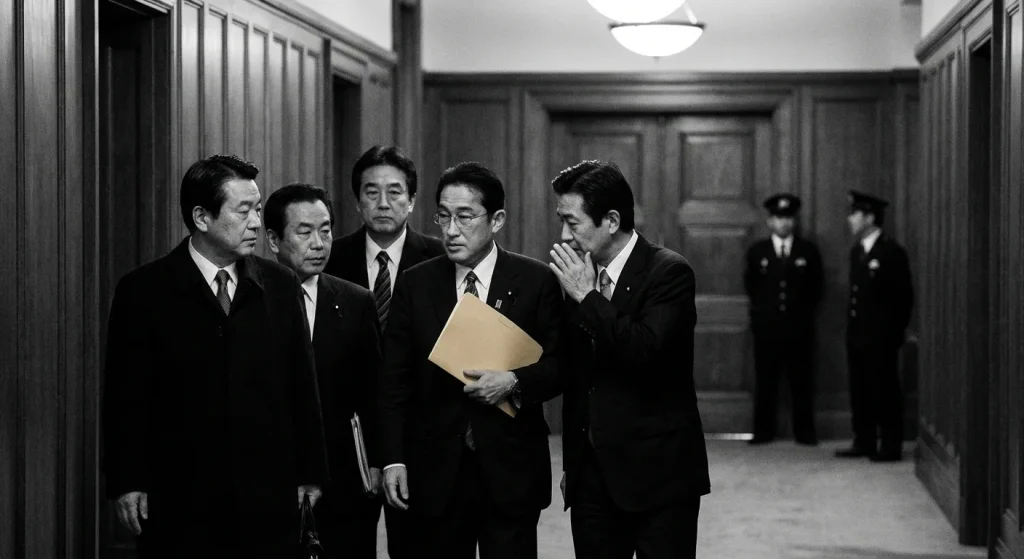
Japan’s new UAP caucus isn’t a tone shift, it’s an organized bloc: Reuters reported that lawmakers launched a bipartisan parliamentary group in June 2024 called the “Unidentified Anomalous Phenomena (UAP) Clarification League for Security and the People’s Safety” (Reuters). Putting that exact banner on it matters because once it has a formal name and a launch date, ministries treat it like “briefing material,” not a fringe topic.
The credibility boost comes from who showed up. Reuters described the league as being formed by senior lawmakers from both the ruling camp and opposition parties, with participation spanning the normal political divide rather than living in one faction. That cross-party mix matters in Japan because it makes the effort harder to dismiss as partisan theater, and it increases the odds the work survives cabinet reshuffles and election cycles without getting quietly shelved.
Publicly, the league framed its mission around security and public safety, not entertainment: the reporting tied its purpose to taking UAP sightings seriously as an airspace and national-security issue and pushing the government toward a more consistent response. That’s a concrete, governance-shaped claim: if something unknown is in controlled airspace, the question is how it’s detected, logged, assessed, and communicated.
Mechanically, this sits inside the Japanese Diet, Japan’s national legislature, which is made up of the House of Representatives and the House of Councillors. A parliamentary caucus (often called a “research group”) is an informal bloc of Diet members: it can coordinate messaging, request briefings, convene outside experts, and repeatedly ask ministries questions in public forums, but it cannot command the bureaucracy or unilaterally declassify and release government files.
What it can do well is turn “we saw something” into repeatable oversight, especially when members from both chambers are willing to keep the issue alive across sessions:
- Push ministries to brief lawmakers on how sightings are logged, triaged, and escalated
- Raise the topic in committee settings where senior officials have to answer on the record
- Convene aviation, defense, radar, and space-domain experts to pressure-test assumptions
- Normalize cross-ministry coordination as a baseline expectation, not a special exception
What it can’t do is dictate outcomes. It doesn’t command the Ministry of Defense, the National Police Agency, or the Cabinet Office; it can’t rewrite classification rules; and it can’t create a new agency by itself. If your bar is “forced disclosure,” a Diet caucus is the wrong tool.
The realistic leverage point is information flow and interagency coordination. Japan’s Ministry of Defense already coordinates bilaterally with the U.S. Department of Defense on UAV research and cooperation, which shows that technical channels exist when officials decide a topic warrants structured engagement.
There’s also a broader institutional direction toward centralization: Japan has been pursuing intelligence coordination reforms aimed at strengthening a central intelligence function and improving how ministries share and deconflict sensitive reporting. A caucus can’t build that architecture by itself, but it can use hearings and briefings to shape what “good reporting” and “good sharing” should look like.
So what should you expect? Look for follow-through signals you can actually verify: publicly acknowledged briefings requested from relevant ministries, UAP-related questions asked in Diet committees, expert meetings with published attendee lists or summaries, and any written guidance describing how sightings are logged and which office owns the handoff between agencies.
Airspace, Security, and Public Trust
Once you strip away the UFO branding, the league’s stated mission points to a familiar government problem: how do you handle unknown objects in real-world airspace without improvising every time?
Most “UAP disclosure” arguments sound like they’re about secrets and sightings. In practice, the real policy problem is airspace governance: detecting incursions early, keeping civilian aviation safe, staying ready for worst-case scenarios, and telling the public what you know without feeding a “government UFO cover-up” storyline.
That mix creates a tricky communications environment. A controller, pilot, or radar operator can see something genuinely anomalous in the moment, but the state still has to make immediate decisions: Do you reroute traffic, scramble fighters, notify allies, or stand down? If the reporting process is unclear or the public only sees fragments, uncertainty starts to look like concealment, even when it’s just the normal fog of real-time operations.
Japan’s own recent record makes the governance stakes concrete. The Defense Ministry said it “strongly suspects” Chinese surveillance balloons entered Japanese airspace on multiple occasions, a characterization reflected in contemporaneous reporting and ministry statements (Reuters coverage and ministry remarks). That’s not a sci-fi edge case, it’s a repeat airspace violation problem that forces decisions about detection, attribution, and response.
The uncomfortable part is how often “unidentified” only means “unidentified yet.” Japanese authorities indicated that three unidentified balloon-shaped objects seen between 2019 and 2021 were later presumed to be Chinese in 2023 reporting and official statements. That’s a clean example of why UAP policy tends to converge on better collection and better triage, because today’s anomaly can become tomorrow’s pattern once you can line up data across incidents.
After the 2023 spy balloon episode, Japan said it was reanalyzing several prior unidentified aerial object incidents. Reanalysis is exactly what you do when the strategic context changes: you go back to old sensor logs and old reports to see what you missed, what you misclassified, and what should have triggered a different response.
Japan has also tried to thread the attribution needle publicly: officials have confirmed past sightings of unidentified flying objects and surveillance balloons while stopping short of explicitly pinning them on China in some statements, even as Japan formally told China that uncrewed surveillance balloon incursions were “absolutely unacceptable.” That tension is where trust problems are born. If the government sounds overly confident without receipts, it looks like propaganda. If it sounds overly vague, it looks like a cover-up. Good process is how you stay credible in the middle.
The fastest way to reduce rumor is to make reporting boring. The U.S. Federal Aviation Administration has issued specific guidance to pilots and air traffic controllers on documenting and reporting UAP sightings, emphasizing that reports should be treated as safety information and recorded consistently (see FAA guidance and search results on UAP reporting on the FAA website). The practical signal is clear: make it easy for pilots and controllers to report anomalies without stigma, and treat the report as a safety input, not a confession that you “saw a UFO.” When reporting is normalized, you get more data points, more consistent descriptions, and fewer late-night leaks that arrive stripped of context.
That structure also forces useful discipline. A real reporting pipeline prompts for time, location, altitude, heading, weather, sensor type, and whether the object was visually observed or only detected on instruments. Those details sound mundane, but they are what let analysts separate “weird but explainable” from “unknown and potentially threatening” quickly enough to matter.
Misidentification usually isn’t one big mistake. It’s several small, understandable errors that stack up, especially when multiple systems disagree. Parallax and geometry errors are a classic example: two observers at different positions can watch the same object and argue about its distance and speed, the same way two phone cameras can disagree about how far away a helicopter is when neither has a reliable reference point.
Radar artifacts add another layer. Filters, clutter rejection, and track initiation logic can produce “targets” that look convincing on a scope but are really noise, reflections, or processing quirks. Meanwhile EO/IR (electro-optical and infrared) sensors can struggle with zoom, autofocus, glare, and limited resolution at long range, producing blobs that invite confident guesses that the pixels cannot support.
Then you get the modern headache: sensor fusion mismatches. Sensor fusion means combining data from multiple sensors into one interpreted track or air picture, so operators can act on a single view instead of juggling separate feeds. When fusion is wrong, it can be wrong in a persuasive way, stitching unrelated detections into a single “object,” or assigning a bad altitude or velocity to a real object because the sensors don’t share the same timing, calibration, or viewpoint.
Standardized reports matter because they reduce that false certainty. They preserve raw observations, capture what was and wasn’t seen, and make it easier to audit how an “unknown” became “identified,” or why it stayed unknown. That audit trail is what lets defense and aviation agencies communicate uncertainty honestly without looking evasive.
- Look for named channels (clear instructions for pilots, controllers, and military operators) rather than ad hoc hotlines and unofficial email chains.
- Look for consistent language that separates “unidentified right now” from “assessed as likely X,” and sticks to that standard across agencies.
- Look for auditable summaries that explain what data types were reviewed (radar, EO/IR, visual, telemetry) and what limitations applied.
- Look for integration across civil aviation, defense, and intelligence, because the same object can be a flight safety issue and a surveillance problem at once.
Those are process signals, not alien conclusions. When governments get the process right, they reduce both operational risk and the rumor vacuum that turns ordinary uncertainty into a “cover-up” narrative.
Japan in the Global Disclosure Wave
Japan isn’t doing this in a vacuum. The same reporting and trust problems show up anywhere pilots, sensors, and air-defense networks keep generating edge cases that don’t neatly fit existing buckets.
Japan’s new parliamentary move on UAP doesn’t land as a one-off curiosity. It fits a broader allied pattern: governments are building formal oversight and transparency routines around “unidentified” reports because pilots, sensors, and air-defense networks keep generating edge cases that don’t neatly fit existing reporting buckets.
The catch is baked in. The more a report touches real collection methods (radar modes, ISR coverage, electronic warfare signatures) or operational posture, the more it drifts into classification and alliance sensitivities. So the trend you’re seeing isn’t a straight line to total openness. It’s a shift toward repeatable process: a defined office or mechanism, a mandated reporting cadence, and at least some public-facing outputs that can be audited over time.
The cleanest reference point is the United States’ AARO (All-domain Anomaly Resolution Office), a Department of Defense office created and tasked by law to collect, analyze, and report on UAP cases. The practical significance isn’t the acronym. It’s the idea that UAP reporting lives in a formal channel with a legal mandate, including requirements for unclassified reporting to Congress and some public products (AARO).
AARO is an official U.S. government office, not an informal rumor source. It maintains public materials intended for congressional stakeholders and the public, which is the whole point: it turns a vague topic into something that produces trackable documents on a schedule.
The limit is just as important as the template. AARO can standardize intake and analysis, but it can’t magic sensitive details into the open. “Unclassified reporting” usually means conclusions and summaries, not raw sensor data dumps.
People hear “disclosure” and picture a single cinematic reveal: full provenance, full footage, full explanation. Governments usually publish something different: short findings, scoped historical releases, and heavily curated record sets where sources and methods stay protected.
A useful calibration tool is what “available records” looks like in practice in the U.S. National Archives and Records Administration (NARA). NARA holds U.S. government UFO/UAP-related records across multiple collections, and the Project Blue Book investigation closed in 1969. Those Blue Book records are accessible through NARA resources (NARA), which is exactly what real-world transparency often resembles: an archive you can query, not an all-answers press conference.
That model matters for Japan because it sets realistic expectations for what “progress” looks like: documented categories, consistent case handling, and releasable summaries that don’t compromise national security.
UAP discussions frequently invoke “Five Eyes,” and it’s worth being precise. Five Eyes is the intelligence alliance of the United States, United Kingdom, Canada, Australia, and New Zealand. Public detail on any UAP-specific collaboration inside that framework has been limited, and the absence of detail is not accidental. Intelligence-sharing arrangements are defined as much by what stays quiet as what gets briefed.
Japan is a close security partner that participates in broader dialogues with allies on defense and information practices, but it’s a mistake to imply there’s a public, formal “UAP pipeline” feeding Tokyo from Five Eyes channels. What you can safely assume is more boring and more useful: partners compare how they log incidents, how they protect classified collection, and how they decide what can be downgraded for public release.
If Japan’s lawmakers want to align with the international direction of travel, the practical wins look the same everywhere: shared reporting standards, declassification norms that produce consistent public outputs, and interoperable data categories so “unknown” means the same thing across agencies and partners. That’s what moves the conversation from headlines to accountable governance.
Likely Agenda and Policy Pathways
If you treat this as a governance story (not a revelation story), the question becomes simple: what can a Diet caucus actually change, and how quickly can it make the system more consistent?
The most meaningful outcomes here are process changes, not revelations. A parliamentary caucus can start producing those changes fast because lawmakers don’t need new statutes to ask hard operational questions, compare agency answers, and force a shared playbook to exist.
In practice, the quickest wins look boring on purpose: closed-door briefings; written questions that require ministries to put positions on the record; and committee time that pressures agencies to show what they collect, what they discard, and what they escalate. That’s where UAP governance starts to become real: not with a headline, but with a repeatable workflow.
The boundary condition is the Diet’s own mechanics. A bill may be submitted to the Diet either by a Diet member or by the Cabinet, and only the Cabinet can submit the national budget or a treaty. A caucus can signal priorities, but if it wants resources, formal programs, or binding commitments, it needs allies inside the right committees and Cabinet channels.
UAPs sit across jurisdictions, so the hard part is getting the operators to treat “unusual aerial” reports like a shared safety and security issue instead of someone else’s problem. The likely operational stakeholders are straightforward: the Ministry of Defense and JASDF for defense airspace and military sensors; MLIT for civil aviation; the Japan Coast Guard for maritime tracks and incidents; Cabinet intelligence functions that fuse reporting; and the National Police Agency for domestic security and investigative support.
Coordination also bumps into how Japan organizes intelligence, including ongoing reforms aimed at strengthening central coordination and information sharing across ministries. That sort of structure can either streamline multi-agency intake or, if mishandled, concentrate it behind thicker secrecy.
The friction point is classification and bureaucracy. Lawmakers will prioritize evidence that is both operationally meaningful and auditable: pilot reports (civil and military), radar tracks, electro-optical and infrared (EO/IR) video, and satellite observations. But the most compelling pieces are often the least shareable, because sensor capabilities, collection locations, and intelligence methods are themselves protected information. That constraint doesn’t kill oversight, it just forces a different question: “What can you responsibly summarize, and how often?”
Legislation is the slow lane, and the caucus shouldn’t pretend otherwise. Cabinet-submitted bills typically go through lengthy drafting and deliberations, and committees do the detailed examination that can stretch timelines. The point of a caucus is to make that slog worth it by narrowing the problem into language ministries can implement.
- Request briefings and gather cases by pulling the last few years of relevant incidents from MoD/JASDF, MLIT, the Coast Guard, Cabinet intelligence functions, and the NPA, then identifying where handoffs failed.
- Standardize reporting and intake by creating a single minimum dataset (time, location, altitude, sensor type, chain of custody, outcome) and a clear escalation rule for safety risk versus national security concern.
- Set oversight norms and narrow legislation that requires periodic summaries, establishes retention rules, and clarifies who owns inter-agency fusion, without demanding declassification that would expose sensitive capabilities.
Notice what’s missing: grand disclosure mandates. The durable version of “transparency” in this space is a reporting obligation plus an audit trail, not a promise that raw sensor feeds will become public.
If you want one non-sensational pathway that still improves safety, watch for alignment with ICAO. ICAO develops aviation standards and policies, and it already has provisions touching remotely piloted aircraft systems (RPAS), including remote pilot licensing and certificates of airworthiness. That matters because the reporting problem is partly a normalization problem: if crews don’t know what to file, and controllers don’t know how to code it, the “data” never becomes usable.
A smart caucus doesn’t need ICAO to have a special “UAP rule” to get value. It can push MLIT and relevant operators to map unusual aerial reporting into existing aviation safety management habits, so the output is consistent across airlines, air navigation, and defense coordination, even when the underlying details stay classified.
If you want to know whether this group is serious, watch for repeatable signals: recurring briefings that include MoD/JASDF, MLIT, the Coast Guard, Cabinet intelligence functions, and the NPA in the same room; a published reporting guideline that tells pilots and controllers exactly what to submit; an inter-ministry intake point with a documented escalation path; and an annual, sanitized summary that counts cases, categories outcomes, and explains what changed in response.
Non Human Intelligence Claims Versus Facts
All of that process talk is also the fastest way to keep the conversation grounded. The more standardized the reporting and review, the harder it is for any single clip or rumor to carry the whole story.
Political attention and new reporting rules are real policy signals, but they aren’t proof of “non-human intelligence.” Extraordinary conclusions require boring, verifiable inputs: measurements you can cross-check, artifacts you can track, and analyses other people can repeat. That’s the line between informed curiosity and getting pulled into alien disclosure hype.
That hype machine forms fast: a sensational headline turns an ambiguous clip into a certainty, and opaque government processes create the distrust that fills in the gaps. David Grusch is a clear example of how this happens. He testified under oath before the U.S. House Oversight and Accountability Committee (press coverage of the House hearing), and press reports indicate he also provided closed-door briefings to congressional offices. Sworn testimony matters because it creates legal stakes and a formal record, but it still isn’t automatically first-hand evidence. Much of what’s publicly described around his central claims has been characterized in public discussion as secondhand, which puts it in the “allegation” bucket until it’s backed by analyzable materials or independently confirmed documentation.
If you want a quick evidence hierarchy, keep it simple. Stronger beats weaker every time: multi-sensor correlation (radar, infrared, visual, telemetry agreeing on the same event) beats a single-sensor clip; a documented chain of custody (a record of who handled a material, when, and under what controls) turns a story into something a lab can actually evaluate; and independent analysis and replication beats closed-door conclusions, because other qualified teams can check the work and see if results hold up.
Public records are also more limited than people imagine. AARO’s public-facing products help set expectations for what’s actually released versus what remains classified, and NARA’s holdings are useful for timelines, case files, and summaries rather than a public cache of confirmed “alien materials” (AARO; NARA).
Use a three-question filter on the next viral claim: Is there multi-sensor correlation, or only one clip? Is there a documented chain of custody for any material evidence? Has any independent team been able to analyze and replicate key findings? If the answer is “no” on all three, treat it as an interesting lead, not a solved mystery.
What to Watch Next in 2025
Japan’s bipartisan UAP research group matters because it changes oversight habits: it normalizes reporting, documentation, and airspace governance even if it never confirms anything extraordinary.
Framing the issue as national security and airspace management pushes agencies toward repeatable process, and repeatable process is what drains oxygen from “cover-up” narratives. The catch is that progress will look incremental and often quiet: the most realistic outputs are cross-ministry guidance, closed-door briefings, and auditable public summaries, because committees work through formal agendas and investigations while Cabinet and budget realities slow big policy shifts. Those “boring” artifacts are also the ones you can verify later, which is the whole point.
AARO is a useful global reference for how formal routines can work and why public visibility still has limits; AARO says it will announce when a public reporting mechanism is available, and there’s no firm timeline on the public site, so watch for updates rather than a scheduled launch. For 2025, track these auditable signals: a formal cross-ministry reporting guidance or directive, a public annual summary, a committee agenda item or hearing, a dedicated budget line item, and a defined cross-ministry reporting channel. And if you’re still stuck on the big question from the start-alien confirmation or airspace housekeeping-this story keeps pointing the same way: compared to 2018’s flat “no confirmation,” 2024’s shift is about building a trackable process around “unknowns,” not announcing what those unknowns ultimately are.
Frequently Asked Questions
-
What is Japan’s new parliamentary UFO/UAP research group called?
Reuters reported that Japan’s lawmakers launched a bipartisan parliamentary group in June 2024 called the “Unidentified Anomalous Phenomena (UAP) Clarification League for Security and the People’s Safety.” The group frames UAP as a security and public-safety issue.
-
When was Japan’s bipartisan UAP (UFO) lawmaker group launched?
The group was launched in June 2024, according to Reuters. It was formed by senior lawmakers spanning both ruling and opposition parties.
-
Does Japan’s 2024 UFO/UAP research group confirm aliens or non-human intelligence?
No-its stated focus is airspace, national security, and public safety, including the possibility that some sightings are drones or weapons. The article says the group is a governance signal about tracking and analyzing unknowns, not proof of non-human intelligence.
-
What can a Japanese Diet UAP caucus actually do, and what can’t it do?
It can request briefings, raise questions in Diet committees, convene outside experts, and push cross-ministry coordination on how sightings are logged and assessed. It cannot command ministries, unilaterally declassify files, rewrite classification rules, or create a new agency by itself.
-
Which Japanese agencies are most likely to be involved in UAP reporting and response?
The article identifies likely stakeholders as the Ministry of Defense and JASDF, MLIT (civil aviation), the Japan Coast Guard, Cabinet intelligence functions that fuse reporting, and the National Police Agency. The point is to treat unusual aerial reports as a shared safety-and-security workflow across these bodies.
-
What minimum data should a standardized UAP/UFO report include?
The article’s proposed minimum dataset includes time, location, altitude, sensor type, chain of custody, and the case outcome. It also emphasizes capturing whether the object was visually observed or only detected on instruments to support later analysis and audit.
-
How can you tell if Japan’s UAP group is serious-what signals should you look for in 2025?
Look for verifiable outputs such as publicly acknowledged briefings requested from ministries, UAP questions asked in Diet committees, expert meetings with published attendee lists or summaries, and written guidance for logging and escalating sightings. The article also flags trackable markers like a defined cross-ministry reporting channel, an annual sanitized public summary, and a dedicated budget line item.
