You keep seeing “UFO news” and “UAP news” threads cite the 1948 “Gorman dogfight,” and the retelling always collapses into two lazy extremes: a sensational alien chase or a dismissive shrug about a pilot getting fooled. The result is the same either way: you cannot tell what the historical record actually supports.
What makes this case stick is not internet mythology, but its posture in the paper trail: an Air Force pilot pursuit report from October 1, 1948, near Fargo, North Dakota, written close enough to the event to preserve raw detail, yet famous enough to be argued over for decades. The initial Air Force report is dated October 5, 1948, and it sits in the early documentation era framed by Project Sign, the Air Force’s active UFO study program in 1948.
So the decision is real: is the Gorman incident evidence of something extraordinary, or a cautionary tale about how fast perception and reporting can outrun what instruments and records can lock down?
The tension is baked in: vivid testimony and a dramatic pursuit create a strong narrative, while night observation limits, imperfect reference cues, and incomplete instrumentation and documentation cap what anyone can prove after the fact.
You will leave able to separate what is documented, what is inferred, and what is speculation by treating each claim as either observation or interpretation, and refusing to let the story blur that line.
1948 UFO panic and Air Force priorities
By 1948, unusual aerial reports were generating “test-case” files because the U.S. Air Force treated them as a national-security sorting problem, not a folklore curiosity. The phrase “flying saucer” had surged into public attention the previous summer, with a nationwide wave of reports in the July 1947 surge. Once that public label existed, every bright light, fast mover, or misidentified aircraft risked becoming a security question that demanded an institutional answer.
The pressure point was timing. Postwar aviation was changing quickly, early Cold War anxiety raised the cost of getting an “unknown” wrong, and public attention meant silence looked like evasion. The Air Force had to investigate, communicate, and assess threat even when the underlying data were thin, secondhand, or inconsistent. That combination reliably produces ambiguous files: not because investigators wanted ambiguity, but because the reporting environment manufactured it.
In 1948 the U.S. Air Force began investigating reported UFO sightings, and from 1948 to 1969 it investigated 12,618 reported sightings (National Archives summary citing Project Blue Book totals). That volume forces triage. The system could not wait for lab-grade certainty before acting; it had to sort reports into buckets that mattered operationally: probable aircraft, probable astronomical sources, probable hoaxes, or unresolved unknowns that merited more attention.
Project Sign, the U.S. Air Force’s 1948 program tasked with investigating UFO reports with a national security threat-assessment lens, meant cases were treated as potential security signals first. Its purpose included assessing whether unidentified aerial phenomena represented a threat to national security. The friction was predictable: the public wanted definitive explanations, while the institution prioritized timely risk management and coherent public messaging with incomplete facts.
This context is the key to reading the Gorman case responsibly. It shaped how reports were collected (who was interviewed and what was written down), how much ambiguity was tolerated (an “unknown” could be an honest administrative outcome), and why “cover-up” narratives later found fertile ground. The fertile ground was information friction: gaps created by time pressure, limited instrumentation, and uneven witness documentation, not proof of a coordinated conspiracy.
Use a simple rule when you read any 1948-era report: treat it as a threat-triage document, then ask what evidence types were realistically available. Look for radar returns, multiple independent observers, instrument logs, and contemporaneous communications. If the file relies mainly on memory, estimates of distance and speed, or single-witness timing, the uncertainty is structural, not suspicious.
Gorman, the F-51, and the setting
That institutional backdrop is why Gorman’s report attracted attention: it looked like the kind of case that might move a file out of the “routine misidentification” pile, even while remaining hard to quantify. To judge it, you have to start with the observer, the aircraft, and the visual environment that framed every estimate.
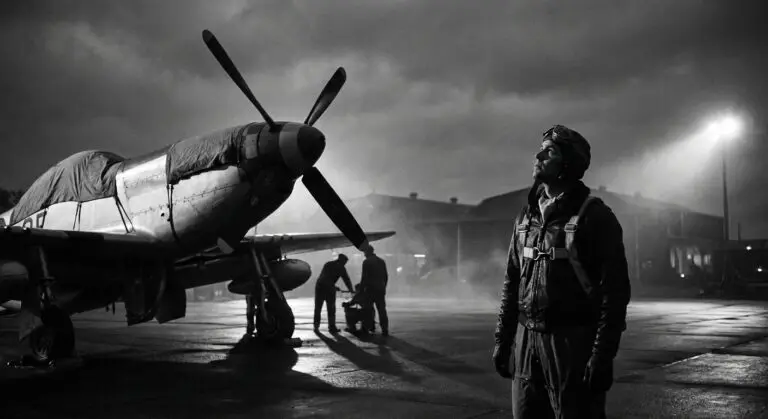
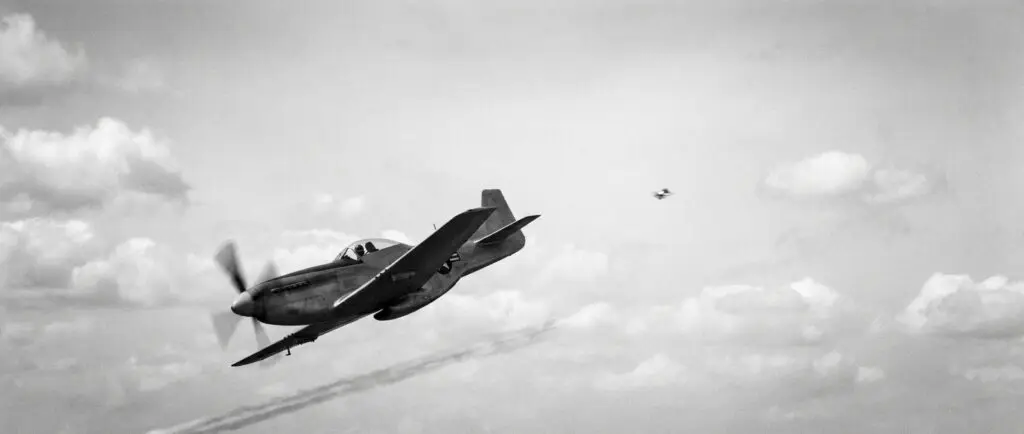
The Gorman incident endures for a specific reason: on October 1, 1948, Lt. George F. Gorman of the North Dakota Air National Guard (North Dakota National Guard) was in the cockpit of a P-51 Mustang, not watching from a porch or a patrol car. That credential matters, because fighter pilots are paid to read closure, aspect, and energy state quickly. The trap is treating “trained aviator” as a guarantee of perfect interpretation, even when the sensory inputs are inherently thin.
Night operations narrow what the eye can reliably solve. With fewer outside references, pilots consistently report misjudging drift, clearance, height, and attitude, and external lights are repeatedly implicated as drivers of perceptual error. Over featureless terrain, missing cues also degrade depth and height judgment, which is exactly the kind of environment where a single light can dominate the scan and feel more informative than it is.
The airplane sets hard boundaries on what an observation can mean. Gorman’s Mustang was the postwar F-51 designation of the P-51, and the P-51D performance reference points commonly listed are straightforward: max speed about 440 mph, cruise about 362 mph, and stall about 100 mph. Those numbers explain why a Mustang can rapidly reposition and generate high closure when the pilot commits to a light source.
But night compresses the margin. Cockpit workload rises, instrument cross-check becomes non-negotiable, and a pilot chasing a point of light has fewer reliable cues for range and relative motion. High performance helps you get there; it does not automatically tell you what “there” is when the target is primarily a light.
Fargo’s airfield environment is part of the data, not background scenery. A formal, active airport is a dense cluster of fixed references: runway and approach lighting, rotating beacons, and other identification lights that pilots use as anchors. At night, an airport code beacon, a flashing light that transmits an airport’s 3 to 4 character identifier to help pilots visually identify an airfield or landmark, can turn a distant point of light into a compelling “target” if you do not immediately recognize the pattern.
Note about names and regulations: “Hector International” as a modern name and current FAR Part 139 certification reflect the airport’s later administrative history and do not themselves prove what specific lighting arrangements existed in 1948. The facility traces its local history to the 1920s and has evolved over time; contemporary operating certificates and the “International” name are modern developments and not direct evidence of 1948 beacon or runway-light configurations (Fargo Hector Airport history).
Phase-by-phase chase narrative over Fargo
Those constraints – night cues, cockpit workload, and a lighting-rich airport environment – are what make the chase narrative both compelling and treacherous. They also explain why a 27-minute timeline can feel “data-rich” while still leaving key quantities unmeasured.
The chase’s reported 27-minute duration matters for a simple reason: it created multiple observation windows. A single flash of light can be dismissed as a star, a reflection, or a misread of relative motion. A 27-minute pursuit gives time for repeated looks from the cockpit, cross-checks with a control tower, and independent ground sightings. The same time span also creates more opportunity to misinterpret what is moving versus what only looks like it is moving as headings and sightlines change.
The pilot’s vantage point was unusually strong for visual tracking because cockpit visibility in the Mustang is described as effectively unobstructed in the forward view. That does not guarantee correct range, altitude, or speed judgments at night, but it does establish that the pilot’s line of sight was not structurally blocked in the way it can be in some other aircraft.
The decision to pursue was made in the context of a fighter that can sustain high-speed maneuvering by 1948 standards, with published P-51D performance figures providing the relevant envelope for what “trying to close” could mean. Those numbers frame what “trying to close” meant operationally, without turning the later narrative into a performance claim about the unknown light.
What survives in Air Force documentation is preserved as part of the Project Sign file set, where this incident group is collectively identified as “Case #1” in later internal filing descriptions (Project Blue Book microfilm index and related roll list). That filing status matters because it indicates the report moved beyond an informal story into an internal record that was treated as intelligence-relevant at the time.
That administrative detail is easy to overread, but it does clarify why the narrative is structured the way it is: it preserves what participants said and did, not a sensor-driven reconstruction. What follows, then, is best treated as a sequence of reported maneuvers and perceptions rather than a solved intercept plot.
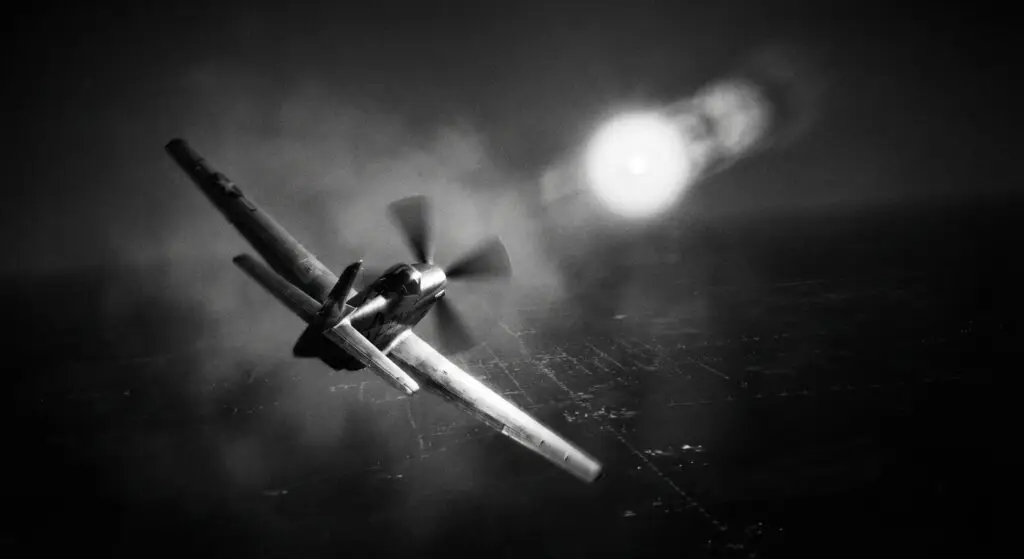
The chase record is described as a sequence of attempted intercepts rather than a straight-line tail. In plain language, the pilot repeatedly tried to position the aircraft so the light would move from a distant point source into something that could be judged by angular size and closure rate. When the light did not “grow” as expected during closure attempts, the report’s descriptive core stayed focused on what the pilot could actually see: a bright light, apparent movement, and repeated changes in relative bearing.
Within the pursuit phase, the major maneuver rhythm described in later summaries is climb, turn, and re-attack. A climb changes the sightline and the background, a turn tests whether the light holds a fixed relationship to the aircraft’s motion, and a re-attack is a fresh attempt to convert an angular observation into a closer pass. Those actions generate more data points, but they also multiply the ways a constant light can look like it is “reacting” when the aircraft is the one changing geometry.
Several moments in the narrative are framed as the object appearing to “respond” to the airplane. Treated strictly as reported behavior, the record describes the light’s apparent position shifting in ways the pilot did not expect during turns and closure attempts. The key documentary distinction is that the pilot reported the timing of apparent movement relative to aircraft maneuvers; later writers often slide from that timing into claims about deliberate intent. The reportable fact is the sequence of perceptions, not a proven motive behind them.
The chase is also described as escalating in the sense that the pilot continued pressing the intercept problem through multiple cycles rather than abandoning it after the first failed closure. Over 27 minutes, persistence itself becomes part of the record: the pilot stayed engaged long enough to generate a sustained timeline instead of a single “sighting.” That persistence is why the file later supported questions about performance, even though the underlying descriptions are still largely visual and relative.
In the separation phase, the narrative resolution is operational rather than dramatic. The chase ends because the pilot stops chasing. The document trail emphasizes duration, repeated maneuver attempts, and the fact that the light was not resolved into a conventional aircraft identification during the engagement. What it does not supply, in the material as commonly summarized, are instrument-backed measures of target speed, target altitude, or a track that stands on its own independent of the pilot’s sightline.
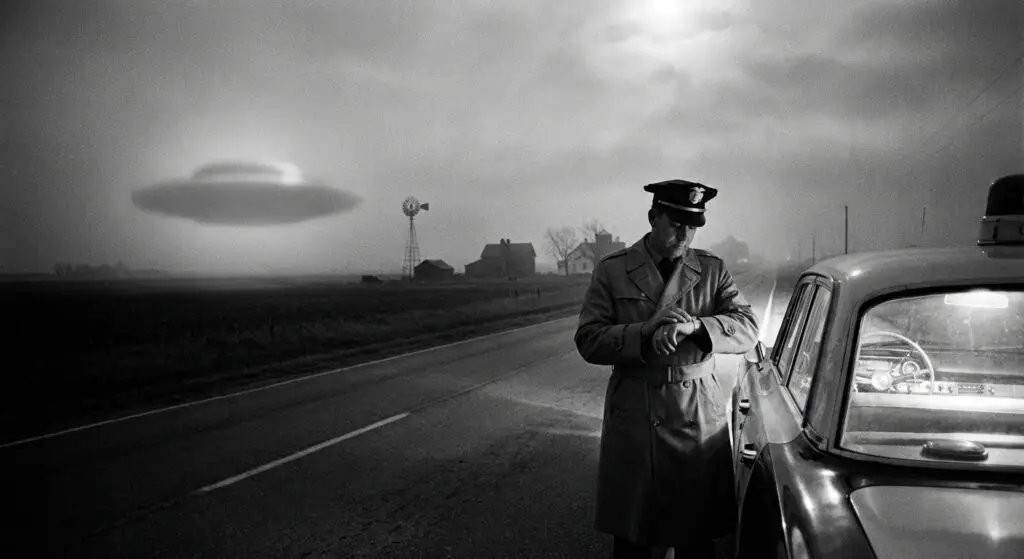
The encounter is also described as corroborated by witnesses on the ground who reported an object or ball of light moving in a manner not consistent with human flight. That phrasing should be treated as the record’s summary characterization of what those witnesses said, not as proof of non-human technology.
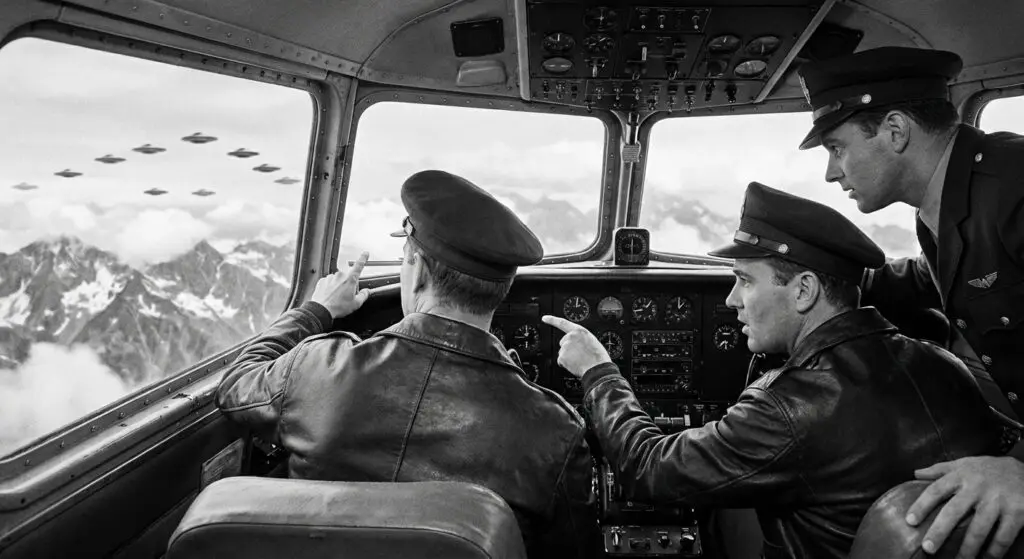
Tower involvement is documented in the case narrative as more than passive listening. Control tower checks found two other aircraft within 100 miles that evidently reported the object (contemporary summary and Project Blue Book recounting). The value of that detail is not precision, it is independence: other crews were reportedly looking at something they also regarded as reportable, even if their descriptions were still visual.
A named ground witness, “Witness 2,” estimated the object about 20 degrees above the ground. The case summary notes that this estimate implies an altitude of roughly 31,000 ft, about 6 miles, for the lights. Treat that number as an inference layered on top of an eyeballed elevation angle, not as a measured altitude. The observation is “about 20 degrees up”; the altitude follows only if you assume distance and geometry that are not directly measured in the moment.
The Project Sign file context matters because it shows how the information moved from observation into documentation, and also why gaps remain. The case file exists in a system where some specifics are redacted by policy, and the surviving narrative tends to preserve what people said they saw more reliably than the performance conclusions later readers want to draw from it.
The clean way to read a 27-minute chase record is to separate description from reconstruction. Description is what the participants directly reported: a light’s position relative to the aircraft, apparent movement during turns, the length of the engagement, and the existence of other witnesses. Reconstruction is everything that requires assumptions: exact altitude, exact speed, exact distance, and intent. The chase’s length supports multiple checks, but it also tempts later writers to treat a long narrative as automatically quantitative.
Use a simple labeling method and be strict about it:
- Mark A (direct observation): statements like “a bright light,” “apparent movement,” “changed bearing during a turn,” and “lasted 27 minutes.”
- Mark B (triangulated): anything independently reported by tower personnel, other aircraft, or ground witnesses as a separate vantage point.
- Mark C (inferred): numbers and conclusions derived from geometry or assumptions, such as altitude implied from a 20-degree elevation estimate, or any implied speed or intent.
What the Air Force concluded and why
The same separation – what was reported versus what can be proven – also explains why official files can feel unsatisfying. In cases like Gorman’s, the Air Force’s workflow prioritized two decisions: whether the report implied a national security threat, and whether it could be closed as explainable or left as unresolved. That produces a kind of closure logic that frustrates modern readers looking for scientific-grade proof, because the file can be “closed” without proving what the object was in a lab sense.
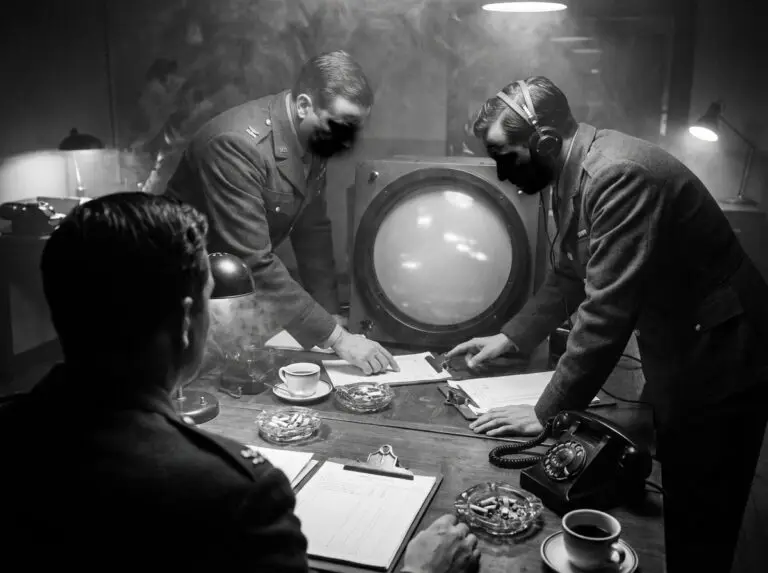
Because Project Sign operated as a threat-assessment program, the investigative center of gravity was always risk triage first and ontology second. A case could be treated as non-threatening even when it remained imperfectly explained, because the operational question was, “Does this demand defensive action?” rather than, “Do we have exhaustive measurements?”
Investigators treated convergence as strength. Multiple witnesses with independent, consistent descriptions carried more weight than a single observer. Reports that anchored time, direction, and duration into a coherent timeline outranked narratives with gaps, shifting estimates, or uncertain reference points.
Instrumented data, when available, sat above impressions. Radar returns with known calibration, logged weather observations, and documented aircraft performance constraints allowed investigators to test explanations against physical limits. In contrast, “looked fast,” “seemed to climb,” or “appeared stationary” were treated as human perception, not measurement, because distance and altitude uncertainty can make speed and size estimates collapse.
That premise shows up any time the file leans on aircraft capability as a bound. The Mustang’s performance envelope provided investigators a numerical frame for judging whether a reported maneuver was compatible with the aircraft’s limits or depended on uncertain range estimates.
Official case dispositions typically fell into a few practical buckets: “identified” (a specific explanation judged sufficient), “unidentified” (no explanation met the internal threshold), or “insufficient data” (the record could not support a confident conclusion). All three can close a file. Only one actually resolves the underlying phenomenon, and even “identified” can leave residual ambiguity if the identification rests on assumptions the record cannot independently verify.
Later, Project Blue Book, the U.S. Air Force’s long-running UFO investigation program, officially operated from 1952 to 1969 (USAF historical fact sheet), and its files and conclusions shaped later public understanding of official UFO inquiries. Program-level conclusions stated that no case provided proof of a threat to U.S. national security, technological developments beyond known science, or conclusive evidence of extraterrestrial vehicles. Those are program-level conclusions, not a promise that every individual case file contains airtight reconstruction.
Transparency debates are only meaningful when the underlying record is inspectable. Project Blue Book documentation exists on 94 rolls of microfilm (T1206), allowing later review of case files and administrative records, including how a conclusion was justified and what data was missing (NARA Project Blue Book microfilm T-1206 overview). That ability to re-check matters because the argument lives in the premises: what was observed, what was logged, and what assumptions were used to bridge gaps.
- Identify what data the explanation relies on (witness statements, weather logs, radar, aircraft performance, photographs) and what data is absent.
- Extract the assumptions about distance, altitude, and speed that turn observations into a concrete identification.
- Specify what evidence would falsify the explanation (a conflicting log entry, a verified instrument reading, a timeline inconsistency, or an independent measurement that breaks the assumed geometry).
Where the case still divides experts
Serious readers split on the Gorman case because the same reported behaviors can be explained two ways: by perceptual and identification limits at night, or by treating the apparent maneuvers as genuinely anomalous. Skeptics lean heavily on night visual illusions, perceptual errors more likely in low-light conditions where limited cues distort judgments of motion, distance, and altitude, because a bright point of light can “perform” like a high-speed object when the observer’s reference frame is unstable. Aviation human-factors literature is blunt about the stakes: pilots frequently report night illusions including misjudgments of drift, clearance, height above terrain, and aircraft attitude, and external lights themselves can distort perception.
The headline claim is extreme performance: bursts of speed and hard turns. Mechanically, that argument rests on acceleration, the rate of change of velocity, including direction changes.
Skeptics emphasize that the observer is inferring acceleration from a light with no visible structure, so the “turn” might be a geometry error rather than a high-g maneuver. Pro-anomalous readers emphasize persistence and apparent kinematics that track as purposeful, not random drift. The assumption difference is simple: skeptics assume the range is uncertain enough that angular motion masquerades as speed; pro-anomalous readers assume the range is constrained enough that the implied acceleration is real. What resolves it is instrumented range and track, not better adjectives.
Skeptics treat “it reacted to me” as the most vulnerable inference in the whole story. A single light can appear to “pace” an aircraft when the pilot’s own maneuvers change the sightline faster than the target changes position.
Pro-anomalous readers point to the repeated sense of timing and mutual maneuvering as evidence of intelligent control. That only holds if you assume the observation is not dominated by known motion-related illusions (including autokinetic effects where a lone light appears to move). Evidence that would settle it looks like correlated tracks from independent sensors showing the light’s motion is external to the aircraft’s own geometry.
Distance uncertainty is not a footnote; it is the engine of the disagreement. Over featureless terrain and sparse visual references, height-depth perception errors occur because insufficient cues lead observers to misjudge depth and height, and a small error in assumed range explodes into a huge error in inferred speed and climb.
Skeptics assume the range was never pinned down. Pro-anomalous readers assume a trained pilot’s judgment plus any contemporaneous observations are enough to bound it. The evidence that resolves it is any hard constraint on geometry: triangulation from separated observers, a known-altitude object near the line of sight, or instrumented altitude and slant range.
Skeptics argue that without distinctive features, distance estimation and maneuver choice degrade, so testimony alone cannot carry extreme-performance claims. Pro-anomalous readers counter that trained aviators are not casual witnesses; they repeatedly assess motion, closure, and attitude under workload.
The assumption clash is credibility versus observability: skeptics assume the environment is underdetermined; pro-anomalous readers assume training narrows the error bars. The clean resolver is independent instrumentation that matches the claimed closure and maneuvering.
Ground observers help with one thing and fail at another: they can confirm something luminous was present, but they are judging a light at night too, under the same class of external-light distortions and misjudgments that show up in pilot reports.
Skeptics assume corroboration is about existence, not performance. Pro-anomalous readers assume multiple observers seeing the same light increases the odds of an external object with coherent behavior. The evidence that resolves it is cross-checked timing plus an observational baseline, like known beacon patterns or star-field references, that can falsify “it moved” claims.
Debates persist because the argument is not really “pilot versus skeptic”; it is “which assumptions are you smuggling in about range, cues, and controllability.” Argue responsibly by stating assumptions first, then making claims. Reader rule: any claim of extreme performance from a light-at-night observation must declare the assumed range and altitude first, because changing that single assumption can flip the conclusion from “impossible” to “mundane.”
Why Gorman matters in 2025 and 2026
Legacy cases like Gorman keep resurfacing because modern disclosure pressure has shifted the core question from “Did someone see something strange?” to “What data exists, who holds it, and what standards govern reporting and release?” In today’s disclosure debate, UAP (Unidentified Anomalous Phenomena), a modern umbrella term for aerial observations that remain unidentified after initial review and data checks, signals a shift toward process and data validation rather than instant conclusions.
That shift creates friction with 1948-era limits. Gorman is testimonial-heavy by necessity, but modern audiences expect time-coded logs, sensor corroboration, and traceable handling of records. When the inputs are mostly a pilot’s narrative plus whatever supporting documentation survives, you cannot retroactively supply the metadata that makes today’s claims testable. The result is predictable: the case stays high-interest, but it remains data-poor by modern standards, which is exactly why it functions as a stress test for disclosure-era expectations.
Congress has put the “show your work” expectation into the public record. The July 26, 2023 House Oversight hearing titled “Unidentified Anomalous Phenomena: Implications on National Security, Public Safety, and Government Transparency” featured sworn testimony from David Grusch and retired Navy Cmdr. David Fravor, which elevated UAP from niche argument to formal oversight subject.
Statutes reinforced that direction. The FY 2024 NDAA was signed on Dec 22, 2023; Public Law 118-31 requires new processes for identifying and transferring UAP-related records to the National Archives. See the public law text at PLAW-118publ31. The statute directs federal agencies to identify UAP records by October 20, 2024 and, for records that can be publicly transferred, to provide digital copies to NARA by September 30, 2025 (NARA guidance summarizing the FY2024 NDAA UAP records requirements).
On the administrative and research side, AARO has produced historical record reporting and summaries. See the AARO Historical Record Report, Volume 1, 2024 (DOPSR-2024-0263 AARO Historical Record Report, Volume 1, 2024) and the AARO website AARO. An affiliated organization identified as “AUI” has published a short summary of an AARO-related report; that AUI is Associated Universities, Inc., the institute that posted the item at AARO Releases Report on Unidentified Anomalous Phenomena (AUI).
Gorman still matters because it benchmarks what “insufficient data” looks like. Information gaps do not prove a cover-up in this specific case, but they reliably erode public trust by leaving room for competing narratives that cannot be decisively falsified.
Use that lesson in reverse for UFO sightings 2025/2026 coverage: prioritize reports with time-synced sensor data, clear provenance of files, and multiple independent channels, because that’s the gap legacy cases cannot fully close.
A disciplined way to read the record
The disciplined read of the Gorman record is not “believe” or “debunk.” It is “separate observation from inference, and preserve evidence integrity so the next case is decidable.” The timeline established that multiple vantage points existed, which raises the ceiling on potential corroboration, but key values such as range and altitude repeatedly remain inferred rather than measured. The investigation record showed how official programs can close a file without delivering scientific certainty, while the surviving archival paper trail still allows later auditing. The skeptic critique remains operationally relevant: night perception failure modes are real, and they must be accounted for even when the observer is trained. Modern parallels sharpen the point, because current disclosure pressure is fundamentally about data standards and transparent processes, not rhetoric.
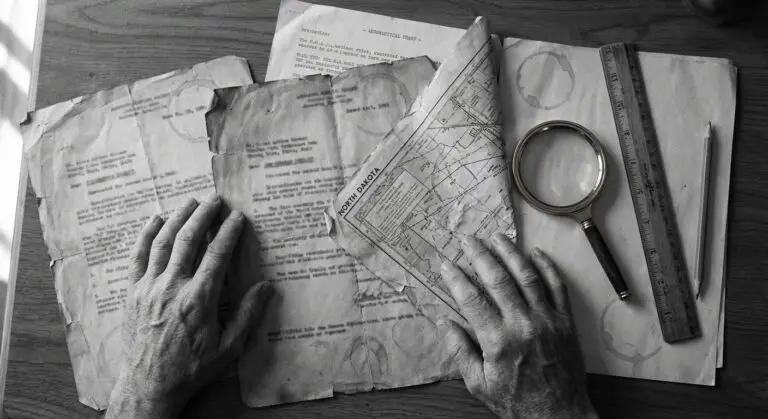
Evidence integrity is the difference between a story and a test. Aviation has already solved the process problem in adjacent domains: accident-investigation manuals such as ICAO Doc 9756, aligned to Annex 13, promote uniform investigative practices precisely so conclusions can be checked and repeated. Eyewitness reports in aviation contexts have been studied and show measurable reliability when analyzed statistically, but they also carry known failure modes, including the night-illusion pathways discussed earlier. If future disclosures are going to settle arguments instead of multiplying them, chain of custody, documented control and handling history of evidence/data to preserve integrity and prevent contamination or later disputes, has to be treated as non-negotiable, not bureaucratic.
- Write the direct observations first, then quarantine everything else as interpretation.
- Tag each inference to its assumptions (distance, speed, altitude, lighting, reference points).
- Stress-test the account against known night-perception failure modes before you elevate it to “performance.”
- Demand sensor data and metadata where available; modern UAP work treats the hard problem as outlier identification in high-dimensional measurement spaces, not narrative coherence.
- Require chain of custody and an auditable paper trail so later analysts can re-run the case.
Use this method every time: (1) document what was directly observed, (2) list what was inferred and from what assumptions, (3) demand sensor/metadata where available, and (4) require evidence handling transparency, so UFO disclosure and UAP disclosure claims become testable rather than endlessly arguable.
Frequently Asked Questions
What was the 1948 Gorman dogfight UFO incident?
On October 1, 1948, Lt. George F. Gorman (North Dakota Air National Guard) reported a 27-minute pursuit of a bright light near Fargo, North Dakota while flying an F-51 (P-51 Mustang). The incident was documented in an Air Force report dated October 5, 1948 and filed in the early Project Sign UFO investigation program.
How long did Lt. George Gorman chase the UFO over Fargo?
The reported pursuit lasted about 27 minutes. That duration matters because it created multiple observation windows, including tower involvement and additional witness reports rather than a single brief sighting.
What aircraft was George Gorman flying, and what are the P-51D performance specs mentioned?
Gorman was flying the postwar F-51 designation of the P-51 Mustang. The article lists common P-51D reference figures as about 440 mph max speed, about 362 mph cruise, and about 100 mph stall speed.
Did the Fargo control tower or other aircraft corroborate the Gorman UFO sighting?
Yes-the case narrative describes control tower checks that found two other aircraft within 100 miles that reportedly also saw the object. The article also states ground witnesses reported a moving object or “ball of light,” which functions as independent corroboration of a luminous source.
What altitude does the article infer from the ground witness “20 degrees above the ground” estimate?
A named ground witness (“Witness 2”) estimated the object about 20 degrees above the ground. The article says this estimate is used to imply an altitude of roughly 31,000 ft (about 6 miles), but notes that number is an inference layered on an eyeballed angle.
What did Project Sign and later Blue Book conclude about cases like the Gorman incident?
Project Sign treated reports as national-security threat triage, allowing cases to be closed as “identified,” “unidentified,” or “insufficient data” without scientific-grade reconstruction. Project Blue Book’s program-level conclusion (1948-1969) was that no case provided proof of a national-security threat, technological advances beyond known science, or conclusive evidence of extraterrestrial vehicles.
How should you evaluate a 1948 UFO chase report like the Gorman dogfight?
Use the article’s labeling method: Mark A for direct observations (e.g., “bright light,” “lasted 27 minutes”), Mark B for independent corroboration (tower/other aircraft/ground witnesses), and Mark C for inferred numbers (altitude/speed/intent). For decision-making, prioritize cases with time-synced sensor data, multiple independent channels, and a clear chain of custody, because legacy files are mostly testimonial and often lack instrument-backed range and track.