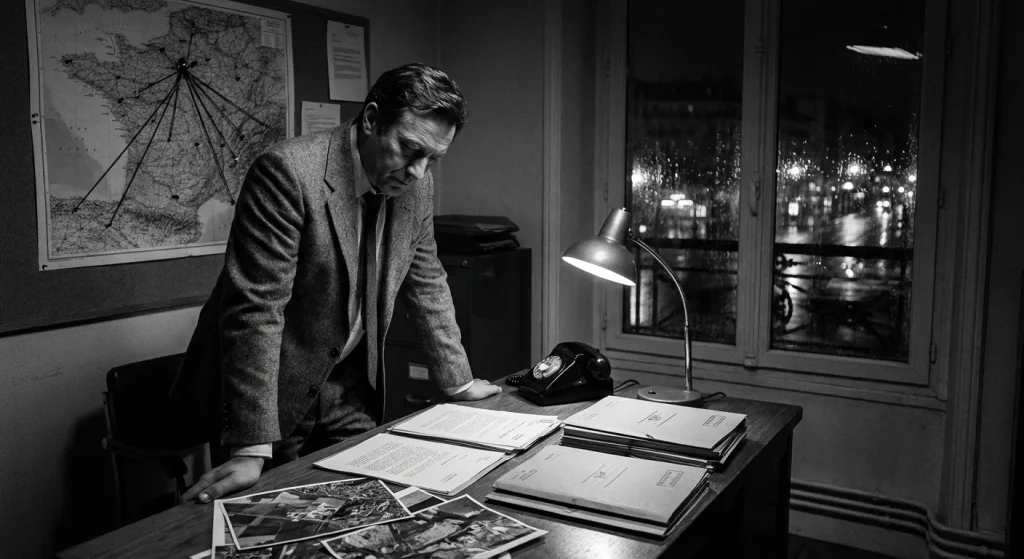
If you follow UFO news and UAP disclosure headlines closely, you have seen the same move repeated: a “program ended,” a “unit was shut down,” and the story immediately turns into cover-up logic. The practical problem is simpler and more frustrating. Official efforts rarely disappear cleanly. They get renamed, moved, or reframed until the public can no longer tell whether the capability is gone or just wearing a new label.
That confusion matters because it changes how you interpret any “official channel” that claims to handle reports. If you accept every shutdown headline at face value, you will conclude governments stop investigating. If you assume every name change is a deception, you will dismiss real institutional continuity that is visible in plain sight. The decision for a reader tracking alien disclosure claims is not abstract; it is whether institutional naming is a signal of policy change, or just administrative housekeeping.
France is the cleanest case study because the continuity is the point. In the research framing used here, a government-linked internal effort is referenced continuously from 1977, commonly discussed as GEPAN then SEPRA then GEIPAN. The institutional record shows GEPAN was created in 1977, the program was reorganized as SEPRA in 1988, SEPRA operated through 2004, and GEIPAN was established or relaunched in 2005, reflecting continuity through name and remit changes rather than a permanent disappearance of the capability.
From GEPAN to SEPRA
France embedded a UFO and UAP study function inside its space agency, not on the fringe. CNES, France’s national space agency that housed the official UAP/UFO study effort, formalized the work in 1977 by creating GEPAN, the original CNES group created in 1977 to collect and study reports of unidentified aerospace phenomena (CNES-GEIPAN mission page, CNES project summary). That placement matters: inside CNES, reports were framed as potential aerospace anomalies worth technical handling, not as folklore to be traded in enthusiast circles.
This is also where the lineage becomes legible. The same CNES effort later appears under other labels, including SEPRA (Service d’Expertise des Phénomènes de Rentrées Atmosphériques), a name associated with the 1988 reorganization (CNES-GEIPAN on SEPRA), and the modern public-facing incarnation GEIPAN (CNES project page). The point is continuity of mandate inside the same institutional home, even as names shift.
GEPAN’s job was not to “believe” or “debunk.” It was built to do technical triage at scale: collect reports, convert them into analyzable information, and separate explainable events from the residue that remains anomalous after review. CNES/GEIPAN describes that baseline mission as collecting, analyzing, investigating where feasible, publishing, and archiving reports of unidentified aerospace phenomena (CNES-GEIPAN mission), and that single summary covers the program’s recurring core activities across the different labels.
The friction is structural: public sightings arrive as unstructured testimony, often after the fact, with uneven timestamps, partial bearings, and imprecise altitude or distance estimates. Aerospace analysis demands the opposite: trackable geometry, environmental context, and corroboration. A CNES-housed unit can impose those standards, but it cannot manufacture missing data. That constraint is why the office’s mission emphasizes disciplined collection, documented analysis, and archiving just as much as field follow-up. Published studies hosted on the CNES-GEIPAN site show the “archive and publish” obligation is operational, not rhetorical (CNES-GEIPAN).
GEIPAN’s operating model explains how this function persists for decades under real staffing limits. GEIPAN operates inside CNES with a small core team and a network of vetted volunteer field investigators (CNES project page). That design solves an unavoidable problem: the volume and geographic spread of reports rarely justify a large permanent field staff, but credible inquiry still requires on-the-ground capacity when a case merits it.
The ROSPARS study’s dataset of about 1,000 reports drawn from the Gendarmerie nationale illustrates the scale pressure that pushes the model toward centralized triage plus selectively deployed field investigation, rather than a permanently large investigative corps (ROSPARS full report (CNES-GEIPAN PDF)).
GEIPAN is also described as publishing information with witness anonymity protections, which fits the practical reality of maintaining a usable public record without exposing witnesses (CNES-GEIPAN).
What Changed in 1988
Against that stable mission and operating model, the key question is what the label signaled in 1988. In 1988, the program was reorganized and commonly referred to as SEPRA; CNES materials describe SEPRA as Service d’Expertise des Phénomènes de Rentrées Atmosphériques, reflecting a remit framed around expertise on atmospheric re-entries and related phenomena (CNES-GEIPAN on SEPRA). That change is best read as a reframing of emphasis rather than an outright termination of capability.
Inside a bureaucracy, a unit name is an operational tool. It shapes mandate boundaries (what you are explicitly responsible for), media handling (what you can credibly say you do), and scientific positioning (what peers will treat as legitimate work). A label that leans toward aerospace safety and atmospheric science tells stakeholders to expect measurable, checkable problems; a label that leans toward “UFOs” invites pop culture assumptions and political heat.
Where direct contemporaneous documentation is absent in the excerpted material, the careful phrasing is “commonly described as” or “reorganized as” rather than asserting a single definitive document that proves the exact legal mechanism of the 1988 rename. CNES archival and project pages, however, record the lineage and the remit language that associates SEPRA with atmospheric re-entries (CNES project page, CNES-GEIPAN SEPRA note).
Even with documentation limits in some excerpts, the operational implication is clear: the external face narrowed toward phenomena that read as aerospace-domain housekeeping, while the organization still intersected with anomalous reports because anomalous reports appear naturally when running a serious filter for misidentifications, re-entries, and unusual atmospheric observations. Reframing is a scope-control move, not a promise that certain report categories have been purged.
Transparency Then and Now
Transparency is the deciding factor in whether official UAP (unidentified aerial phenomena) efforts earn trust. “We investigate” is a promise; searchable, citable records are proof. In practice, openness is engineered: what gets published, how quickly it appears, whether the archive is indexed, and whether the investigative method is visible enough that a third party can follow the logic from raw inputs to conclusions.
The clearest credibility signal is a public document you can actually read and reference, not a press-facing summary. For example, CNES-GEIPAN has made at least some full reports publicly available online, including a publicly accessible “ROSPARS” full report PDF hosted on its site (ROSPARS full report).
French and EU privacy law forces incompleteness, even for well-intentioned, government-adjacent work. The French Data Protection Act (Loi Informatique et Libertés) requires strict protections when processing the personal data of French residents, and French data protection rules operate through GDPR principles. That domestic framework translates into operational constraints: names, addresses, exact coordinates, vehicle identifiers, phone numbers, and small contextual details that can re-identify a witness are not “nice to redact.” They are legally and ethically unsafe to publish.
The same logic applies to sensitive state information. Even if a case file is mostly mundane, it can contain flight paths, sensor capabilities, or procedural details that map directly onto aviation security and defense posture. You can publish the conclusion and still have to withhold the parts that teach an adversary what is monitored, how it is monitored, and what gaps exist.
“Government UFO cover-up” is a contested narrative, but it thrives on information asymmetry. A redaction looks identical to concealment if you cannot see the rulebook that required it. The public also evaluates institutions on friction: if the archive is hard to search, if case files appear selectively, or if methods are opaque, people substitute intent for process and assume the missing pages are where the interesting answers are.
Even straightforward aggregation can be misread. The ROSPARS study analyzed about 1,000 reports from the Gendarmerie nationale, which implies standardized upstream reporting. If the public can’t see what fields were collected, which fields were removed before publication, and why, the gap gets filled by speculation instead of method (ROSPARS PDF).
Readers can evaluate transparency without access to everything. GEIPAN’s stated baseline matters here: publishing its work while ensuring witness anonymity, including anonymity in published investigation documents. That “publish-and-anonymize” posture separates two questions that often get conflated: protecting people versus protecting conclusions (CNES-GEIPAN).
- Verify access: an archive that is publicly reachable, consistently organized, and searchable by case attributes beats any proclamation.
- Check consistency: redactions should follow repeatable rules, not ad hoc black boxes that vary case to case.
- Look for method notes: what was collected, what was excluded, and what standards guided classification.
- Demand separation: privacy removals should not erase the evidentiary chain that supports the investigative conclusion.
Lessons for Today’s Disclosure Era
Today’s disclosure era is structurally different because it is mandate-and-hearing driven. France’s continuity-and-reframing model kept UAP work inside a small technical function of a space agency, where longevity and method can matter more than public cadence. The U.S. system incentivizes the opposite: publishable outputs on a statutory clock.
That contrast makes AARO a useful comparison point because its public obligations are defined in law rather than implied by institutional tradition. The clearest anchor is AARO, the Department of Defense office that Congress has tasked by law to coordinate UAP analysis and produce specified public reports. FY2023 NDAA Section 1683 explicitly mandated work on a Historical Record report; the FY2023 NDAA bill text is available from the Senate Armed Services Committee (FY2023 NDAA bill text (PDF)).
AARO maintains a public site (AARO homepage), and the Department of Defense has published a Historical Record report file that has been discussed publicly (AARO Historical Record report (DOD PDF)).
The friction is predictable: continuity rewards slow accumulation and careful classification; mandates reward deadlines, formatting, and language that can survive interagency review. The result is a disclosure experience that feels episodic: each new requirement creates a new “moment,” even when the underlying analytical work stays incremental.
In practice, most people do not consume investigative files. They consume hearings, short summaries, and media packaging. Public commentary regularly points to AARO’s annual UAP reports as its primary public-facing outputs, which means the narrative rhythm becomes annual and document-based, not case-based.
Section 1683 also created a second kind of consumable: the Historical Record report. AARO has produced a publicly discussed Historical Record report, and that page count and scope matter because they signal how the “history” is being framed: a bounded, reviewable artifact rather than an open-ended research program (DOD/AARO Historical Record report).
Then there are the visibility spikes that drown out everything else. The House Oversight Committee held a public hearing titled “Unidentified Anomalous Phenomena: Implications on National Security, Public Safety and Government Transparency” on July 26, 2023 at 10:00 a.m. in Room 2154 Rayburn (House Oversight hearing page). Media coverage such as an NBC recap helped amplify memorable moments from that hearing (NBC News summary).
Future “UFO sightings 2025/2026” coverage will keep cycling between certainty and disappointment because the system mixes slow analysis with fast attention markets. You can grade credibility without picking a side by separating three layers.
Raw reports: Treat these as inputs, not conclusions. A sighting report is a data point with unknown quality until it is corroborated.
Official analysis: Prioritize what is actually mandated and published. If a claim is not in AARO’s required public reporting stream or CNES-GEIPAN’s published archives, it is not part of the accountable record.
Political theater: Hearings create visibility, not verification. If the evidentiary basis is unverified testimony or secondhand accounts, label it correctly and wait for documented analysis, not viral certainty.
The reliable takeaway is procedural: check what the law requires, read what is actually released, identify what evidence is presented on the record, and separate that from what remains unverified narrative.
Why SEPRA Still Matters
SEPRA matters because it shows how official UAP work persists by changing framing, not by vanishing. CNES’s linked effort stayed continuous across names and remits: GEPAN (1977), reorganized into SEPRA in 1988, SEPRA operated through 2004, and GEIPAN was established or relaunched in 2005 (CNES-GEIPAN, CNES project page). The 1988 “SEPRA” label reads as a reframing of how the work was organized and communicated, not a clean stop. That continuity is also what makes France a useful corrective to shutdown headlines: the same core function can remain in place even as the public-facing label shifts and the documentary trail stays imperfect.
What looks like “serious investigation” in practice is disciplined triage and durable records, not instant “alien disclosure”: GEIPAN is described as collecting, analyzing, and archiving information on unidentified aerospace phenomena; it publishes while protecting witness anonymity, which necessarily shapes what the public can see (CNES-GEIPAN). Put those constraints beside the modern U.S. disclosure cycle, where mandates and hearings amplify narratives faster than casework can mature. Use four criteria on the next headline: the mandate is explicit, the method is consistent across time and labels, the record is accessible in a usable archive, and “unexplained” is treated as a disciplined status in an investigative pipeline, not a conclusion.
Frequently Asked Questions
-
What is SEPRA and how does it relate to GEPAN and GEIPAN in France?
SEPRA is a later label used for France’s CNES-linked UFO/UAP study function that began as GEPAN in 1977 and is now publicly associated with GEIPAN. The article describes this as one continuous CNES-embedded effort operating under different names from 1977 to 2004.
-
Did France shut down its UFO investigation program in 1988?
No-1988 is presented as a reframing toward the SEPRA label rather than an end of the capability. The article emphasizes continuity of the same CNES-housed mission across GEPAN, SEPRA, and later GEIPAN.
-
What changed when CNES shifted toward the SEPRA framing in 1988?
The SEPRA framing emphasized re-entries and atmospheric phenomena, positioning the work as aerospace-domain housekeeping rather than sensational “UFO” pursuit. The article notes this was a credibility and scope-management move while still intersecting with anomalous reports.
-
What does GEIPAN actually do with UFO/UAP reports?
GEIPAN is described as collecting, analyzing, investigating where feasible, publishing, and archiving information on unidentified aerospace phenomena. It maintains a documented set of cases that remain unexplained after review rather than letting them disappear into rumor.
-
How is GEIPAN staffed to investigate UAP reports across France?
GEIPAN operates inside CNES with a small core team supported by a network of vetted volunteer field investigators. This model enables centralized triage while still allowing on-the-ground follow-up when a case warrants it.
-
How many reports were analyzed in the ROSPARS study mentioned in the article?
The article states ROSPARS analyzed roughly 1,000 reports drawn from the Gendarmerie nationale. This volume is used to illustrate why GEIPAN relies on centralized triage plus selectively deployed field investigation.
-
What should you look for to tell a real UFO program shutdown from a quiet rebrand?
The article’s checklist is to verify a publicly reachable and searchable archive, check that redactions follow consistent rules, look for method notes on what was collected/excluded, and ensure privacy removals don’t erase the evidentiary chain. It also advises demanding documentary proof for claims like an “official shutdown” versus a mere name change.
