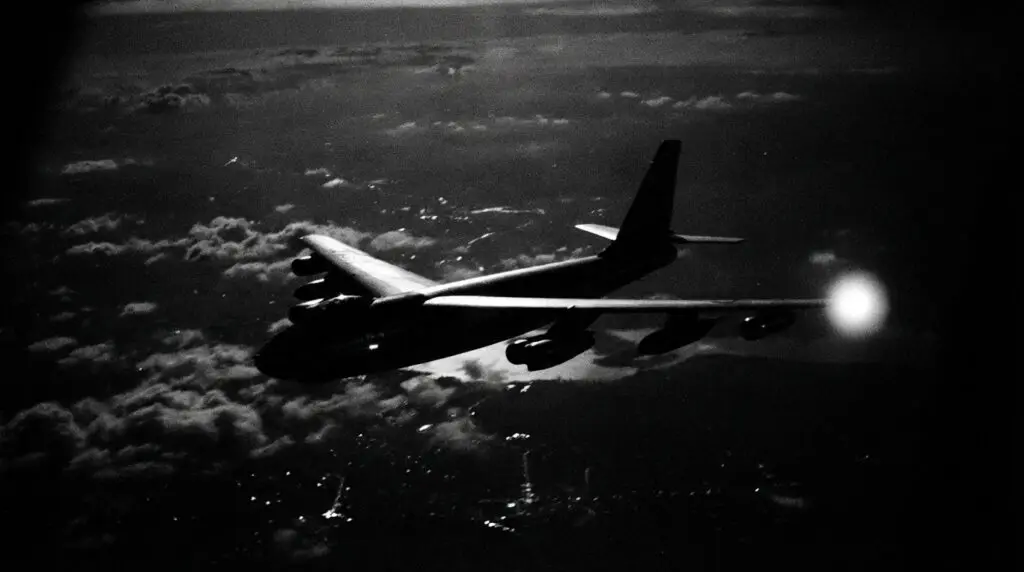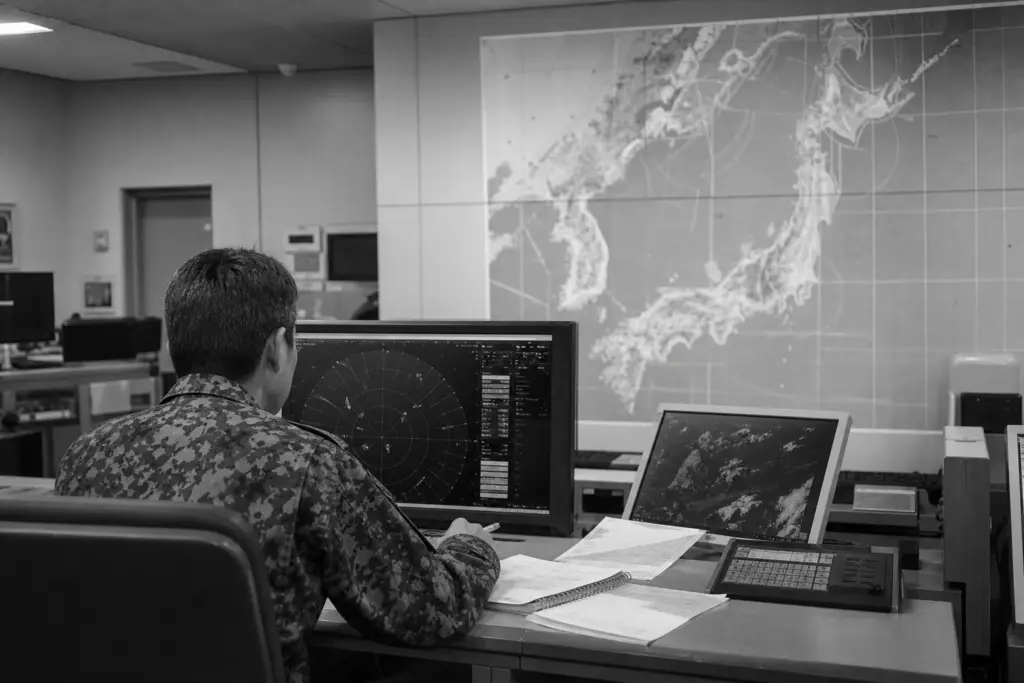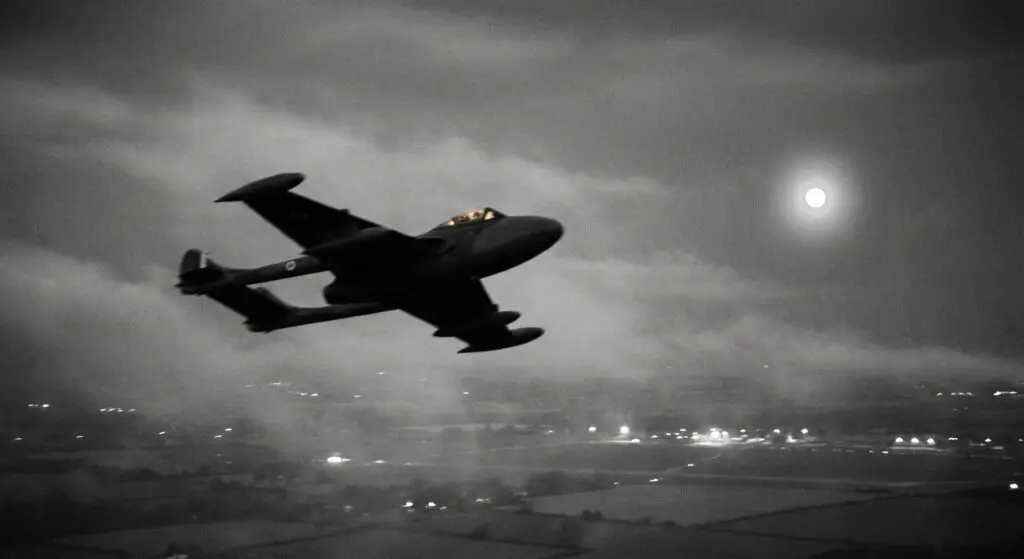
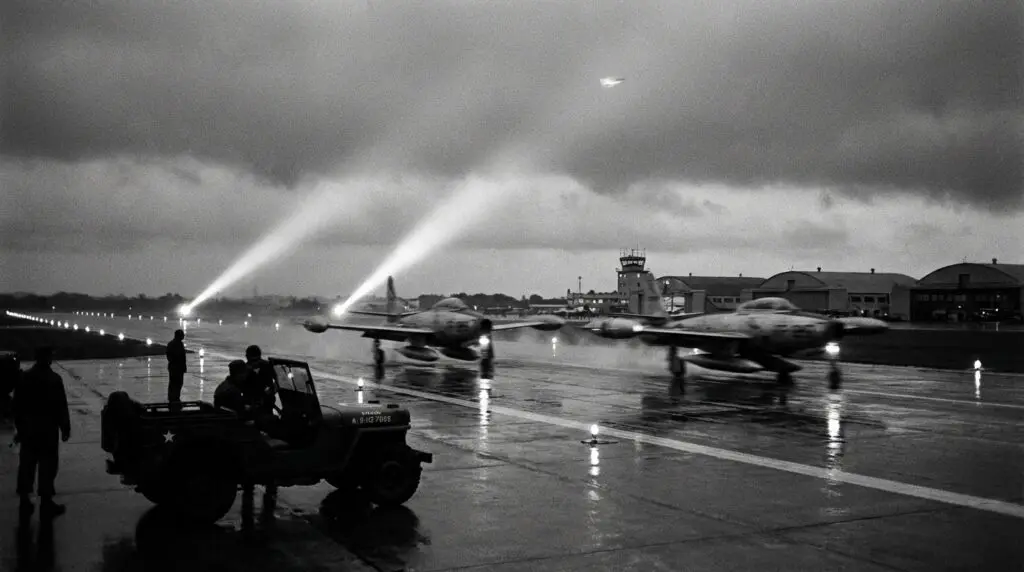
Ellsworth Air Force Base, 1953: a blip on a scope that no one can name, a controller working with imperfect returns, and a phone call that turns uncertainty into action. This was not a quiet backwater. Ellsworth hosted the 28th Bombardment Wing and its B-29 operations in the early 1950s, and an interceptor squadron maintained around-the-clock protective alert duties, meaning crews and jets were staged for rapid launch when an “unknown” crossed the system’s tripwires.
You have probably noticed how modern “UFO news” or “UAP news” headlines skip that tripwire step entirely. They jump from “unidentified” to a conclusion, then treat the lack of tidy answers as proof of something extraordinary. The cleaner stress-test is older, military-documented night alerts where decisions carried real stakes: when the screen shows “unknown,” somebody has to choose a response in minutes, not argue theories for weeks.
The core tension is built into Cold War air defense. Air Defense Command (ADC), established in 1940 to defend the continental United States from aerial attack, treated “unknowns” as potential threats first and mysteries second, operating as the USAF component inside the broader CONAD and NORAD defense structure. That posture rewarded speed and readiness because interceptor response was the point of the system, not post-event storytelling. In 1953 USAF alert culture, a scramble (alert launch) was a timing standard as much as an order: “scramble” meant scramble time, the measured clock between the call and fighters getting airborne to meet an emergency. Radar ambiguity, compressed timelines, and institutional incentives produced records that were serious in intent and incomplete in detail, which is exactly why they are valuable.
You will leave with a practical standard for separating documented milestones, reasonable procedure-based inferences, and later retellings, then applying that discipline to modern disclosure claims without importing sensationalism.
Why Ellsworth was on edge
In 1953, an unidentified radar return over the Northern Plains was treated like an operational intrusion, not an aviation trivia question. Ellsworth sat on the approach lines to the continent’s interior, tied to a bomber mission that depended on minutes, not hours. That combination drove a simple rule: an unknown track could not be ignored, because the cost of waiting was measured in lost reaction time and compromised readiness.
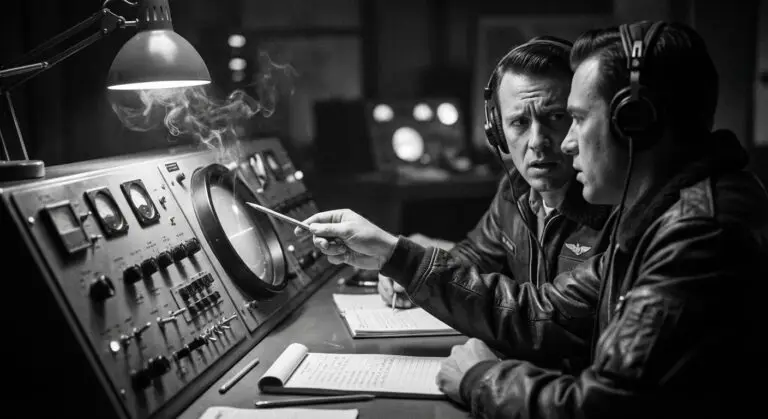
The friction was that early Cold War air picture certainty was never perfect. Radar coverage was uneven, weather clutter happened, and identification often lagged the first detection. Ellsworth’s posture forced decision-makers to act while the information was incomplete, because the decision to do nothing was also a decision with consequences.
Ellsworth Air Force Base’s host unit is the 28th Bomb Wing (28 BW). The 28th Bomb Wing was activated July 28, 1947 and is located at Ellsworth AFB.
In the early 1950s, Ellsworth hosted bomber aircraft including the B-29 Superfortress, a fact that anchors the base’s strategic posture in the bomber era rather than a purely local airfield role.
That posture only sharpened as Ellsworth operated D-36 Peacemaker (B-36) bombers as front-line ready-alert aircraft and later received B-52s in 1955.
The nuance is that bomber bases were not just places where airplanes lived; they were nodes in a time-sensitive deterrent system. If a track was unidentified, the practical question was not “what is it?” but “how fast can we get eyes on it and deconflict it from our strategic mission?”
SAC had F-84 Thunderjets in service from 1948 through 1957, which places the type squarely inside a 1953 rapid-reaction environment. The XP-84 first flew February 28, 1946.
Cold War air defense also relied on fighters sitting ready on protective alert; a fighter-interceptor squadron, the 54th Fighter-Interceptor Squadron, maintained around-the-clock protective alert duties during the Cold War.
The catch was capability and workload: early jet intercepts demanded tight fuel planning, disciplined radio work, and rapid climbs into thin margins. Readiness expectations were high, but the airplane did not solve identification by itself. The system did.
Ground-Controlled Intercept (GCI) was the practical mechanism that turned a radar track into a taskable intercept: a controller used radar updates to issue headings, altitudes, and timing cues so the fighter could be positioned to cross the target’s projected path, instead of searching blind.
Operationally, “getting vectored” meant flying a sequence of controller-directed turns and climbs based on the ground picture, then adjusting as the track updated. The limitation in 1953 was not pilot willingness; it was that the controller’s picture could be incomplete or delayed, so the intercept was built around best-available geometry, not perfect certainty.
Assume speed, triage, and procedure. Ellsworth’s bomber-centric posture pushed unknowns into a real workflow quickly, even when identification was ambiguous. Do not assume every rapid launch reflects panic, nor that terse records imply indifference. Most of what survives on paper from this era reads routine because, to the units executing it, routine readiness was the point.
That institutional posture is the backdrop for what survives of the specific Ellsworth incident: a response remembered as an intercept, but preserved unevenly in the paperwork that later fed UFO archives.
The 1953 incident step by step
The 1953 Ellsworth AFB incident only stays a military case study if every claim is pinned to the only fixed points this case reliably gives us in the material at hand: a 1953 time frame, Ellsworth Air Force Base in South Dakota, and an air-defense response that later entered the UFO record. Where the file does not preserve a time, a name, a radar site, or a verbatim transmission, the timeline has to say “not recorded” instead of filling gaps with procedure.
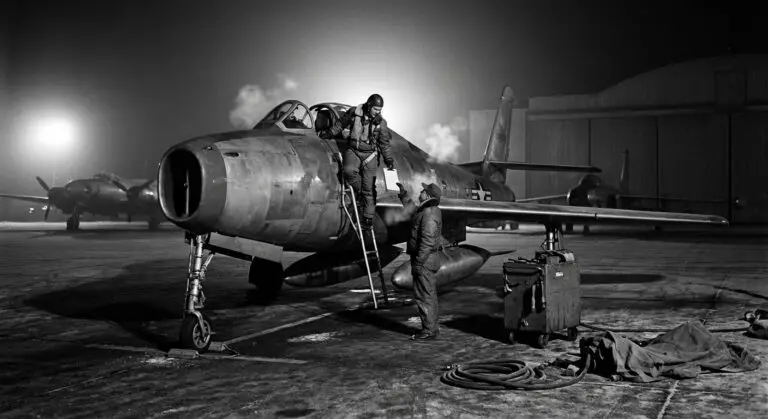
The reason this incident shows up in a UFO archive at all is Project Blue Book case file, the U.S. Air Force program that investigated UFO reports from 1947 to 1969, headquartered at Wright-Patterson Air Force Base, with one stated objective of determining whether UFOs posed a threat to the security of the United States. Blue Book is the archival pathway for an intercept case like Ellsworth because it is where an “unknown” report could be routed and summarized even when raw operational artifacts were not retained.
Command context matters because it defines what “counts” as a timeline fact. In 1953, the air-defense chain ran through Air Defense Command (ADC, the CONUS air-defense command element) inside the broader CONAD and NORAD structure, so the only defensible chronology is “who had the track, who made the launch call, and what the aircraft were told,” not what later storytellers decided the object “must have been.”
- Initial detection or report enters the system (Documented if preserved in an official summary, otherwise not recorded). For the 1953 Ellsworth AFB incident, the material available for this draft does not preserve the originating channel that triggered action: no surviving reference here to a specific radar site, a named scope operator, a tower call, a ground observer, or a time-stamped phone relay. The only case-anchored statement that can be made without inventing details is negative and narrow: the initial “first report” specifics are not recorded in the surviving, commonly circulated summary-level record tied to Ellsworth in 1953.
- Decision to launch fighters is issued (Documented only if the record states it, otherwise Inferred or Later retelling). In this Ellsworth 1953 case, the decisive hinge is an order to get fighters airborne from alert, but the available material here does not include the contemporaneous artifacts that would document it cleanly, such as a base operations log entry, a squadron flight sheet, or an ADC mission/sector log noting “scramble.” As a result, any statement that “fighters launched from Ellsworth AFB” has to be treated as Later retelling unless and until a primary document is produced, even if that launch is widely asserted in secondary UFO literature.
In Air Force usage, “scramble” is the emergency-speed push to get interceptors airborne for an urgent intercept. For Ellsworth 1953, that definition tells you what the missing order would have meant operationally, but it does not substitute for the missing Ellsworth-specific launch record.
- Controller-to-fighter guidance (vectors, altitudes, timing) is provided (Documented only with recorded numbers, otherwise Inferred without numbers). The 1953 Ellsworth AFB incident record available here does not preserve a controller transcript, time-tagged vectors, an altitude assignment, or a named control facility, so no honest reconstruction can quote headings, ranges, speeds, or a climb/descent instruction for this case. What can be said, and only at the right confidence level, is limited to Inferred (standard procedure): if fighters were airborne on an air-defense intercept in 1953, they would have been guided by a controller (GCI, ground-controlled intercept) rather than freelancing a search pattern, but Ellsworth-specific guidance moments are not recorded in the documents presently in hand.
The hard limit on certainty in the 1953 Ellsworth AFB incident is the absence, in the accessible case material for this draft, of the artifacts that would normally anchor a minute-by-minute chronology: raw radar plots or scope photos, radio communications tapes, a base operations log showing alert status changes, and a squadron-level sortie record listing aircraft number, pilot, takeoff time, and recovery time. Without those Ellsworth-specific items, you cannot time-align “radar contact,” “vector issued,” “visual,” and “termination” as more than story beats, and any attempt to do so becomes a narrative reconstruction rather than a record-based timeline.
This thinness should not be misread as lack of seriousness in 1953. ADC alert posture and command-and-control were explicit concerns in that era, and interceptor readiness was treated as a core requirement of the air defense system. The friction in the Ellsworth 1953 incident is archival and evidentiary: the system was designed to react fast, and much of what it generated was not built to survive as a case file decades later.
- Reported visual observations are logged and compared to sensor claims (Documented if quoted or summarized in a primary record, otherwise not recorded or Later retelling). In the Ellsworth 1953 incident material available here, there is no verbatim pilot quote, no named aircrew member, and no preserved detail like “light,” “disc,” “formation,” “maneuver,” or “no joy” that could be tied to a location, altitude, or time window. That forces a disciplined separation: any vivid visual description associated with “Ellsworth 1953” that cannot be traced to an official summary belongs in the timeline only as Later retelling, and it cannot be used to “confirm” what radar allegedly showed because the Ellsworth-specific radar data are likewise missing.
- Intercept termination and recorded outcome are stated in the narrowest surviving language (Documented if the file states the reason and disposition, otherwise not recorded). For this 1953 Ellsworth AFB incident, the available record here does not preserve the operational ending details that matter most: no recorded termination cause (track lost, cancel, fuel, weather), no recovery time, and no contemporaneous disposition wording such as “identified,” “unidentified,” or “insufficient information.” The actionable takeaway is blunt: until a primary Ellsworth-era log, report extract, or Blue Book case summary with those fields is surfaced, claims like “the object disappeared” or “they were called off” have to remain outside the Documented timeline and be labeled Later retelling.
The payoff of keeping the Ellsworth 1953 incident this strict is that it becomes auditable. If a future copy of the Blue Book case material, an ADC log extract, or a unit sortie record supplies a takeoff time, a controller vector, a pilot name, or a written disposition, it drops straight into the correct step above as Documented without rewriting the story around it.
That auditability is also the bridge to the only question that matters next: what, exactly, do the surviving records show versus what later summaries imply.
What the records actually show
Ellsworth 1953 is a clean test of discipline: the key question is not “what’s the theory?” but “what record supports the claim?” If a detail cannot be tied to a dated document, a named witness statement, or an archived message, it stays a story. That matters because the most persuasive-sounding specifics in 1950s intercept cases are routinely the least documented, especially raw sensor data and complete communications transcripts.
Project Blue Book (USAF UFO program) case files are the closest thing to an official dossier. Each case file contains a control sheet that summarizes the report and records the Air Force explanation and conclusions. That control sheet is the first anchor for any Ellsworth 1953 claim because it forces basic accountability: case number, dates, witness type, and the Air Force disposition.
The friction is what is usually missing. Blue Book packets often do not include the underlying radar scopes, original logs, or full command-and-control audio. Common failure modes are reading the control sheet as a complete record, or treating a short narrative summary as if it captures everything pilots or controllers said during the scramble.
Blue Book staff periodically produced status reports, and USAF reporting chains generated summaries that compress incidents into a few lines. These documents prove institutional awareness and how the Air Force categorized the event. They rarely prove the technical basis for the categorization because they are downstream products.
The failure mode is mistaking an official tone for evidentiary depth. If a summary asserts an explanation without attaching the measurements, plots, or transcripts, it is a conclusion without its work shown.
Local and regional newspapers can preserve the “when” and “who” of a case: publication date, named officials, and direct quotations that help confirm that a scramble or official statement occurred. They also distort technical detail through simplification, deadline pressure, and secondhand paraphrase, especially on radar-related claims and unit nomenclature.
The failure mode is laundering a misquote into “official confirmation” because it appeared in print. Press is corroboration for timeline milestones, not a substitute for primary military paperwork.
Later compilations can help you locate leads, but they frequently add details that exceed primary documentation. NICAP published The UFO Evidence in 1964, and such works often blend documents with interviews and unattributed retellings. Treat every added claim as a separate item that must be traced back to a primary record or a clearly identified witness interview.
- Start with the National Archives, which publishes information about National Archives UFO records, including Blue Book materials, and use that guidance to identify the relevant case file holdings and access path.
- Request the full Blue Book case file scan, not just a summary page, and inventory what is actually inside (control sheet, narratives, witness forms, correspondence).
- Cross-check dates and names against contemporary local press to confirm who said what publicly, then treat mismatches as questions, not answers.
- Ask for underlying records only where they would plausibly exist (base operations logs, message traffic, unit histories), recognizing that Cold War alert posture is exactly why some paperwork existed in the first place.
- Interpret “missing” carefully: it can mean never created, destroyed under retention schedules, misfiled, withheld, or separated into a different series that requires a different request.
Use a triage checklist and you will stop arguing from vibes: (1) primary file in hand, (2) every claim tied to a document or identified witness, (3) summaries treated as conclusions, not data, (4) press used for dates and direct quotes only, (5) later compilations treated as indexes until every added detail is sourced.
Once you separate documentation from narration, the remaining question is narrower and more practical: which explanations survive contact with the way radar intercepts actually worked in 1953, and which ones collapse under missing correlation.
Misidentification, radar error, or something else
A serious Cold War response never meant an exotic cause. In 1953, the air-defense posture treated ambiguous tracks as potential threats until proven otherwise, and Ellsworth had an interceptor unit on round-the-clock protective alert (the 54th Fighter-Interceptor Squadron), so “launch first” was normal operating posture, not a verdict about what the target was.
The hard question the surviving paperwork usually cannot answer is correlation: did the radar picture, the pilot’s visual report, and the environmental context describe the same thing at the same time? GCI tactics (radar-directed intercepts) let controllers identify tracks and plot intercepts, but radar can also generate false or ambiguous tracks when clutter, calibration and alignment limits, or propagation conditions distort what the scope displays, and that distortion changes what “speed,” “altitude,” and “maneuvering” appear to mean on paper.
Instead of forcing a single conclusion, treat each explanation as a checklist with failure modes. Any candidate has to explain four operational outputs of a 1953 intercept: implied speed, implied altitude, track behavior (continuous vs jumpy), and whether the pilot’s sighting is time-locked to the radar-directed geometry rather than simply concurrent.
1) Astronomical targets (stars, planets, meteors): This bucket can explain a confident “light” report with zero physical target, especially when a fast jet is turning, climbing, and constantly changing the apparent bearing of a fixed point. It has to account for why the object seemed to move, hover, or “pace” the aircraft, and it usually does that with perception, heading changes, and brightness effects. The fit breaks when the case requires a tight match between changing radar range and the pilot calling “tally” exactly where the controller is steering them, because a fixed astronomical source does not produce a radar track that closes and opens like an aircraft.
2) Weather and balloons: A balloon hypothesis has to explain slow real motion that can look fast if range is wrong, plus a small visual target that can brighten or dim with viewing angle. A radiosonde is the small expendable 60 to 80 g instrument package carried by a weather balloon, which pins down the basic behavior: it drifts with winds aloft, it does not accelerate, and it does not execute purposeful turns. The fit breaks when the narrative demands sustained high speed at low altitude, abrupt reversals, or deliberate “intercepts” of the interceptor, because drift does not generate fighter-like geometry unless the range and bearing picture is already compromised.
3) Aircraft (misidentified, untracked, or mismatched): This bucket has to explain a coherent track that supports an intercept solution and a visual that is consistent with another aircraft’s lighting and relative motion. It also has to explain why the contact was not immediately recognized as routine traffic by the people vectoring the fighter. The fit breaks when the claimed performance exceeds what any plausible aircraft could sustain, or when the “single target” collapses into a controller and pilot talking about different contacts (a real aircraft visually, but a different radar return on the scope).
4) Radar anomalies and interpretation errors: This bucket must explain how the scope could show a track with aircraft-like continuity without a corresponding aircraft at that position, and why the plotted motion implied extreme speed or sudden course changes. Radar-fundamentals literature for ground systems treats clutter, calibration and alignment limits, and propagation constraints as normal sources of false, smeared, intermittent, or displaced returns, especially near the edge of coverage or in heavy ground return environments. “Anomalous propagation” is when atmospheric refraction bends the radar beam so the scope shows misleading returns at unexpected ranges or bearings, which can manufacture “impossible” closure rates from ordinary objects or ground returns once the geometry is misread.
5) Residual unknown: “Unknown” is a residual category, not a positive identification. To earn that label in a way that means anything, the case has to keep correlation intact under stress: a radar track that behaves like a real target, an intercept that is demonstrably flown onto that specific track, and a visual that matches the intercept geometry in time and bearing. The fit usually breaks for mundane reasons: missing primary artifacts that would let you test whether the radar and the visual were ever the same thing.
- Recover raw radar scope film (or equivalent primary plotting), plus radar logs showing range scales, filters, antenna settings, and any maintenance or calibration notes.
- Align controller-pilot communications (comm tapes, transcripts, or detailed comm logs) to the radar timeline to test whether callouts match the scope at the minute-by-minute level.
- Pull weather observations and profiles for the intercept window, including anything that indicates refractive layering consistent with anomalous propagation.
- Check weather balloon and radiosonde launch logs from nearby stations, then compare winds aloft to the reported bearings and timing.
- Audit site-specific radar documentation (coverage, known clutter sectors, calibration procedures, and operator guidance) so “speed” and “altitude” are not artifacts of geometry plus interpretation.
Grade explanations by demanding a two-layer match: it must fit what was observed and the limits of how it was observed. Strong fits keep radar behavior, pilot visuals, and context time-locked without handwaving, and they survive contact with missing-data questions by pointing to specific artifacts that would confirm or falsify them. Weak fits only solve one layer, like a compelling pilot sighting with no demonstrable radar correlation, or an exciting radar plot with no raw scope record, no comm tape alignment, and no weather or launch logs to test propagation and balloon drift.
Those same missing-artifact problems are also why Ellsworth 1953 continues to resurface: the case lives where high-consequence procedure meets incomplete surviving documentation, and that mix is easy to repurpose in modern arguments.
How this case echoes today
The Ellsworth scramble persists in today’s UFO disclosure and UAP disclosure argument for one reason: “disclosure” is fundamentally a fight over records, process, and accountability, not a single dramatic night in the sky. A scramble is designed for speed in an emergency intercept, and Cold War units maintained around-the-clock alert precisely because decisions had to be made on partial, fast-moving information. That same institutional reality explains why older intercept cases keep resurfacing: they sit at the intersection of high-stakes threat response and thin surviving documentation, which makes them politically louder than their evidentiary footprint.
Modern UAP (unidentified anomalous phenomena) framing is intentionally neutral: it covers events that remain unidentified after review, often because they are sensor-observed, and it implies no origin by default. Governments prefer “UAP” because it is scoped to what can be assessed across radar, EO/IR, and other data streams, without smuggling in “alien” as a conclusion.
AARO’s stated baseline position is blunt: it has found no verifiable evidence that the U.S. government or private industry ever had access to extraterrestrial technology. That statement sets public expectations, because it rejects a specific claim about possession and exploitation, while leaving room for cases that are unresolved due to limited data, classification barriers, or missing records.
AARO also states it is reviewing the U.S. historical record relating to UAP and that a second volume of its congressionally directed historical review will be released. The implication is procedural, not cinematic: the work product is a record review, not a single “case solved” announcement.
Senate UAP disclosure amendments (including Senate Amendment 2610 and Senate Amendment 797 in the 118th Congress) stated a purpose to create an “unidentified anomalous phenomena Records Collection” at the National Archives. That matters because it changes access and preservation rules for historical material, rather than “proving” any one intercept.
Treat every headline about an old incident as a documentation story first. Ask what actually changed: a newly released record, a reclassification decision, a new repository requirement, or a standardized review finding. If the answer is “nothing but a new label,” the underlying evidence did not get stronger, it just got louder.
What we know and what we don’t
Ellsworth 1953 still matters because it shows how the military behaves when it cannot identify a track quickly: the Cold War air-defense system maintained protective alert readiness and treated interceptor responsiveness as a core requirement. That posture lowers the practical threshold for a scramble (alert launch) even when the public record later looks thin.
- Known: Cold War air defense incentives favored fast interception over waiting for perfect certainty.
- Known: The incident-timeline can support a sequence of reporting, escalation, and a real operational response, without supporting confident claims about what the object was.
- Known: The sources-and-evidence section shows the key constraint: available records demonstrate activity, not technical proof of a specific cause.
- Unknown: The public-facing file set does not provide the radar logs, communications audio, detailed pilot debriefs, or precise locations and altitudes needed to collapse the case to one explanation.
- Plausible: Multiple tiers remain live, from misidentification and radar error through genuinely unresolved unknowns, because the missing data is exactly what would adjudicate the dispute.
- Known: Modern UAP disclosure debates keep circling back to archival access because allegations rarely outlive contact with primary documentation.
Start with primary repositories. The National Archives maintains an Electronic Reading Room for FOIA-related materials and guidance. National Archives records are distributed across facilities nationwide and presidential libraries, so “not online” is not the same as “does not exist.” Blue Book archives and related records are commonly accessed via National Archives resources and declassified collections. Expect partial runs, redactions, catalog dead ends, and slow returns, and treat any claim that lacks a document image and collection context as provisional.
Hold the line on standards previewed at the outset: when an “unknown” crosses the tripwires, the system moves fast, but the paper trail can be thin. “Unknown” remains a category, not a conclusion, and every new UAP headline earns credibility only when it can be traced back to a cataloged record.
Frequently Asked Questions
What was the Ellsworth AFB UFO incident in 1953?
It refers to a 1953 air-defense “unknown” associated with Ellsworth Air Force Base in South Dakota that later entered the UFO record via a Project Blue Book case file. The article’s documented anchors are the time frame (1953), location (Ellsworth AFB), and that an air-defense response is asserted in later summaries, while many operational details are not preserved in the accessible record.
What does “scramble” mean in a 1950s Air Force intercept?
A “scramble” is an emergency-speed alert launch to get interceptors airborne quickly for an urgent intercept. In 1953 alert culture it was also a timing standard, measuring the clock from the call to fighters becoming airborne.
What aircraft and units were involved at Ellsworth AFB in the early 1950s?
Ellsworth hosted the 28th Bomb Wing and operated bomber aircraft including the B-29 Superfortress, later operating B-36 bombers and receiving B-52s in 1955. The base also had round-the-clock protective alert duties associated with the 54th Fighter-Interceptor Squadron, and the article places F-84 Thunderjets in the 1948-1957 SAC service period relevant to 1953.
How did Ground-Controlled Intercept (GCI) work for a 1953 radar intercept?
GCI used radar updates to issue headings, altitudes, and timing cues so a fighter could be positioned to cross the target’s projected path instead of searching blind. The article notes that 1953 limitations included incomplete or delayed radar pictures, so intercept geometry was built on best-available data rather than perfect certainty.
What specific details about the Ellsworth 1953 scramble are missing from the surviving record?
The article states the accessible material does not preserve the originating report channel (specific radar site, operator, time-stamped relay) and lacks primary artifacts like raw radar plots/scope photos, comm tapes/transcripts, base operations logs, and squadron sortie records with takeoff/recovery times. It also reports no verbatim pilot quotes, no named aircrew, and no recorded termination/disposition details such as “identified” vs “unidentified.”
What explanations does the article say can account for a 1953 “unknown” radar/visual report?
It lists five buckets: astronomical targets, weather/balloons (including radiosondes), aircraft misidentification, radar anomalies/interpretation errors (including anomalous propagation), and a residual “unknown.” The article emphasizes that any explanation must account for implied speed, implied altitude, track behavior (continuous vs jumpy), and whether pilot visuals are time-locked to the radar intercept geometry.
What records should you look for to evaluate an old military UFO/UAP intercept claim like Ellsworth 1953?
The article recommends starting with the full Project Blue Book case file (not just a summary) and then cross-checking dates/names with contemporary local press for direct quotes. It also points to seeking underlying artifacts where plausible-base operations logs, message traffic, unit histories, radar logs/scope film, comm records, weather profiles, and balloon/radiosonde launch logs-to test correlation and radar propagation claims.