You are trying to separate signal from hype in a nonstop stream of UFO and UAP news, and you are not wrong to suspect that a lot of “disclosure” talk is performance. The counterintuitive part is this: one of the more substantial, document-led releases happened quietly, in Europe, years before the current mainstream wave.
That matters because today’s discourse rewards instant conclusions and viral fragments. Government records do the opposite. They force you to sit with uncertainty, compare narratives against what was actually written down, and accept that transparency is not the same thing as certainty. A real release does not hand you a belief system. It hands you paperwork, context, and a clear view of what officials could not explain at the time.
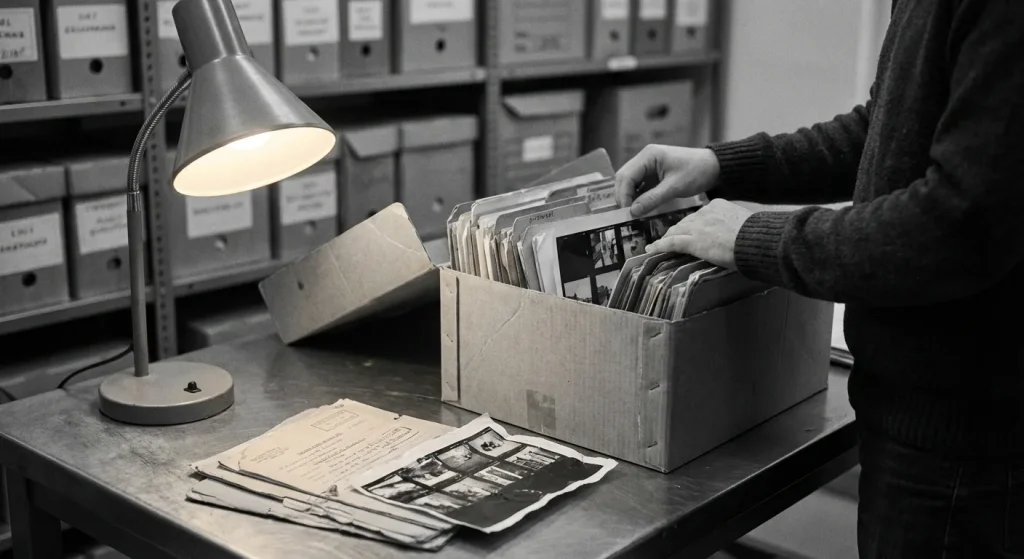
Contemporary reporting by news outlets covering the event stated that on January 30, 2009 the Danish Air Force released what was reported as 329 pages of previously classified UFO sighting archives, containing more than 200 unsolved cases (UPI; IceNews). Those reports framed the tranche as material that had been treated as restricted for decades before being opened to public inspection.
The same reporting frame describes the files as having been maintained as top-secret UFO records for decades before being opened to the public, which is the point: governments can document anomalous reports seriously without pretending they have a final answer.
Use Denmark’s 2009 release as a standard. Judge “disclosure” by what documents exist, what they actually say, what they omit, and what remains unresolved, not by the volume of today’s UAP disclosure cycle built around them.
What Denmark Actually Declassified
The value of Denmark’s 2009 event is the record set itself, not the folklore around it: contemporary news coverage reported that the Danish Air Force released 329 pages of previously classified UFO archives that were said to contain more than 200 unsolved cases (UPI; IceNews).
Where to find the files: the holding institution is the Danish National Archives (Rigsarkivet). Relevant material is found by searching Rigsarkivet’s collections via its “Search the Collections” service or Arkivalieronline for records related to the Royal Danish Air Force (Flyvevabnet). Useful search terms include the Danish keywords “UFO”, “flyvevåbnet”, and “uidentificerede flyvende objekter”; see Rigsarkivet guidance on searching collections and online records (Search the Collections – get started; Arkivalieronline and online records). If you cannot locate a specific series title in the public catalog, use those institutional search tools and the Air Force-related subject headings as starting points.
Those files were described as having been maintained as top-secret for roughly 30 years before being opened. What you should take from that claim is practical: there was an internal dossier system that later became externally accessible, not a new investigative conclusion announced in 2009.
One friction point matters immediately if you plan to analyze the tranche: the materials available for this article do not include a primary archive catalog entry or a complete published inventory that pins down the tranche’s exact date range or confirms whether what was released is the entire series or a subset. Treat those boundaries as unknown until you verify them in Rigsarkivet’s catalog or related official documentation.
In a government records context, declassification is an administrative change in access status: a record moves from restricted to available under the applicable rules, but the underlying content stays the same.
That distinction keeps you honest when reading a release. “Open to the public” is about who can consult the files and under what conditions, not an endorsement of every allegation in the pages, and not proof that the releasing authority judged the events extraordinary.
A case file matters because it is a bundle you can evaluate as evidence, not a single anecdote repeated out of context. In practice, a UFO report file usually preserves three things you can test against each other: the initial report narrative (what was observed, where, and when), the administrative handling trail (how the report entered the system and where it was routed), and any disposition notes that show what the receiving office did with it.
The catch is that bundles are rarely uniform. Some files will be “thin” because nothing follow-up-worthy was recorded; others will be “thick” because clarifications were added, attachments were collected, or internal assessments were written. Your job as a reader is to separate what the witness asserted from what the file itself documents as actions taken and facts established.
An unsolved case in archival casework terms means unresolved on the record: the documentation available in the file did not support a definitive identification or closure at the time it was processed, or later. It does not mean the archive concluded “non-human,” “extraterrestrial,” or any other extraordinary explanation; it means the paper trail ends without a resolution.
That framing is the difference between analysis and mythology. When you see “unsolved,” read it as a statement about the limits of recorded evidence and the completeness of the investigative trail, not as a statement about what the phenomenon “was.”
- Verify provenance by locating the catalog entry or official publication context where the tranche is described, then confirm the holding institution, the series title, and any file identifiers used to track folders or documents.
- Extract core metadata case by case: date and time, location, observing context (for example, civilian report versus operational/military context if stated), and any reference numbers or routing stamps that show where the report went.
- Track attachments and handling by noting what is actually present in each file: follow-up notes, internal routing, and any closure language that indicates whether the file was actively investigated or simply recorded and stored.
- Separate claims from documentation by quoting only what the record contains, and by labeling whether a statement comes from the observer, an internal note, or a later summary.
- Log gaps explicitly by recording missing dates, missing disposition, missing identifiers, or unclear coverage boundaries; those absences often explain why a case remained an unsolved case on the record.
Approached this way, the 2009 pages become usable historical material: a finite tranche with traceable metadata, interpretable dispositions, and clearly marked unknowns you can only resolve by returning to primary catalog descriptions and the full holdings.
Those evaluation steps also point to the next question the records raise: not just what was released, but what kind of reporting system produced it in the first place.
How Denmark Handled UFO Reports
The paper trail Denmark surfaced points to the Royal Danish Air Force as a primary institutional recipient and custodian: it is described as having maintained UFO files as restricted material for decades before the records were opened in 2009.
Inside the defense structure, routing could also move upward: the Danish Air Force Command prepared a report on aerial phenomena and handed it to the Defense Staff, which is exactly the sort of internal handoff you expect when a sighting touches airspace awareness rather than public curiosity.
You will sometimes see claims that civilians could report sightings directly to the Danish military from the 1980s until around 2005. Treat that as unverified secondary chatter from community accounts, not a documented public reporting program.
Most “UFO” reporting workflows inside a defense organization are administrative first and investigative second. A unit has to receive the information, decide whether it intersects with aviation safety or national defense, and then document what was done with it. That bias toward paperwork is not a flaw; it is how bureaucracies keep decisions auditable.
At a high level, the realistic workflow looks like this: an intake point receives a narrative (time, place, direction, altitude estimate if any), staff log it, and the report gets triaged. If there is an operational hook, officials can check obvious explanations that are already in government reach (scheduled flights, known military activity, radar logs if available, weather phenomena) and record whether anything matched. If there is no operational hook, the case still gets filed, because the organization has to show it handled incoming information consistently.
The key constraint is capacity. A defense staff can preserve a record of a sighting without running a full field investigation, and the file will still look “official” because it has dates, routing, and sign-offs. That is why these records often read like incident management rather than detective work.
Denmark’s declassification (records opened to the public) is governed by the Danish National Archives access rules: Rigsarkivet explains that records transferred to the Archives are generally made available 20 years after creation, with longer restricted-access periods applying for categories such as defense, intelligence methods, or personal data; specific exceptions and application procedures are described by the Archives (Rigsarkivet – restricted access periods for records; Rigsarkivet – apply for permission to see documents and data).
Put those two mechanics together and a 2009 release becomes legible as routine administration: records get kept, routed, periodically reviewed, and eventually become eligible for opening once their sensitivity decays or restrictions expire. A multi-decade file series can hit that eligibility window in batches, especially if different documents were created in different years.
If you want to understand what the Danish state actually did, read the release like an administrator. Routing lines tell you who owned the problem. Dates and file references tell you whether it was handled as an operational concern or merely recorded and stored. Sign-offs and recipients show whether the report stayed local or climbed toward the Defense Staff.
That is the right inference model for any government UFO file release: not “What did they secretly know,” but “What did their paperwork require them to do,” and where did that requirement stop.
Once you read the files through that lens, the large number of unresolved entries becomes less mysterious and more diagnosable: it usually reflects what the record contains-and what it does not.
Patterns Across 200 Plus Unsolved Cases
Across a release reported as 329 pages with more than 200 unsolved cases, the “unresolved” label clusters around missing or low-grade evidence, not around any single spectacular behavior. Reports persist in the file because key fields are absent (exact time, direction of view, duration, weather), corroboration is thin (single observer, no independent witness), or the chain of custody for supporting material is incomplete (no retained photo negative, no radar printout, no log extract).
That framing matters because technical and government casework often separates “unknown” from “unexplainable.” “Unknown” is a filing outcome driven by identification failure given the record at hand; “unexplainable” implies a stronger claim that a good record exists but no known explanation fits. Treating every unresolved entry as “unexplainable” inflates what the archive can legitimately support.
Casework tends to move through a small set of explanatory buckets because most sightings are observations of ordinary stimuli under imperfect conditions. The recurring filters are familiar: astronomical objects (bright planets, stars near the horizon, meteors), aircraft (including navigation lights, landing lights, and perspective effects), balloons, atmospheric and optical effects (cloud illumination, mirages, reflections), hoaxes and misreporting, and the catch-all of insufficient data.
The friction is that these buckets are easier to apply when a report includes time, azimuth or bearing, elevation angle, and a stable location for the witness. When those fields are present, many cases can exit the pipeline quickly. When they are missing, the file often stops at “unknown” because investigators cannot responsibly collapse uncertainty into a single identification.
The archive’s unresolved residue is best understood as a pattern of documentation failures. The most common failure mode is missing metadata: “evening” instead of a clock time; “toward the sea” instead of a bearing; “fast” instead of an estimated angular speed or start-to-stop duration. That level of description blocks comparison to flight movements, astronomical charts, and meteorological data.
Single-witness events are another friction point, especially when the witness is mobile. A driver, a fisher on a moving boat, or a pilot in a turning aircraft can report true motion that is partly a product of changing viewpoint. Without a second witness, a radio call, or a contemporaneous note, the file cannot resolve whether the object maneuvered or the observer’s geometry changed.
A third limiter is follow-up depth. Many investigative records in government settings prioritize triage over reconstruction: log the report, attempt a straightforward match to aircraft or known phenomena, then close when the trail goes cold. “Unresolved” can mean “no additional work product exists,” not “extraordinary performance was confirmed.”
Finally, the absence of corroborating sensors frequently prevents closure. Without radar tracks, air-traffic logs, meteorological observations, photographs with provenance, or physical traces with chain-of-custody, an investigator is often left with narrative testimony only. Narrative can be sincere and still be non-diagnostic.
This article does not include individual Danish case pages, archive IDs, dates, or text excerpts beyond the scale statement about the 2009 release. Without those documents, it cannot responsibly present Danish-specific vignettes tied to particular files, witnesses, locations, or reported behaviors.
If you provide relevant case pages or file IDs with text extracts, vignettes can be written in a strictly document-bound format using only fields explicitly present in each record: witness role as written, location descriptor as written, time and duration if recorded, described appearance (light, shape, color), described motion (hover, climb, turn, acceleration), and the closing disposition (identified, insufficient data, unknown, still unresolved).
The archive’s open questions are often framed as “what are these objects,” but the more immediate constraint is “what was actually observed.” The provided research set does not include a quantitative breakdown of witness types, settings, or behavior categories. Any percentages, counts by category (civilian vs pilot vs military), or claims about coastal versus inland clustering would need to come from direct coding of the Danish case files or a credible secondary analysis that explicitly ties its coding to the archive.
That limitation is structural. Unresolved case files are not a controlled dataset: reports are self-selected; terminology varies by witness; and supporting materials are uneven. Treating the collection like a statistical sample produces confident-looking conclusions that the underlying records do not warrant.
Read the unresolved residue like an evidence audit. The right question is not “is it extraordinary,” but “is it specified.” Strong interpretations require strong fields.
- Demand exact timestamps, duration, and the witness location at start and end.
- Capture bearings and elevation angles, even approximate, plus the witness heading if moving.
- Check weather and visibility for that place and time, not just general conditions.
- Corroborate with independent sources: other witnesses, ATC logs, flight tracks, radar, or contemporaneous written notes.
- Separate “unknown” (not identified from the record) from “unexplainable” (a well-instrumented case with no fit), and treat extraordinary interpretations as hypotheses until the record earns them.
That evidence-first discipline is also the cleanest way to compare a quiet archive opening like Denmark’s with the modern UAP environment built around live updates, hearings, and rolling investigations.
Denmark Versus Today’s UAP Era
Denmark’s release model was records access: decades-old, once-classified Air Force files were declassified and opened to the public after being treated as restricted for years. Today’s UAP environment is defined by active, politicized information channels where audiences watch investigations unfold in real time, argue about what should be released, and treat every update as a scoreboard. That shift changes the mechanism and the expectation: an archive dump proves how a bureaucracy documented reports, while a live program is judged on whether it produces answers fast, in public, and with persuasive technical detail.
“UAP (unidentified anomalous phenomena)” is an institutional scope decision, not a marketing tweak. “UFO” centers a single frame: an object in the air. UAP is designed to manage ambiguity across domains and sensor types, including events that are not cleanly “objects” and not strictly “flying.” The friction is that the broader label invites broader speculation in public discourse, while agencies use it to avoid premature conclusions and to route reports through standardized triage. The practical takeaway is simple: the term UAP signals a workflow that starts with anomaly management, not with an assumption about origin.
In the current U.S.-centered framework, that workflow is also attached to a named coordinating office rather than a dispersed filing practice.
AARO (All-domain Anomaly Resolution Office) exists to centralize coordination: it is a dedicated office with a remit that includes investigating unidentified anomalous phenomena. AARO published “Historical Record Report on Unidentified Anomalous Phenomena, Volume 1” on March 8, 2024 (AARO/DoD PDF). The report’s stated historical window runs through October 2023 for the records it examined (see report).
On caseload signals: media reporting around May 2022 noted that a government database then contained roughly 400 incidents (NPR, May 17, 2022). AARO and DoD reporting later indicated substantially larger totals in subsequent reporting cycles, with official offices describing over 1,600 reported cases to be addressed in the broader AARO reporting period (see AARO materials and public DoD reporting on UAP case counts, aaro.mil).
Modern “disclosure” is heavily shaped by hearings, media cycles, and prominent allegation-driven storylines. David Grusch, a former Defense Department official, testified at the July 26, 2023 House Oversight Committee hearing and in his prepared remarks and testimony used terms such as “non-human” when describing what he said were government-held materials and information; his written opening statement and the committee transcript record those assertions (Grusch opening statement; committee transcript).
- Demand primary documents: reports, transcripts, and the stated reporting window before treating a claim as “confirmed.”
- Assume classification limits: absence of public sensor data is not proof of absence, and it is not proof of a cover-up.
- Separate testimony from records: sworn statements are inputs to an investigation, while released case files and official reports are outputs you can actually verify.
Disclosure Politics to Watch in 2025
If the present-day UAP era is built around ongoing programs and contested narratives, the practical leverage point is still the same: the oversight mechanisms that force documentation into the open.
The next phase of “disclosure” lives or dies on oversight tools: mandates that force agencies to produce records, protections that let insiders report misuse of funds, and publication requirements that turn briefings into documents you can verify. The friction is that Congress can propose aggressive language, but only enacted text binds agencies, and implementation can lag even after a bill becomes law. Classification and compartmentalization still constrain what can be released publicly, so the most reliable signal in 2025-2026 is not a viral clip, it is a paper trail you can cite.
The NDAA (National Defense Authorization Act) matters because it is the annual must-pass defense policy vehicle that routinely attaches reporting requirements, timelines, and compliance hooks to the Pentagon and the wider national security bureaucracy. For transparency watchers, the key anchor is simple and verifiable: the FY2024 National Defense Authorization Act was enacted as Public Law 118-31. Public Law numbers are how you separate binding oversight from aspirational messaging.
The catch is that “UAP language” often appears first as proposals or amendments, then gets narrowed or removed during conference negotiations. If you see claims about final language carryover into enacted NDAAs, verify them at the time of writing using section citations in the enacted public law, not summaries or screenshots.
In practice, “UAP Disclosure Act” is a label used for proposals that try to accelerate public disclosure through structured review, record collection, and prioritized release decisions. One widely reported Senate amendment framed its purpose bluntly: “To provide for the expeditious disclosure of unidentified anomalous phenomena records.” That sentence tells you what to watch for: mechanisms that move records from scattered custody into a review process that ends in publication, not just closed-door briefings.
The hard part is execution. Without specific, enforceable deadlines and definitions for what counts as a covered record, agencies can comply narrowly while technically checking the box.
Public reports only surface what agencies are required to compile or what individuals can safely disclose through lawful channels. H.R. 5060 (119th Congress) is listed on Congress.gov with the official introductory title beginning “To provide whistleblower protections to Federal personnel for disclosing the use of Federal taxpayer funds to evaluate or research unidentified anomalous phenomena” and is currently shown as introduced; see the bill entry for the full text and official summary (Congress.gov — H.R. 5060).
Watch for whether protections are tied to clear reporting pathways and whether agencies are obligated to respond in writing.
- Anchor to enacted text: Track public law numbers (for example, Public Law 118-31) and confirm any claimed UAP-related requirements by section citation in the enacted statute.
- Hunt for implementation clocks: Identify deadlines measured in days after enactment, named responsible offices, and required deliverables (memos, reports, briefings, record inventories).
- Demand publication, not paraphrase: Separate “report to Congress” from “public report.” A mandate that never requires public release will not create verifiable transparency.
- Check record-collection standards: Look for definitions of “record,” required metadata, retention rules, and whether records must be centralized or simply “made available” on request.
- Follow whistleblower channels: Track whether proposals like H.R. 5060 advance, whether they specify protected disclosures about taxpayer-funded UAP work, and whether outcomes include documented findings.
- Prioritize primary sources: Read the enrolled bill, conference report, committee prints, and agency-published documents. Social media summaries are not oversight.
What Denmark’s Archive Still Teaches
Denmark’s January 30, 2009 release is the benchmark because contemporary coverage reported it as 329 pages of primary records opened to the public, with more than 200 cases left explicitly unsolved (UPI; IceNews). That is what real disclosure looks like when it is document-led, not slogan-led. If the public can inspect the underlying reports, dates, and official handling, the conversation moves from belief and denial to an audit of what the state actually recorded.
The archive also forces disciplined interpretation. Technical and government writing routinely separates “unknown” (not identified with available data) from “unexplainable” (not explainable within a given framework), and that distinction matters because most UFO files are ultimately about evidentiary limits, not proof of extraordinary causes. Even robust releases leave residue: incomplete witness detail, missing instrumentation, classification boundaries, and access regimes that keep some records closed beyond standard timelines. An “unsolved” label often means “not enough to close,” not “solved as exotic.”
Use that standard on the next wave of UFO or UAP headlines: judge oversight, reporting mandates, and whistleblower channels by what records they produce and what the public can actually access. Demand primary documents, clear provenance (who created the record and when), an index of what exists versus what is withheld, and replicable metadata you can cross-check in an official repository. If the story cannot point you to inspectable files, it is politics, not disclosure.
Frequently Asked Questions
-
What did Denmark declassify in its 2009 UFO archive release?
On January 30, 2009, the Danish Air Force released a tranche described as 329 pages of previously classified UFO sighting archives. The release is described as covering more than 200 unsolved cases.
-
How many pages and unsolved cases were in Denmark’s 2009 UFO file release?
The release is described as 329 pages. It is also described as containing more than 200 unsolved cases.
-
What does “declassification” mean in the Denmark UFO archives context?
Declassification is an administrative change in access status, meaning records move from restricted to public availability while the underlying content stays the same. It is not proof that officials endorsed witness claims or reached new conclusions in 2009.
-
What does “unsolved case” mean in Denmark’s declassified UFO files?
An “unsolved case” means the paper trail ends without a definitive identification or closure based on what was recorded in the file. It does not mean the archive concluded the event was “non-human” or extraterrestrial.
-
Why did so many Danish UFO cases remain unresolved in the archive?
The article attributes the unresolved label mainly to missing or low-grade evidence such as incomplete time/location details, thin corroboration, or absent supporting materials like radar logs or retained photo originals. Many files also reflect triage and record-keeping rather than deep field investigation.
-
How should you analyze Denmark’s declassified UFO case files to avoid hype?
Verify provenance by finding the catalog/publication context, then extract core metadata like date/time, location, and routing stamps case by case. Separate witness claims from what officials documented, and explicitly log gaps such as missing identifiers, dates, or closure notes.
-
How is Denmark’s 2009 UFO archive release different from today’s UAP disclosure era?
Denmark’s model is a document-led records-access event: decades-old Air Force files were opened to the public, described as having been kept top-secret for roughly 30 years. Today’s UAP era is driven by live programs, hearings, and ongoing investigations where audiences expect fast public answers rather than archival paperwork.
