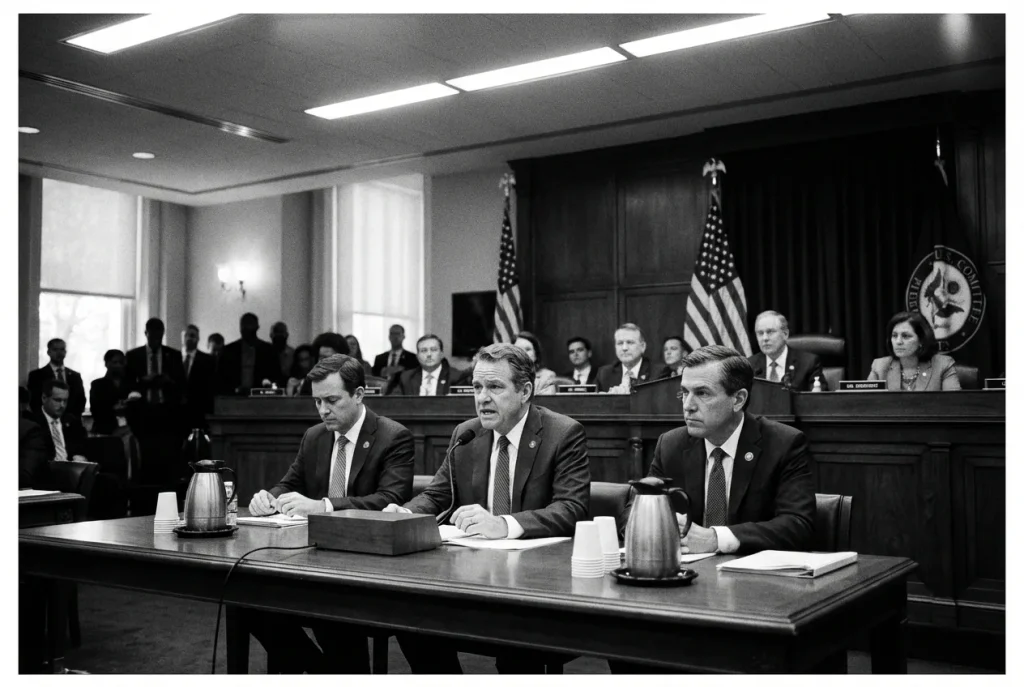
The July 2023 UAP hearing didn’t “prove aliens.” What it did do was change the tone of UFO disclosure overnight, because suddenly the biggest claims weren’t bouncing around podcasts and anonymous leaks, they were delivered in a sworn, on-the-record setting with named witnesses and bipartisan attention.
If you watched the viral clips as they hit your feed, you probably ran into the same whiplash everyone did: one side yelling “government UFO cover-up,” the other side dismissing it all as vibes and hearsay. You’re left trying to answer a simpler question: what actually happened in that room, and what does it mean for real UAP disclosure versus internet-fueled UAP news?
Here’s the friction you have to hold in your head. Public testimony can be compelling, especially under oath, but public proof is constrained by classification. The Department of Defense and the intelligence community leaned hard into “Unidentified Anomalous Phenomena (UAP)” instead of “UFO” around 2021 for a reason: it signals a national-security and scientific framing, not pop-culture mystery. That same framing also means a lot of the most specific material, if it exists, won’t be rolled out in an open hearing for the cameras.
So what can a public hearing realistically do? It can formalize allegations, put pressure on agencies to answer specific questions, and create an oversight trail that’s harder to ignore than another headline cycle of UFO news. What it can’t do is publicly display classified sensor data, program details, or chain-of-custody evidence in real time.
On July 26, 2023, the House Oversight hearing titled “Unidentified Anomalous Phenomena: Implications on National Security, Public Safety, and Government Transparency” put those dynamics on full display. The committee posted the official materials, including video and transcript, on its site at U.S. House.
You’ll walk away able to sort each big claim into an evidentiary tier and spot the oversight signals that actually move the story forward.
The Witnesses and Their Credentials
After the tone shift, the “who” is the whole ballgame, because these three witnesses land in three different credibility lanes. Two are operational, firsthand military observers with direct exposure to flight operations and risk. The third is an intelligence and whistleblower lane that’s largely secondhand by design, focused on what was reported up the chain and what oversight bodies should be able to verify. That mix is a big reason Congress didn’t treat the hearing like fringe spectacle, but it also explains why “credible” doesn’t automatically equal “proven.”
David Fravor testified as a U.S. Navy aviator who was commander of Strike Fighter Squadron 41 (VFA-41, the “Black Aces”) assigned to USS Nimitz. Public attention anchors him to the Nov 14, 2004 “Nimitz/Tic-Tac” encounter. In hearing terms, that matters because it’s not an abstract story about UAP (government term); it’s a senior tactical aviator describing something encountered during real-world operations, where identification, deconfliction, and command reporting aren’t optional.
The nuance is that an operational witness is strongest on what was observed and how it impacted safety and decision-making in the moment, not on sweeping conclusions about origin or programmatic intent. The actionable takeaway is simple: Fravor’s lane is direct observation under operational constraints, which is exactly the kind of testimony oversight committees take seriously.
Ryan Graves testified as a former U.S. Navy F-18 pilot who has continued to engage the issue publicly, including as Executive Director of Americans for Safe Aerospace.
Credential-wise, the public anchor is straightforward: a former U.S. Navy F-18/F/A-18F pilot who served for over a decade, with deployments including Operation Enduring Freedom. His relevance to the hearing’s concerns is the framing: recurring training-range incidents treated as a safety and reporting problem, not a one-off spectacle. That turns the question from “what was it?” to “what do pilots do when this keeps happening, and are they being heard?”
The tradeoff is that pattern testimony depends heavily on reporting quality and institutional follow-through. Graves’s lane is credibility through operational repetition and risk management.
David Grusch was described publicly as a former intelligence official and whistleblower who made public claims about UAP-related programs. That lane is inherently about oversight: who knew what, who had access, what was funded, and whether Congress and AARO (the UAP office) got accurate answers.
The boundary matters. His public posture has been that his account is built on others’ reports and alleged documentation rather than direct, cockpit-level observation. That doesn’t make his testimony worthless, but it does change what it can establish: it elevates allegations that are supposed to be verifiable through records, audits, and interviewed witnesses, rather than through a single operational encounter.
When you weigh later headlines, ask whether a claim is firsthand operational observation or secondhand reporting.
Those credentials set the lanes. The next step is seeing how each lane shaped what could be said under oath in a public, classification-limited setting.
What They Said Under Oath
The cleanest way to understand the hearing is to separate what was said into two evidentiary tiers. Tier one was firsthand testimony: operational encounters and day-to-day aviation realities described by pilots who were there. Tier two was secondhand testimony: allegations about hidden programs and “non-human intelligence” relayed by a witness describing what others told him. That split matters because firsthand vs secondhand testimony changes what you can responsibly conclude. Fravor and Graves’ claims can be evaluated like incident reporting from the people involved; Grusch’s claims require corroboration from the original sources he points to, plus whatever documentation or classified confirmation Congress can compel.
Cmdr. David Fravor’s sworn account sat firmly in the firsthand tier. His emphasis wasn’t “a wild story,” it was an operational red flag: trained military aviators observed something they couldn’t identify or explain within the normal frameworks of aircraft performance and airspace management. He framed the significance in practical terms, not pop culture terms: when pilots meet unknown objects in controlled training and operating areas, the problem is less “what is it” and more “why are we accepting this as normal risk.”
He also stressed process failures, because that’s where the hearing kept returning. In his telling, the encounter was not handled like a clean, transparent safety investigation that reliably drives learning across a fleet. He argued that incidents like his should trigger consistent collection of sensor data, standardized reporting, and accountability for follow-up. His ask was straightforward: treat these events as real operational encounters, investigate them with the same rigor applied to any other flight safety or airspace intrusion issue, and make sure oversight bodies can see what the operators see.
Ryan Graves used his operational credibility to keep the focus on repeatability and risk, not spectacle.
Graves’ testimony leaned heavily on a pattern claim: pilots were encountering unidentified objects repeatedly in or near training ranges, creating a persistent flight safety concern. He talked about the kinds of hazards aviators worry about in real life, midair collision risk, unknown capabilities, and the consequences of uncertainty at speed. The story, as he framed it, wasn’t “one-off mystery,” it was “recurring safety problem.”
Just as important, he described why the reporting pipeline didn’t work the way it should. A big theme was stigma: pilots hesitated to report because of career repercussions, ridicule, or being treated as unreliable. That dynamic matters because it directly degrades the data set. If the people closest to the events don’t report, leadership gets a distorted picture, and Congress gets even less. Graves’ position was that the government doesn’t need a grand theory before it fixes the basics: make reporting routine, protect reporters, and treat the subject like an aviation safety and national security issue that deserves disciplined collection and analysis.
David Grusch’s sworn statements landed in a different tier: he advanced allegations about UAP-related programs and “non-human intelligence,” but he did not present his account as personal observation of recovered craft. He drew a sharp boundary around what he personally witnessed versus what he said he learned through interviews and official work. That distinction is the whole ballgame for interpreting his testimony.
Under oath, Grusch stated that he has not personally seen alien craft or alien bodies. He also said his assertions were based on testimony from more than 40 witnesses (see the official hearing transcript and video at the House Oversight Committee hearing page: hearing video and transcript).
He further framed his concern as an oversight problem: if relevant activities exist inside classification compartments, then normal congressional visibility breaks down, and public debate gets filled with speculation. In several exchanges, the hearing also signaled that some specifics were better handled in a classified setting, which is exactly where secondhand claims either tighten into verifiable leads or collapse under questioning.
Despite the different evidentiary tiers, the testimonies resonated for the same underlying reasons. First: flight safety risk. Fravor and Graves talked like operators because operators think in hazards, near-misses, and unknowns in shared airspace. Second: reporting stigma. The hearing kept circling back to the idea that people don’t report what they see because they don’t trust the system to treat them fairly, which guarantees thinner data and louder rumors.
Third: classification barriers. Even without adjudicating any allegation, the structure of the discussion made the friction obvious: the more something is walled off, the harder it is for oversight to function and the easier it is for speculation to thrive. Finally, the hearing featured repeated “government cover-up” framing as a claim or concern raised by witnesses and questioners, not as an established fact. That framing is politically powerful, but it also creates a trap: it encourages the public to blend firsthand operational encounters and secondhand program allegations into one undifferentiated conclusion.
The practical takeaway is that the hearing makes more sense when you keep those tiers separate. Do that, and UAP news gets a lot harder to sensationalize.
Once you separate what each witness could actually establish in public, the next question is unavoidable: what did the hearing move into the realm of proof, and what stayed in the realm of allegations?
What Was Proven and What Was Not
The 2023 UAP hearing proved something real, just not what “alien disclosure” headlines imply. It proved Congress can put sustained oversight pressure on the system and normalize public testimony on a topic that used to get treated like career poison. What it did not prove, on camera, was that crash retrieval programs exist, that non-human intelligence is involved, or that any specific material has been validated as exotic. Fravor’s firsthand account and Grusch’s secondhand allegations raised stakes and urgency, but they didn’t become publicly verifiable evidence in that room.
In any serious fact-finding process, testimony is only one category of evidence. Decisions get made based on what’s actually in the record: witnesses, documents, and physical items, weighed together, not just on how credible someone sounds. That’s the gap the hearing couldn’t close in public, because no classified materials were publicly presented and the format limits what can be asked and answered openly versus what has to be handled in closed settings.
Here’s the practical verification primer that explains why this gets stuck. Classification blocks what can be shown, even if it exists. Compartmentalization blocks who can confirm it, even inside government, because access is need-to-know. And chain-of-custody is the difference between “someone says this is the file” and “this is the original, with provenance, metadata, and an audit trail.” If a claim involves imagery, sensor data, or physical fragments, you need to know where it came from, how it was stored, who handled it, and whether the original source is intact.
That chain-of-custody point sounds fussy until you remember how evidence is handled in the real world: investigators ask for the document and even the envelope, because provenance matters. And even when you have physical or forensic-style analysis, it’s not magic. Forensic science has known failure modes, so “lab tested” only means something if the inputs, methods, and controls are transparent and repeatable.
AARO is a useful reality check here. AARO’s public posture is that it’s leading a scientific, data-driven effort to address UAP. That posture is not, by itself, proof of crash-retrieval or non-human intelligence claims. It tells you the government is organizing data work, not that any specific extraordinary conclusion has been validated for the public record.
Progress looks boring on purpose: declassifications that include source context, formally released reports with methods and definitions, and oversight confirmations that cite documents, programs, and responsible offices (even if details stay classified). The most meaningful shifts are paper trails that can be audited, cross-checked, and reconciled with budgets, tasking, and custody logs, not just additional retellings.
- What specific documents exist that describe alleged crash-retrieval activities (program names, dates, contracting paths), and who is the custodian?
- Has any inspector general or internal audit verified that such a program is funded, staffed, and tasked, even at a classified level?
- What is the chain-of-custody for any alleged materials or imagery, from collection to storage to analysis?
- What laboratories analyzed any materials, under what protocols, with what controls and replication attempts?
- Which officials with direct access have provided corroboration in documented form (memos, sworn statements, official findings), not just verbally?
- What declassifications are being requested, denied, or partially granted, and what reasons are cited for each decision?
- What does AARO report it can and cannot access, and what gaps (data, authorities, compartments) are documented?
The simplest way to evaluate future UAP news: ignore the hype cycle and watch for primary-source movement, meaning declassified exhibits, auditable reports, inspector general findings, and official confirmations that can be independently checked.
That emphasis on paper trails and formal access helps explain why the hearing’s impact showed up most clearly in policy mechanics, not in a sudden dump of public evidence.
How It Shaped UAP Policy Next
The loudest aftershock of the July 2023 hearing wasn’t any single clip or quote. It was the way the hearing converted public attention into oversight momentum: pressure for clearer reporting channels, stronger protections for people bringing information forward, and more structured disclosure and declassification processes instead of ad hoc leaks.
If you want a clean timestamp for “post-hearing” policy movement, use the FY2024 National Defense Authorization Act. It was enacted as Public Law 118-31 on December 22, 2023; see the enrolled FY2024 NDAA (H.R. 2670) on Congress.gov at Congress.gov and the Public Law entry at Govinfo. Those texts and their associated committee reports are the authoritative source for what the law requires of agencies, including mandated reporting, required briefings, and review mechanisms tied to oversight.
In practice, that’s the real mechanism to watch. Hearings generate questions; NDAA-era mandates generate paper trails. Once requirements exist, agencies have to answer in specific formats, on specific timelines, to specific committees, which is where oversight becomes measurable instead of rhetorical.
A key thread people keep tracking is the “UAP Disclosure Act” language that was discussed in congressional debate and in amendment proposals around the NDAA process. For the primary legislative texts and summaries related to disclosure and review mechanisms, consult the NDAA enrolled text and official congressional summaries; for public-facing summaries and the AARO-mandated historical and review reporting structure, see AARO’s congressional materials and press products at Aaro. Those sources explain the statutory review and records-handling expectations Congress debated and, in some cases, directed.
That structure is the point: it treats UAP material as a records-management and review problem, not a social-media problem. The tradeoff is speed. A process that’s designed to be defensible and orderly can feel slow, especially when classification rules or sensitive sources and methods are involved.
The other policy thread is plumbing: where people report, how those reports are handled, and what protections exist when someone alleges wrongdoing or improper withholding of information. Better channels and stronger protections don’t validate any specific claim on their own. What they do is reduce the friction that keeps information stuck in informal networks, and they create a predictable path for Congress and inspectors general to evaluate allegations without forcing everything into public view.
It’s also where you can see lawmakers trying to keep pressure on. Some members issued post-hearing statements; media coverage has tied certain lawmakers to proposed whistleblower-protection efforts. Separately, Rep. Eric Burlison has alleged in media interviews that “staff behind the scenes” were blocking a proposed UAP whistleblower protection effort; that remains an allegation reported in news coverage (see contemporaneous reporting on the July 26, 2023 hearing, for example: Reuters, July 26, 2023).
Most resistance is boring on purpose: classification constraints, internal review bottlenecks, jurisdiction fights between committees, and political incentives to avoid owning a controversial disclosure process. Even when there’s bipartisan curiosity, turning it into durable rules means negotiating language that agencies will actually follow and that oversight bodies can audit.
If you want to separate momentum from hype, watch for four things in official artifacts: (1) NDAA text and conference materials that create reporting deadlines, (2) committee letters demanding specific deliverables, (3) any written standards for how UAP-related records are identified, reviewed, and disclosed, and (4) documented reporting pathways and protection language that makes it safer for people to bring information forward through formal channels.
All of that policy plumbing can feel abstract, so it helps to translate it into a simple watchlist: which official outlets are publishing checkable documents, and which items would actually move a claim from “interesting” to “verified”?
What to Watch After the Hearing
The 2023 hearing did two things at once: it normalized UAP testimony under oath, and it forced a cleaner line between what the public heard from firsthand military encounters and what remained broader, secondhand allegations. That split is the real takeaway because it tells you where verification can actually happen.
The framework from the body holds: treat UAP claims in two tiers (firsthand vs secondhand), remember the public-record limitation (a public setting cannot surface classified details), and track the policy aftershock as it moves through oversight and reporting. The FY2024 NDAA marker mattered less as a headline than as a signal that disclosure and protections have institutional momentum, even when the proof arrives slowly.
- AARO’s 2024 annual report: look for the document titled “All-domain Anomaly Resolution Office Annual Report on Unidentified Anomalous Phenomena” on official channels.
- AARO’s Congressional Press Products page: this is the hub that also lists the AARO Historical Record Report, making it easier to track what AARO is formally putting in front of Congress and the public (Aaro).
- ODNI’s reporting cadence: ODNI stated a classified UAP report was submitted to Congress and that an unclassified report is available on official channels (ODNI, defense.gov, and aaro.mil). Verify you’re reading the unclassified release, not commentary about it.
- Declassification and document releases: prioritize posted PDFs, formal statements, and dated updates over summaries or screenshots.
- Oversight updates: watch for official committee notices, posted transcripts, and on-the-record statements that narrow claims into checkable facts.
Media attention will ebb and surge with the news cycle. Your edge is staying process-first: future clarity is most likely to come from documented reporting channels, declassification actions, and oversight updates rather than viral clips. If you want to follow this responsibly, set a reminder to check AARO and ODNI postings quarterly and treat everything else as noise until it lands in the record.
Frequently Asked Questions
-
What was the July 2023 UAP hearing called and when did it happen?
It took place on July 26, 2023, and was titled “Unidentified Anomalous Phenomena: Implications on National Security, Public Safety, and Government Transparency.” Official video and transcript were posted by the House Oversight Committee at oversight.house.gov.
-
Who testified at the 2023 UAP hearing and what were their credentials?
The witnesses were Navy aviator Cmdr. David Fravor (VFA-41 “Black Aces,” USS Nimitz; linked to the Nov. 14, 2004 “Tic-Tac” encounter), former Navy F-18 pilot Ryan Graves (Executive Director of Americans for Safe Aerospace), and former intelligence official/whistleblower David Grusch. Fravor and Graves testified from operational, firsthand aviation experience, while Grusch’s lane was oversight-focused and largely secondhand.
-
Did David Grusch say under oath that he personally saw alien craft or bodies?
No-Grusch stated under oath that he has not personally seen alien craft or alien bodies. He said his assertions were based on testimony from more than 40 witnesses.
-
What’s the difference between firsthand and secondhand testimony in the UAP hearing?
Firsthand testimony came from Fravor and Graves describing operational encounters and aviation safety realities they experienced directly. Secondhand testimony came from Grusch’s allegations about programs and “non-human intelligence,” which he framed as information learned through interviews and official work rather than personal observation.
-
What did the 2023 UAP hearing actually prove-and what did it not prove?
It proved Congress can normalize UAP testimony under oath and apply sustained oversight pressure, but it did not publicly prove crash-retrieval programs, non-human intelligence involvement, or validated “exotic” materials. No classified sensor data, program details, or chain-of-custody evidence was presented in the open hearing.
-
What should I look for to verify future UAP disclosure claims instead of relying on viral clips?
Prioritize primary-source movement: declassified exhibits with source context, auditable reports, inspector general findings, and official confirmations that cite documents, programs, and responsible offices. The article specifically recommends tracking AARO’s 2024 annual report, AARO’s Congressional Press Products page, and ODNI’s unclassified UAP report releases on official channels.
-
How did the hearing influence UAP policy, and what’s the key post-hearing milestone to track?
The hearing helped convert public attention into oversight momentum for clearer reporting channels, stronger protections for reporting, and structured declassification processes. The key milestone cited is the FY2024 National Defense Authorization Act, enacted as Public Law 118-31 on December 22, 2023, which is where Congress turns oversight goals into enforceable reporting requirements and deadlines.
