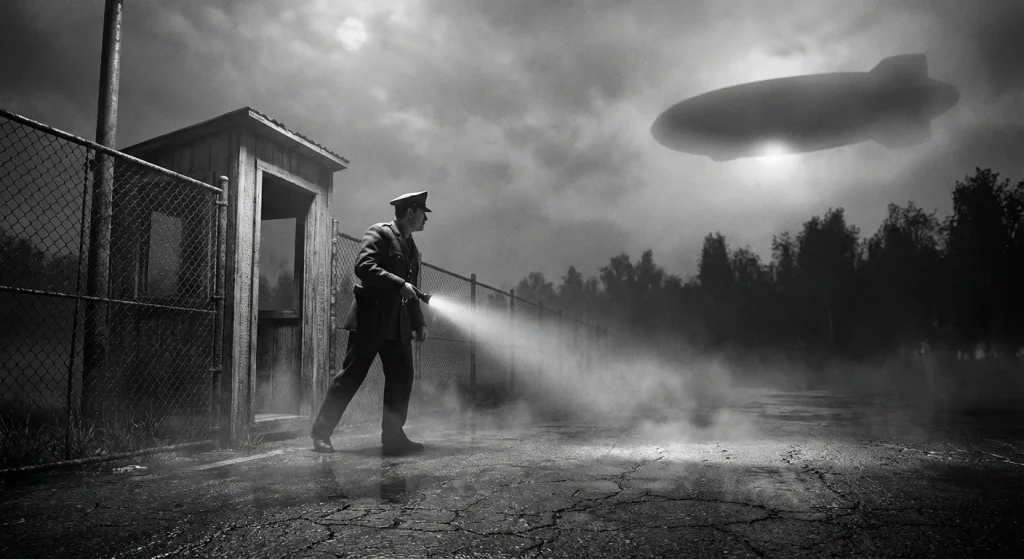
You keep seeing “UFO disclosure” and “UAP disclosure” headlines, and the signal-to-noise problem is obvious: the same legacy cases get recycled as “fully documented” proof, even when the sourcing is hard to pin down. The Zanfretta case sits near the top of that pile, usually presented as Italy’s unusually solid abduction story. That reputation deserves an audit, not a retweet.
The story endures because it is repeatedly described with credibility cues people trust: a working security guard on duty, multiple incidents over time, multiple witnesses, and some form of institutional involvement. The friction is that “documented” is doing a lot of work in online summaries. Within the research materials used for this article (see Sources), the verifiable paper trail for the most repeated specifics is thinner than the confident way the case is often narrated, and traceability varies sharply depending on which claim you are looking at. See a general summary.
That gap matters because once a claim locks into a mainstream or conspiratorial narrative lane, it spreads differently and gets repeated with increasing certainty. The Zanfretta case shows the same pattern: later retellings commonly assert multiple abductions, often “11” between 1978 and 1981, and even an “alien artifact,” but this set of materials does not supply verifiable numeric documentation specific to Zanfretta that would let you confirm those numbers as a matter of record. For published retellings and book listings that reiterate counts or witness totals, see the book listings and summaries in Sources below.
A source-aware read also has to respect how accounts drift: perceptions and later memories of anomalous experiences are fluid and subjective, which produces discrepancies across retellings. So the clean approach is to separate what is firsthand-claimed, what is described as institutional action, and what only appears as later summary language, and to treat anything the materials cannot trace as “often claimed,” not established fact.
Terminology is part of that discipline. “UFO,” shorthand for Unidentified Flying Object, still dominates pop culture, but official-language usage has shifted from “UFO” to “UAP,” meaning Unidentified Aerial Phenomena, in U.S. government documents from roughly 2020 to 2021 onward. “UFO vs UAP terminology shift” also shows up in U.S. government FOIA logs and reports alongside, or in place of, “UFO,” which is why both terms appear here, depending on what a source is actually signaling.
The goal is practical: to separate what the Zanfretta story reliably supports from what disclosure-era repetition often inflates beyond what the reviewed materials can verify.
The Setting and Key Players
Those credibility cues only mean something if the underlying context is stable and checkable, so the first pass has to be basic: where it happened, what the job demanded, and which institutions can actually be traced. In the materials used here, “Genoa” is the only clearly named geographic anchor in the publicly available summaries and secondary sources. See the general case summary in Sources for where Genoa appears in retellings. See a secondary summary.
What the reviewed materials do not give is the finer-grain geography that would let a reader map claims onto a verifiable route: no smaller towns or hamlets, no named patrol sites, no nearby landmarks, no distances from Genoa, and no municipality or province identifiers. That absence is not trivia. Without it, later retellings can slide between “near Genoa” as a general vibe and “near Genoa” as a checkable location with a dispatch history, a property address, and a chain of custody for reports.
In the accounts, Zanfretta is first a worker, not a media figure: a night security guard on patrol in the Genoa area. That matters because security work produces a specific kind of incident narrative. Night patrols are repetitive, often solitary, and structured around interruptions: alarm activations, perimeter checks, radio or phone calls, and a requirement to decide quickly whether something is a fault, a trespass, or an emergency.
That setup complicates memory and reporting in predictable ways. A guard’s first description typically prioritizes operational details that affect response time, safety, and liability: what triggered attention, what was seen or heard, whether access points were secure, and whether the guard could maintain communications. The practical takeaway is straightforward: the “work context” is part of the claim. Any reconstruction that ignores how security incidents get logged, escalated, and handed off is building on narrative texture instead of institutional procedure.
The cast that later tellings commonly assert is easy to recognize as roles: the security guard; an employer or security firm; law enforcement responders; medical personnel; and journalists who amplify the story. The verification problem is that the materials reviewed for this article do not supply the identifiers that convert roles into traceable records.
Specifically, the reviewed summaries and secondary sources in this set do not include early-report details naming the responding law-enforcement body (Carabinieri vs Polizia), any station or command, or any officer names or ranks. They also do not document Zanfretta’s employer, his exact duties, or the specific property or properties he was guarding. Treat any version that confidently supplies those missing specifics as provisional unless it is backed by a primary Italian record that can be independently located and checked. For commonly cited secondary summaries, see Sources below. See Wikipedia summary.
Those missing identifiers become even more consequential the moment you try to turn the story into a dated sequence of events, because chronology depends on exactly the kind of logs and locations the reviewed materials do not supply.
A Timeline of Reported Encounters
A clean timeline is the only way to keep the Zanfretta case from collapsing into contradictory internet lore. The materials reviewed mix four different kinds of claims, and each behaves differently over time:
(a) Zanfretta’s own reported experiences (what he said happened to him), (b) what other people allegedly observed (lights, sounds, his condition when located), (c) what institutions allegedly did (police response, searches, medical checks, any documentation), and (d) later summaries reshaped (a secondary retelling, meaning a later recap built from earlier tellings rather than date-stamped primary material, which is exactly where dates drift and details harden into “facts”).
The friction is non-obvious until you try to reconcile dates: widely shared versions can be wrong on basics, including the year. The reviewed materials do not supply a reliable list of exact incident dates and times, dispatch times, search start times, or “found” times for Zanfretta. Treat any granular timestamp you see online as unverified unless a primary Italian news report, police record, or contemporaneous log is added and quoted in full. For commonly circulated secondary chronologies and retellings, see the Sources list below. See a widely reposted summary.
This is also why identifications change. The reviewed materials include at least one documented sighting elsewhere that was later identified as a toy balloon in an unrelated example of misidentification. That kind of revision is normal in casework: an initial interpretation can be replaced by a better one once more information arrives. It is a methodological illustration only, not an explanation for Zanfretta.
The 1978 “core” is usually presented as a single anchor event: a night shift incident in which Zanfretta reports an encounter, then a response follows, then he is located and assessed. The reviewed materials do not include the hard scheduling details that would let a reader lock this to a precise clock time, so the sequence below stays at the level the materials can support without inventing missing specifics.
1) Alarm or encounter report (firsthand claim + alleged communications). Zanfretta is described as reporting something unusual while on duty. Later retellings often frame this as an urgent call or radio message made in real time. What the reviewed materials do not provide are the verifiable anchors a timeline needs: the exact time of the call, the recipient, the wording, and any dispatch or switchboard record that can be checked. (See Sources for the public secondary summaries cited here.)
2) Disorientation or “missing-time-style” claim (firsthand claim). The core episode is commonly paired with a claim that his perception of time and continuity broke: confusion about what happened, gaps in memory, or an interval that others say cannot be accounted for. The reviewed materials support treating “missing-time-style” as part of the commonly described narrative, but they do not supply a contemporaneous medical intake note, a timestamped statement, or a report that pins down the duration. For secondary accounts that describe missing-time claims, see Sources.
3) Response and search (witness claim + alleged official action). The story is typically rounded out by others allegedly reacting: colleagues and or police searching, then locating him in a distressed condition. This is the step where online chronologies often get overconfident, because it invites precise claims like “search started at X” or “he was found at Y.” The reviewed materials explicitly do not supply reliable dispatch times, search start times, or found times, so those numbers should not be treated as established facts without primary documentation.
In other words: you can describe the narrative shape of the 1978 core episode, but you cannot responsibly attach minute-by-minute timing from the reviewed materials alone. The absence of logs is not a conclusion about what did or did not happen; it is a boundary on what can be dated precisely.
Later accounts frequently extend the story beyond the core episode and compress multiple episodes into a single arc, commonly described as running from 1978 into the early 1980s. This “bundled” layer is where totals inflate and where the reader is most likely to confuse repetition in the literature with independent corroboration.
One example from the reviewed materials is a Zencastr summary that frames the case as a timeline beginning with a “first abduction” in 1978 and ending with a “final (official) disappearance” in 1980. That Zencastr item is not publicly linked in the materials provided here; it is not available publicly. To verify that summary you would need the recording or transcript of the Zencastr episode, or a published copy that includes date-stamped sourcing. Treat an unpublished audio summary as a retelling until you can inspect the primary items it cites.
That kind of summary is useful for seeing how the story traveled, but it is not a substitute for a dated incident register. The reviewed materials do not verify the number of incidents, the dates of each episode, or the specific circumstances of later events sometimes placed in 1979, 1980, or 1981. When a retelling presents a clean sequence with a confident incident count, treat it as a claim about the narrative, not as a fact about the record, until it is tied to primary Italian reporting or official documents with dates attached.
How the story spread matters here because “prominence” is not the same as “documentation.” One secondary retelling attributes the case’s rise in prominence to attention from abduction researchers, but the underlying source for that attribution is not supplied publicly in the materials reviewed. To verify claims about who amplified the case and when, you need the contemporaneous publications or citations that show that influence. See secondary retellings in Sources for examples of later distribution patterns.
The reviewed materials include a clear demonstration of error propagation: at least one publicly available secondary source misdates the core event as “November 30, 1989.” That is not a small slip. If a secondary retelling can shift the year by more than a decade, then confident-looking timelines that specify exact dates and times without primary documentation deserve immediate skepticism on chronology grounds alone.
Use conflicts like that as an evaluation tool. When you see a precise claim such as “the call came in at 22:15” or “he was found at 01:30,” ask two questions before you accept it:
1) What is the date-stamped primary material? A contemporaneous newspaper report, a police log, a medical intake record, or a signed statement with a date. If none is quoted and attributable, the precision is performative.
2) Is the source chain transparent? If a timeline traces back to someone summarizing someone else, that is the mechanism that produces “November 30, 1989” style errors.
The actionable takeaway is strict: demand date-stamped primary material for any precise chronology claim, and treat tight timelines circulating online as unverified until you can trace each timestamp back to a contemporaneous record.
Once the timeline is reduced to what can actually be traced, the next question is narrower but harder: what evidence exists outside Zanfretta’s own account, and how cleanly can it be tied to a time and creator?
Witnesses, Reports, and Corroboration Claims
The Zanfretta story gets its reputation from corroboration claims, but corroboration only counts when it is independent of the central witness and traceable back to a specific time and creator. In practical terms, you are looking for lanes of evidence that do not share the same point of failure.
The first lane is independent witnesses: people who can be identified, placed at a location, and tied to a timestamped statement or log entry. A “roster” mindset matters here: treat witnesses like case data you can locate, not vibes you can repeat. Even basic guidance on fact witnesses emphasizes enumerating sources such as the client and investigating officer(s), then tracking what each can actually attest to.
The second lane is institutional records: dispatch logs, station blotters, incident reports, radio recordings, and shift notes. These are valuable because they are created for operational reasons, not to bolster an extraordinary claim.
The third lane is medical documentation. A contemporaneous record (created during treatment, not reconstructed later) carries weight because it locks observations to a time, place, and provider, and it is constrained by clinical workflow. Medical records typically include observations, progress notes, consultations, and reports of special examinations such as labs, x-rays, and EKGs.
Many courts often treat contemporaneous treatment documentation as useful and generally genuine evidence because it is produced in the ordinary course of care. Procedures for admitting and weighing such records vary by jurisdiction and case type.
The fourth lane is media artifacts: dated reporting, raw footage, archived photos, and publication metadata. Media coverage is not “proof” by itself, but it can provide timestamps, names, and leads that point back to primary records.
The commonly circulated narrative frequently reports several categories of corroboration: additional witnesses who saw lights or an object; police response and on-scene activity; medical checks following episodes; physical traces said to be left at a location; and press coverage that amplified the case. The earlier timeline is useful here only as an anchor for what should exist at those moments: a call record when help was summoned, a dispatch entry when a patrol car was sent, a station report when statements were taken, and a clinical chart when someone was examined.
Even within the reviewed materials, you can see how “documentation” language gets used as a credibility marker, including references to “documentation” without a reproducible inventory of what those documents are.
The biggest gap is police specificity. The public secondary summaries and listings in the reviewed materials contain no concrete police involvement specifics for Zanfretta in the supplied excerpts: no report numbers, no named units, no officer observations, and no substantiation of dramatic details sometimes asserted in retellings (including weapons-drawn claims). Without those identifiers, “police were involved” stays a narrative label rather than a file you can pull.
The materials reviewed also do not substantiate Zanfretta-specific documentation counts. A numeric figure appears in some retellings (“Around 1,700 pages”), but the excerpts available here do not tie that number to the Zanfretta case, and other references to catalogs or investigations do not supply a case-linked inventory in the text provided.
Medical records are especially sensitive to this problem: real hospitals and health systems run on rules and recordkeeping requirements, but the reviewed materials do not include Zanfretta-specific charts, facility names, dated exam notes, imaging reports, or provider signatures that would let a reader confirm contemporaneity and provenance.
- Demand identifiers: report numbers, agency names, unit designations, officer names, timestamps, and the location of custody for the record (station, archive, publisher).
- Check time anchoring: a claim that tracks the timeline should have a matching created-at time (dispatch time, intake time, exam time), not just a later recap.
- Prioritize contemporaneous medical content: look for objective observations, vital signs, clinician impressions, consultation notes, and attached test reports (labs, x-rays, EKGs). In injury disputes, medical records function as the primary verification tool because they document what was observed and treated.
- Verify independence: the best corroboration comes from sources that do not depend on the same storyteller, such as a dispatch log aligning with an ER intake note and a separate media timestamp.
- Follow access reality: in many jurisdictions, including the United States, individuals often have a legal right to request and obtain copies of their own medical records, but procedures, time limits, and fees vary by jurisdiction and provider. Check local law and the record custodian’s policies to confirm how to obtain documents in a specific case.
If the story is “documented,” it should resolve into documents you can name, date, and source. If it cannot, you are not evaluating corroboration, you are evaluating repetition.
When those documents are missing or unspecified, the analysis necessarily shifts from “what was recorded” to “what else could generate the same narrative shape,” which is where skeptical models earn their keep.
Skeptical Views and Alternative Explanations
Serious skepticism treats an abduction narrative as a dataset: a timeline of perceptions, statements, and later retellings that must be explained with the fewest new assumptions. The point is not to sneer at a witness. It is to pressure-test ordinary mechanisms that reliably generate vivid, internally consistent stories even when nothing non-human occurred. That approach matters here because repeated recounting and certain interviewing methods can raise confidence while lowering accuracy, producing a narrative that feels more solid over time without becoming more diagnostic.
Misidentification is the default alternative model because human perception is optimized for speed, not forensic precision. In low light, at unknown distance, and under fear, a bright stimulus can lose scale cues and become “large,” “near,” or “structured” in memory. Aircraft lights, helicopters, flares, distant vehicles, and astronomical stimuli can also appear to maneuver when the observer is moving, when clouds pass, or when attention snaps between reference points. Stress and fatigue compound this: long shifts, isolation, and sudden alarms narrow attention, compress time, and promote threat interpretation. This model explains abrupt onset, intense emotion, and limited sensory detail well. It struggles more with claims that depend on close-range, repeated, highly specific interaction sequences unless the reporting record shows stable, contemporaneous descriptions that do not inflate across retellings.
Memory does not replay; it reconstructs. After a frightening event, people fill gaps using inference, cultural scripts, and later information, often without noticing the stitching. “False memory” matters here because it describes a recall experience that feels certain and vivid while being inaccurate, especially when cues imply what should be remembered. “Hypnotic regression,” the practice of using hypnosis to retrieve autobiographical detail, is criticized for reliability because hypnosis increases suggestibility and confabulation, which contaminates recall rather than clarifying it. Scientific reviews have discussed mechanisms of false-memory creation and hypnosis’s role. For summaries of the scientific and clinical literature on hypnosis and memory, see Sources such as the U.S. National Criminal Justice Reference Service abstract and a review in PubMed Central. See a review on memory and hypnosis. Legal history also shows contested treatment of hypnotically refreshed testimony; for example, the U.S. Supreme Court addressed limits on excluding such testimony in Rock v. Arkansas (1987), which is relevant to how courts balance admissibility questions. See Rock v. Arkansas.
Attention dynamics can stabilize a story without any deliberate fraud. Media coverage, investigators’ expectations, and community feedback reward coherence and narrative closure, which pushes accounts toward crisp sequences and recurring motifs. Each retelling becomes rehearsal, and rehearsal increases fluency, which listeners interpret as accuracy. This model explains why a narrative can harden and become more consistent over months or years. It struggles to explain independent, contemporaneous corroboration that was recorded before the story became public currency.
Proponents emphasize structure: multiple reported episodes rather than a single shock, and claims of institutional contact or interest that imply the events were taken seriously at the time. Skeptical analysis does not ignore those claims; it asks what they actually constrain. Repetition can indicate an external cause, but it can also reflect repeated exposure to the same work conditions, the same ambiguous stimuli, and the same reinforcement cycle. Institutional involvement can reflect routine response to reports, not validation of an extraordinary cause. Actionable takeaways are straightforward: discount details first obtained under hypnosis, prioritize the earliest recorded reports, and ask of each key claim whether it requires a non-human explanation or whether a known perception and memory pathway already fits.
In Italy, organized skepticism exists as an ecosystem rather than a single opinion: CICAP (Comitato Italiano per il Controllo delle Affermazioni sul Paranormale) is an Italian organization devoted to investigating paranormal claims, and its presence underscores the basic method being applied here: test mechanisms, document techniques, and separate early records from later narrative growth.
That method aligns with broader skeptical inquiry norms: the Committee for Skeptical Inquiry explicitly frames its mission around scientific inquiry, critical investigation, and reason when examining controversial claims, which is exactly the standard a case with high-emotion testimony and post-event interviewing needs.
The same dynamics that harden a story over time also interact with today’s disclosure environment, where platforms reward familiar narratives that already “fit” the moment.
What It Means in the Disclosure Era
Modern UAP disclosure cycles change what people notice, not what older cases can prove. When hearings occur and “new report” chatter starts, platforms reward familiar, high-arousal stories that already have keywords, clips, and searchable lore. That attention dynamic is measurable: information framed inside mainstream versus conspiratorial narratives propagates differently across networks, and emotional engagement drives what people share and revisit. The result is a predictable surge of “precedent” hunting, where a legacy case like Zanfretta gets reposted as if resurfacing itself adds evidentiary weight.
Public hearings, brief media clips, and short-form social media posts produce memorable soundbites that travel faster than full transcripts and exhibits. Viral hearing snippets often collapse context: viewers see a short quote or clip before they can review the complete exchange, the witness statement, or the limiting instructions provided by adjudicators. The actionable move is simple: treat a clip as an index, then verify via the full transcript and any submitted exhibits before forming a judgment.
“Non-human intelligence” and similar accelerated phrases act as rhetorical amplifiers because they move casual interpretation from “unknown object” to “agent with intent.” Individuals who use that phrasing in public forums can shape public perception, but that amplification is commentary unless the exact wording, context, and supporting evidence are tied to the official record. The hearing record or official report is the evidence baseline; everything else is commentary about the record.
No U.S. hearing or recycled headline constitutes evidence for an Italian abduction story. Those events only change the interpretive climate around ambiguous experiences, which is exactly why individual case claims have to stand on their own documentation and traceability.
One more boundary check: the reviewed materials used for this article do not include specific AARO 2025 report titles or publication details. If someone cites an “AARO report” or similar as settling a point, verify directly against the agency releases and primary documents. Keep catalysts (hearings, report drops, trending phrases) separate from case evidence, and you stop discourse momentum from laundering old claims into “confirmed” status.
That separation of attention versus evidence is the difference between treating Zanfretta as a headline accessory and treating it as a case you can actually evaluate.
How to Read the Zanfretta Story
The Zanfretta case is best treated as a disciplined case study in how extraordinary claims persist under imperfect documentation: it stays compelling because it is presented as repeated incidents with alleged institutional touchpoints, not as a one-off anecdote. That framing creates a sense of structure and accumulation, and it explains why the story keeps resurfacing whenever “most documented” abduction claims are discussed.
The complication is that narrative certainty grows faster than verifiable paperwork. The timeline itself shows fragility, including at least one major misdate in a secondary retelling, which signals how easily a clean chronology can be rebuilt incorrectly once the story is circulating. The reviewed materials also do not provide verifiable, Zanfretta-specific counts to cash out the familiar “most documented” claims, so confidence based on officer totals, pages of reports, or interview counts is not traceable here. Add the human factor noted at the start: accounts can drift as retelling pressure and time reshape what gets emphasized or omitted, which is why early, dated records matter more than polished later arcs.
Use the same evidence-audit mindset when future UFO or UAP headlines appear: separate what is influential from what is demonstrable, then grade the claim on traceability, not vibe.
- Prioritize contemporaneous records over later summaries, transcripts, and documentaries.
- Verify independent witnesses by checking whether accounts were captured separately and close in time, not harmonized after the fact.
- Demand documentation provenance: who created the record, where it has been stored, and whether a clear chain of custody exists.
- Interrogate incentives: reputational, commercial, community status, or institutional motives that reward escalation.
- Test falsifiability: identify what specific observation or record would meaningfully weaken the claim, and look for attempts to rule alternatives out.
Follow UFO and UAP news with primary-source habits: ask for the records, the provenance, and the falsifiable claims before you pass the story along.
Sources
- Wikipedia: Zanfretta UFO Incident (summary of the case and common retellings)
- Historic Mysteries: Zanfretta UFO (secondary retelling)
- Cryptidz fandom: Zanfretta’s Aliens (commonly reposted summary)
- English-language book listing on Amazon (2014 edition)
- English-language book listing on Amazon (2024/2025 edition)
- Chapman University digital commons (sociology material on diffusion and narrative; cited for distribution patterns)
- PubMed Central: review on memory, hypnosis, and false-memory mechanisms
- U.S. Office of Justice Programs: abstracts on memory, hypnosis, and eyewitness research
- Rock v. Arkansas, 483 U.S. 44 (1987) – U.S. Supreme Court (admissibility of hypnotically refreshed testimony)
- Supreme Court docket 20-5923 appendix (included here as part of the legal materials reviewed)
- Cornell Law Review / legal scholarship on evidence and testimony (for context)
- UIC Law Review repository items on evidentiary rules and hypnosis
Note on unpublished or unavailable source items mentioned in the text: where the article refers to a “packet,” a “Zencastr summary,” or privately supplied materials that are not publicly posted, those items are not available publicly in the materials reviewed for this article. To verify claims that depend on unpublished materials, a reader would need either (a) documented, dated copies of the transcripts or reports cited, or (b) credible archival locations and accession numbers for police, medical, or media files that can be inspected by independent researchers. Where such primary items are publicly available, they are listed in the Sources section above.
Frequently Asked Questions
-
What is the Zanfretta abduction case (1978) supposed to be about?
It’s a widely repeated Italian UFO/UAP abduction story centered on a night security guard on patrol in the Genoa area who reported an unusual encounter during a shift. The article treats it as a case study in how a compelling narrative can persist even when the easily verifiable paper trail for commonly repeated details is thin.
-
What does UAP mean, and how is it different from UFO?
UFO means “Unidentified Flying Object,” while UAP means “Unidentified Aerial Phenomena.” The article notes U.S. government language shifted toward “UAP” in documents from roughly 2020 to 2021 onward, which is why both terms appear in modern coverage.
-
Where did the Zanfretta incident happen according to the article, and what location details are missing?
The only clearly named geographic anchor in the packet is Genoa (with one excerpt also pairing Genoa with Pisa in historical framing). The article says the packet does not provide smaller towns, patrol sites, landmarks, distances, or municipality/province identifiers that would let readers map claims to checkable locations and logs.
-
How many Zanfretta abductions are commonly claimed, and does the article verify that number?
Later retellings commonly assert multiple abductions, often “11” between 1978 and 1981, and sometimes even mention an “alien artifact.” The article states the research packet does not supply verifiable, Zanfretta-specific numeric documentation that confirms those counts as a matter of record.
-
What specific timeline details does the article say are not supported by the provided packet?
The article says the packet does not supply exact incident dates and times, dispatch times, search start times, or “found” times for Zanfretta. It also points out a clear error-propagation example where one source misdates the core event as “November 30, 1989,” showing how secondary timelines can drift by more than a decade.
-
What documents and identifiers should exist if the Zanfretta case is really “documented”?
The article says you should demand identifiers like report numbers, agency names (e.g., Carabinieri vs Polizia), unit designations, officer names, timestamps, and where the records are held (station, archive, publisher). It also emphasizes contemporaneous medical records (observations, progress notes, consultations, and test reports like labs, x-rays, and EKGs) and independent corroboration that aligns across logs, medical notes, and dated media artifacts.
-
What should you look for before treating Zanfretta as evidence in today’s UFO/UAP disclosure news cycle?
The article’s rule is to separate attention-catalysts (viral clips, hearings, trending phrases like “non-human intelligence”) from case evidence, and to verify against primary, date-stamped records. It recommends prioritizing the earliest recorded reports, discounting details first obtained under hypnosis, and treating precise online timestamps as unverified unless tied to a contemporaneous Italian news report, police log, or medical intake record.
