The hardest part of legacy UFO cases is not the story. It is the documentation gap that lets a headline outrun the receipts. In the current cycle of UFO news and UAP disclosure chatter, the same “credible witness” claims circulate endlessly, but when you go looking for names, dates, and primary records, the trail often thins out fast.
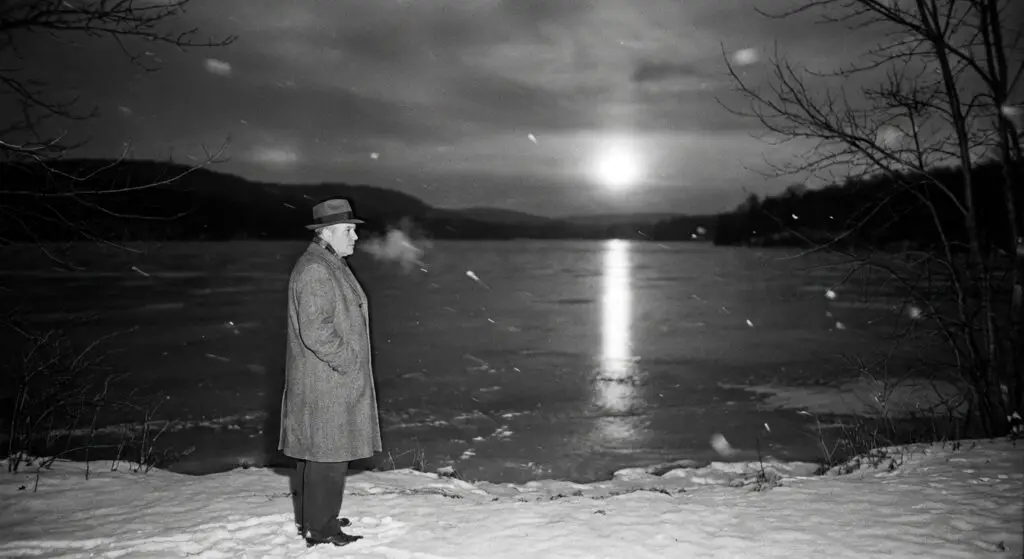
The Wanaque Reservoir case is a clean example of that problem. A 1966 report is commonly summarized as an elected municipal mayor reportedly seeing a strange object over Wanaque Reservoir that appeared to direct light onto the ice. It is the kind of detail that sticks in memory and spreads easily because “mayor reportedly witnessed it” sounds like built-in verification.
Here is the tension this article resolves: compelling testimony can be real, and still be poorly documented. Two research gaps define this case as it appears in the provided source set. First, none of the provided sources verify the mayor’s full name, the specific town or borough, or the witness’s 1966 term dates. Second, the provided sources do not confirm the commonly cited incident date, or even whether the event was reported as one night versus multiple nights. Those are not minor footnotes; they determine what you can responsibly treat as established fact.
You will leave with a disciplined way to read this case without surrendering to either hype or cynicism. The standard is simple: every claim will be labeled as directly sourced versus unverified or secondhand, and the remaining open questions will be stated as open questions, not silently filled in.
Wanaque Reservoir in 1966
Most debates about legacy sightings collapse because readers can’t picture the scene or verify basic environmental context. Before anyone argues interpretation, you need the same baseline any field investigator would demand: exact place, winter surface conditions, and a timeline framework that separates what can be reconstructed from what is still unknown.
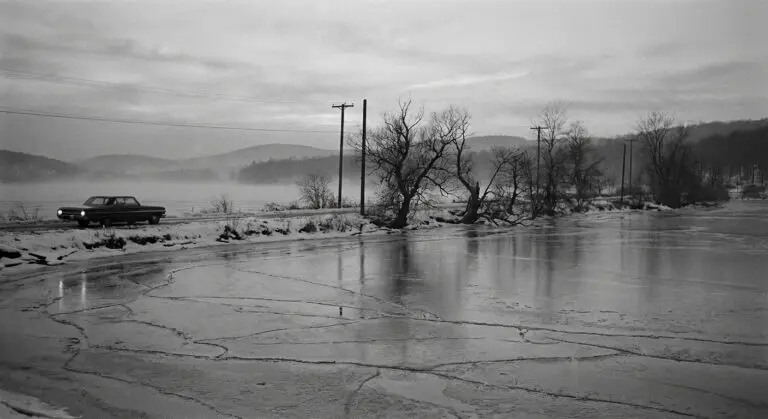
Wanaque Reservoir sits at approximately 41.0450 degrees N, -74.2953 degrees W. The U.S. Geological Survey maintains a monitoring location for the reservoir that records coordinates and water-surface elevations for the site (example station page with station coordinates and stage data). For recent published gauge values see the USGS station page for the reservoir https://waterdata.usgs.gov/monitoring-location/01386990/.
Published state planning documents list the reservoir storage capacity at roughly 29.5 to 29.6 billion gallons. See the New Jersey Department of Environmental Protection water-supply appendix for official capacity figures and system identification https://dep.nj.gov/wp-content/uploads/water-supply-plan/2017-wsp-docs/2017-wsp-appendix-c.pdf.
The construction timeline is described differently in different sources. Local histories and state archival summaries note development of the Wanaque system and construction of Raymond Dam in the early 20th century; published local histories and archival references document the project and show varying completion dates reported in the 1920s. For local historical context see the Wanaque Public Library history page and the New Jersey State Archives background on state projects https://wanaquelibrary.org/history/beginning-of-construction-of-the-wanaque-dam/ and https://www.nj.gov/state/archives/sznor001.html. Because sources differ on exact start and completion years, treat construction dates as a supported but not fully reconciled detail until the original engineering or commission records are produced.
A frozen surface changes what the eye and camera have to work with. Ice and snow increase reflectivity, which raises glare and makes bright sources more prone to visible reflections on the surface. That same reflectivity can also reduce contrast: faint features can wash out against a bright, pale foreground, while a dark feature can appear sharper simply because the foreground is bright. Cold, clear nights add another layer of friction because clean air and low haze can make distant lights look closer and more defined than they would on a humid or hazy night, even before you consider any specific explanation for what was seen.
Right now, the responsible move is to treat timing as a framework, not a finished story. Until the exact calendar date and local time window are confirmed from the underlying account, you can’t publish precise claims about what the sky “had to” look like. The provided sunrise and sunset snippets circulating with the story appear inconsistent, so any exact times must be verified with a reliable ephemeris before they go in print. Once the date is pinned, pull environmental anchors that are independently reconstructable: use NOAA/NCEI’s Past Weather Tool for nearby observing stations to retrieve historical temperature, visibility, and cloud cover, then pair that with ephemeris-verified sunrise, sunset, and twilight for the reservoir coordinates. What you should not overstate, without better sourcing, is the exact observer position, exact viewing direction, or the exact moment-by-moment progression of events.
That baseline matters because it tells you what can be checked independently (location, terrain, winter optics) and what cannot be asserted yet (a precise timeline and viewing geometry). The next step is narrower: what, exactly, did the mayor say was seen, and where is the artifact that preserves those words?
The mayor’s reported observation
This section can only be as specific as the capture artifact that preserves the mayor’s words. In the evidence corpus provided for this revision, none of the included items are the contemporaneous newspaper story, police report, transcript, or raw interview that would anchor the mayor’s reported observation; several excerpts are explicitly described as containing no information on a mayor’s name, municipal affiliation, or 1966 term details.
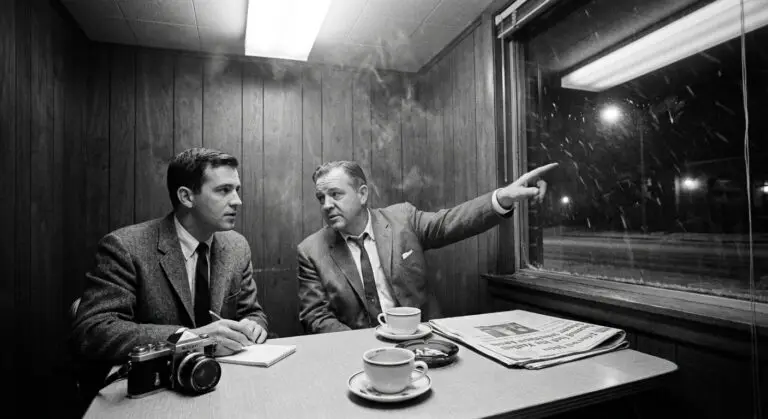
The provided materials do not include contemporaneous news clips, police logs, or other carrier documents that would preserve dated, on-the-record wording from a named mayor or municipal official. That means any sensory detail (shape, color, distance, duration, sound) cannot be responsibly upgraded to “Direct Quote” status from this corpus alone.
| Sensory channel | Detail as it appears in the provided corpus | Quote label | Capture artifact (name, date, byline if known) | What you can and cannot claim from this |
|---|---|---|---|---|
| Visual form / lighting | No wording describing the object’s shape, edge definition, color, or the light’s geometry appears in the supplied evidence items. | Paraphrase: not available | Not present in supplied corpus | You cannot attribute “beam-like” (or any equivalent) to the mayor without the original article/interview text. |
| Movement | No verbs, timing markers, or motion descriptors (hovering, lateral movement, ascent/descent) are preserved in the supplied evidence items. | Paraphrase: not available | Not present in supplied corpus | You cannot convert later storyline verbs (“came,” “left,” “moved”) into an observed movement claim. |
| Sound | No mention of sound or silence is present in the supplied evidence items. | Paraphrase: not available | Not present in supplied corpus | You cannot credit “no sound” to the mayor without a quoted or clearly attributed statement in a primary artifact. |
| Distance / height / duration | No numbers (yards, feet, minutes) appear in the supplied evidence items. | Paraphrase: not available | Not present in supplied corpus | You cannot treat any later numeric estimates as part of the mayor’s observation unless they trace back to notes/audio/video. |
The clean way to keep this account honest is to separate “what was observed” from “what it was said to be doing.” The same boundary matters in any structured account: measures describe what happened, while contextual attributes describe who/what/where. Treat the mayor’s sensory statements (what he saw or heard) as the measures, and treat mechanism or intent language (“projected,” “scanned,” “searched”) as a separate, higher-risk layer that must be explicitly attributed to either the witness’s exact words or the reporter’s framing.
Without the primary artifact, you cannot truthfully assign ownership of loaded verbs. Appearance-language (“bright,” “beam-like,” “spotlight-like”) can be a witness description, or it can be a reporter’s compression; mechanism-language (“projected a beam,” “aimed at the ice”) is an interpretive step that must be tied to a direct quote, a clearly marked indirect quote, or an explicitly labeled paraphrase in the originating report. Because the supplied evidence set contains no such originating report, the only defensible move is to keep observation and inference separated and flagged as unverified until the original wording is produced.
That missing chain is not abstract: the supplied corpus contains no near-time newspaper clipping, no dated interview transcript, no bylined feature, and no municipal or police document that records the mayor’s words. As long as those carrier documents are absent, you do not have the “who said what, where it was published, and when” foundation required for precision.
Journalistic attribution mechanics decide whether this story is evidence or folklore: a credible report marks words as Direct Quote (exact phrasing), Indirect Quote (“he said that…” preserving meaning), Paraphrase (reporter summary), or reconstructed dialogue. In this record state, you cannot tell whether any “beam” wording is the mayor’s language or the reporter’s compression, because the artifact that would show the quote type is not in the supplied corpus.
Later retellings are where contamination enters, especially when phone interviews or informal recollections get treated like transcripts. The research brief you provided includes a cautionary example from media-ethics discussion: a subject described a phone interview where they were not told they were being recorded and were not told the conversation was on the record. Treat that as a standing warning: if you cannot produce the original, on-the-record artifact, you cannot safely upgrade later “quotes” into evidence, even if they read crisply.
The same discipline applies to biographical credibility claims (military service, aviation credentials, specialized operational knowledge): do not repeat them as fact just because they sound like authority. Verify them through official records, including the National Archives process for researching military service records, before you use them as evidentiary weight in evaluating the mayor’s observation.
The missing items are concrete and fixable. The supplied evidence set does not include any document that preserves the mayor’s exact wording (or even a bylined paraphrase tied to a publication and date), so the right next step is retrieval of the originating carrier material.
- Locate the earliest known publication or broadcast item that attributes the observation to the mayor, including publication name, date, and byline (or station, date, and segment details).
- Extract the exact sentence(s) that describe what was seen and heard, then label each line as Direct Quote, Indirect Quote, Paraphrase, or reconstructed dialogue exactly as the artifact presents it.
- Record who captured the statement (reporter name/outlet), how it was captured (on-scene, phone, press event), and whether contemporaneous notes, audio, or video exist.
- Separate observation-language (appearance, motion, sound) from inference-language (mechanism, intent, “what it was doing”) and attribute each phrase to the witness or the reporter’s framing.
- Corroborate with additional named witnesses tied to the same carrier artifact or to their own dated statements, not to later compilations.
- Request any municipal or public-safety records that would anchor time and response (police log entries, dispatch notes), then cite them by date and custodial office.
- Verify any military or aviation biography claims through official documentation, using National Archives military records research guidance rather than repetition across secondary retellings.
Use this as your reader checklist and do not relax it: (1) quote type (Direct, Indirect, Paraphrase, dialogue), (2) who recorded it (named reporter/outlet), (3) when it was recorded (publication date or timestamp), and (4) which phrases are observation versus inference. If any one of those four fields is blank, the claim stays in the “unverified retelling” bucket, not in the evidence file.
Corroboration, police response, and press coverage
The mayor’s account, as commonly repeated, implies there should be a trail: a call, a log entry, a datelined story, or at least a bylined paraphrase that fixes names and dates. That is why corroboration is not “more stories,” it is better-timed records.
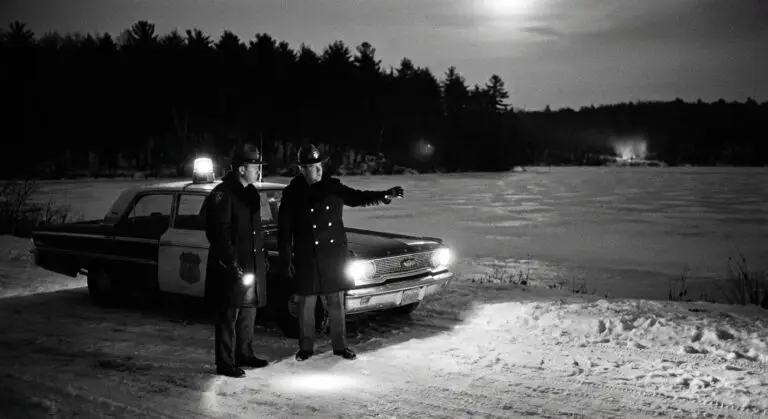
A contemporaneous source, meaning a document created at the time of the reported event (not a decades-later retelling), carries more evidentiary weight because it locks dates, names, and actions before memory and legend-building can reshape them.
For a mayor’s claim, the highest-value corroboration is procedural: police dispatch logs, incident cards, radio run sheets, and any municipal records that prove an official response was triggered. Close behind are same-week newspaper items that name the mayor, identify the town and date, and describe who was contacted (police, county officials, state police, or a reservoir authority). Municipal meeting minutes can matter too, but only if they were recorded in the same reporting window and clearly reference the incident as a matter of public business.
The friction in many UFO cases is that “official-sounding” citations often trace back to later UFO literature, not to 1966-era documentation. Treat later compilations as pointers, not proof: they can tell you where to look, but they do not substitute for a datelined local paper, a police log entry, or a time-stamped agency memo. If no additional same-week named witnesses appear in local reporting, that absence is itself a data point: it keeps the case centered on one primary witness until independent, time-anchored accounts surface.
Project Blue Book is the U.S. Air Force program (1947-1969) that investigated and cataloged UFO reports, so it is the first federal-era file set that can either corroborate the claim with a matching entry or show that no Air Force tracking occurred. Start with the Blue Book index, because it is the fastest way to confirm whether the date and location produced a cataloged case number before you sink time into narrative writeups.
Practically, those Blue Book indexes were extracted from microfilm reels and transferred as redacted copies to the National Archives, which means the index can be searchable even when case-file contents are uneven. The FBI also hosts a Project Blue Book collection in its Vault; it is not a guarantee of local corroboration, but it is a clean way to check whether interagency correspondence exists for the relevant time period.
Local corroboration lives or dies on record access. New Jersey’s baseline reality check is simple: state law requires a written request to access government records, and OPRA requests may be hand-delivered, mailed, transmitted electronically, or submitted via an online portal when an agency provides one. Municipalities and state agencies commonly provide guidance and forms; see the New Jersey Department of Community Affairs OPRA guidance for official instructions and links to state resources https://www.nj.gov/dca/home/opra.shtml. “Someone must have called the police” is not evidence until a log or report is produced.
Prioritize the agencies most likely to have created a paper trail: the local police department with jurisdiction, county communications centers if they handled dispatching, and any state-level law enforcement that might have been notified. Then expand to reservoir-related entities if they maintained incident or security logs. Use this priority order when you search:
- Scan same-week local and regional newspapers for named attribution and any mention of official contact.
- Request police and dispatch logs for the relevant date range to confirm whether an incident was recorded.
- Verify against Project Blue Book indexes, then pull any matching National Archives or FBI Vault materials tied to that entry.
What could a beam on ice be
Even before you can adjudicate what happened at Wanaque, you can still evaluate what kinds of conditions can produce a “beam on ice” description. That analysis does not solve the documentation gap, but it does constrain what is plausible once the original wording is recovered.
A beam-on-ice report is not automatically exotic. Frozen surfaces, cold-air optics, and ordinary high-intensity lighting can all manufacture effects that look like a projected “ray” striking a reservoir.
Ice behaves like a giant contrast amplifier. A narrow, bright source that would look merely “glowy” on dark water can turn into a sharply bounded streak on ice because the surface reflects and redistributes light instead of absorbing it. The non-obvious catch is that the surface can also lie to you about direction: rutted snow, wind-sculpted ice, and cracks act like thousands of tiny facets. They can redirect the brightest part of the reflection into a line that visually connects “sky to ground,” even when the original light is off-axis.
The practical discriminator is geometry. A true projected beam that intersects the surface should keep a consistent direction when you change viewing position, while a specular reflection line tends to shift dramatically with observer movement because the “hot spot” is angle-dependent.
One cold-weather explanation that routinely reads as “a beam” is a light pillar: an atmospheric optical effect where light reflects off flat, plate-like ice crystals suspended near the ground, forming a vertical column that can look beam-like at night. Hexagonal ice crystals act like small mirrors, and their aligned reflections stack into a vertical pillar in your line of sight. Light pillars form from artificial sources such as streetlights or searchlights as well as the sun or moon, so the presence of a pillar does not, by itself, identify the light source.
The friction point is scale and distance. Light pillars are most common in extremely cold air when flat crystals form close to the ground, and when the crystals are very near an observer, pillars can appear around individual nearby lights even at meter-scale distances. Cold temperatures plus light snow or flurries are a reliable setup because they promote the crystal types and concentrations that make pillars obvious.
Clouds, aerosols, and suspended particles also control what you can see. The same night can hide a real beam in clear air or make a modest light source look like it has a “path” through the sky when scattering ramps up.
Two categories matter: airborne searchlights and ground-based spotlights.
Aircraft or helicopter searchlights produce a tight, high-intensity spot that moves independently of terrain. The signature is coordination: a smooth sweep, a spot that translates across the ice at a steady angular rate, and often audible engine or rotor noise if the platform is close enough. The complication is masking: cold air can carry sound oddly, and terrain can block it, so “no sound” is not a knockout test. The best discriminator is motion relative to wind and landmarks: an aircraft-driven spot tracks deliberate steering, not gusts.
Shore-based spotlights include fixed lights (aimed and held) and moving lights (handheld or vehicle-mounted). Their signature is tethering: the apparent origin stays pinned to a shoreline point, road, building, or hilltop; sweep patterns often show pauses, jitter, or repeated arcs. On ice, the reflected patch can elongate into a “beam” shape simply because the surface is acting like a reflector.
- Reconstruct weather: temperature, humidity, precipitation type (especially flurries), and visibility to test for near-ground ice crystals and strong scattering.
- Check cloud base and haze: low cloud or suspended aerosols make sky-path visibility more likely; clear, dry air makes it less likely.
- Map viewing geometry: witness positions, azimuth, and elevation; true beams keep direction across viewpoints, reflections shift with the observer.
- Characterize motion: continuous sweep vs locked-on illumination; spot translation speed across the ice; any jitter consistent with handheld or vehicle motion.
- Capture platform cues: reported sound, rotor/engine timing, and whether the light’s motion stays independent of shoreline features.
- Corroborate operations: aviation activity logs and any documented event lighting or work lighting in the broader area for the same time window.
- Seek multi-angle confirmation: independent observers from different shorelines; a light pillar remains vertically aligned to the source, while a surface reflection “beam” re-aims with perspective.
Why this case matters in 2025
When a story is vivid but thinly documented, modern audiences tend to treat interpretation as a substitute for records. That is the dynamic that keeps Wanaque circulating: it is easy to argue what a “beam on ice” might have been, and much harder to produce the dated artifact that proves who said what.
Legacy cases like Wanaque are frequently reexamined because current UAP interest and reporting standards encourage review of older incidents. That modern attention increases the importance of finding primary documents rather than relying on summary retellings. Do not cite federal reports, hearings, or agency summaries in support of this local 1966 case unless you can point to the specific published document or hearing transcript that names this incident directly.
Wanaque’s value is not as “proof” of anything modern social media wants it to prove. It’s a clean case study in the gap between public certainty and documentary certainty: people can agree a story feels credible while still lacking the primary documents that would let anyone evaluate what agencies did, what data existed, and what was concluded at the time.
Treat it like serious historical work, not internet adjudication: prioritize primary-document recovery, then corroborate with tools that actually anchor claims to place and record. Historical map sources and on-the-ground field checks are standard methods for confirming sites and context, and the same discipline applies here when separating what’s said from what’s documented.
How to research the Wanaque sighting
If Wanaque is going to be discussed as a serious case rather than a reusable anecdote, the work has to be verifiable: a named publication, a date, a byline, and a preserved excerpt that shows whether the key phrases were quote, paraphrase, or later reconstruction. The steps below are designed to rebuild that trail in the least speculative way possible.
This case becomes solvable only when someone rebuilds the paper trail, and newspapers are the fastest way to anchor dates, names, and locations before you chase anything else. Start with the New Jersey Digitized Historic Newspapers index, which provides an index of known digitized New Jersey newspaper titles and lets you identify titles that served Passaic County in 1966. Use that list to target specific papers, then run tight searches built around the least-changeable terms (town name, reservoir name, mayor’s name, “police,” “beam,” “light,” “reservoir”).
Expect the first relevant story to be missing from full-text databases. When the digitized route stalls, extend the search through microfilm at the New Jersey State Archives, which holds 8,000+ master negative reels representing nearly 600 New Jersey newspapers on microfilm. That collection is where “not online” stories usually live. Pull the date range from the earliest clipping you have, then expand outward day-by-day until you find the first mention and any follow-ups or corrections.
Once you have a narrow date window, you can ask for government records efficiently. OPRA (Open Public Records Act) is New Jersey’s public-records law governing requests for certain government documents from state and local agencies, and it is the right tool for asking Wanaque-area agencies for specific categories: police blotters or incident logs for the date(s) in question, dispatch records if retained, and municipal meeting minutes that might mention constituent calls or public-safety activity. See official New Jersey OPRA guidance for forms and submission options https://www.nj.gov/dca/home/opra.shtml.
The friction is retention: schedules often limit what still exists for 1966. Write your request to accept that reality. Ask the custodian to cite the applicable retention schedule if records were destroyed, and document the outcome either way. A “no records found” response is still a data point if you preserve the exact request text, the agency’s reply, and the date of the determination.
Conflicting accounts usually collapse once you test geometry instead of arguing narratives. USGS TopoView provides access to current and historical topographic maps for mapping and analysis, so you can plot candidate vantage points and the claimed location on the ice. “Line of sight” is the direct viewing path between observer and target, and it is constrained by terrain, elevation, and obstructions, so a plausible report must clear those constraints.
Maps can still mislead. Field checks can identify and confirm candidate observation sites noted on maps, and they will reveal what the contour lines cannot: tree lines, buildings, road shoulders, and whether a “good viewpoint” is actually visible from a safe, legal pull-off.
- Capture citations: save full publication title, date, page, column, and the archive source (digitized index vs microfilm).
- Save scans verbatim: keep unedited images or PDFs plus a separate, labeled transcript for searchability.
- Maintain a change log: record every new detail, what it replaced, and why you changed your view.
- Tag uncertainties: separate “reported,” “confirmed by record,” and “inferred from geometry,” so contradictions become trackable problems instead of noise.
If you do only one thing, do it in this order: lock the earliest article, narrow the date window, file targeted OPRA requests that can be answered, then test line-of-sight claims on TopoView and in the field while logging both hits and dead ends.
That process matches the standard set in the introduction: do not let a powerful summary outrun the receipts. Until the earliest carrier document is recovered, the mayor’s identity details, the incident date, and the specific “beam” wording remain claims to be verified, not settled facts-and that is exactly the line between disciplined historical reporting and comfortable retelling.
Frequently Asked Questions
What is the Wanaque Reservoir UFO 1966 case about?
It is a commonly repeated 1966 report that an elected municipal mayor saw a strange object over Wanaque Reservoir that appeared to direct light onto the ice. The article’s central point is that the story is vivid but the primary documentation needed to verify names, dates, and exact wording is missing from the provided source set.
Where is Wanaque Reservoir located and what are its basic specs?
The reservoir is at approximately 41.0479663° N, -74.2947068° W with an approximate surface elevation of about 302 feet. It was built to hold about 29.5 billion gallons, and water delivery began in 1930 after eight years of construction.
What key details about the mayor and the incident are unverified in the Wanaque Reservoir story?
The provided sources do not verify the mayor’s full name, the specific town or borough, or the witness’s 1966 term dates. They also do not confirm the commonly cited incident date or whether it occurred on one night versus multiple nights.
Does the article contain a direct quote or primary record of the mayor describing a “beam” of light on the ice?
No-none of the supplied evidence items include a contemporaneous newspaper story, police report, transcript, or raw interview that preserves the mayor’s exact words. Because that carrier document is missing, the article says you cannot responsibly attribute “beam-like” wording to the mayor from this corpus alone.
What are non-UFO explanations for a “beam on ice” effect at a frozen reservoir?
The article highlights that ice and snow increase reflectivity, which can turn bright sources into sharp streaks or lines and distort perceived direction. It also describes light pillars, where light reflects off flat, plate-like ice crystals in cold air to form a vertical column that can look beam-like at night.
How can you tell a true projected beam from a reflection line on ice?
A true projected beam that intersects the surface should keep a consistent direction when you change viewing position. A specular reflection line tends to shift dramatically with observer movement because the brightest reflection (“hot spot”) is angle-dependent.
What’s the best way to research and verify the Wanaque Reservoir 1966 UFO claim?
Start by finding the earliest datelined publication or broadcast that names the mayor and incident date, then extract and label the wording as Direct Quote, Indirect Quote, or Paraphrase exactly as printed. Next, request same-date police/dispatch logs and other municipal records via New Jersey OPRA, and check Project Blue Book indexes (National Archives/FBI Vault) for any matching entry.