You’ve probably noticed the pattern: a new wave of “UFO disclosure” headlines hits, everyone reacts, and then you’re left hunting for primary-source material that actually settles anything.
So the real question is simple: is H.R. 1187 actually different, and should you care enough to track it past the clickbait cycle?
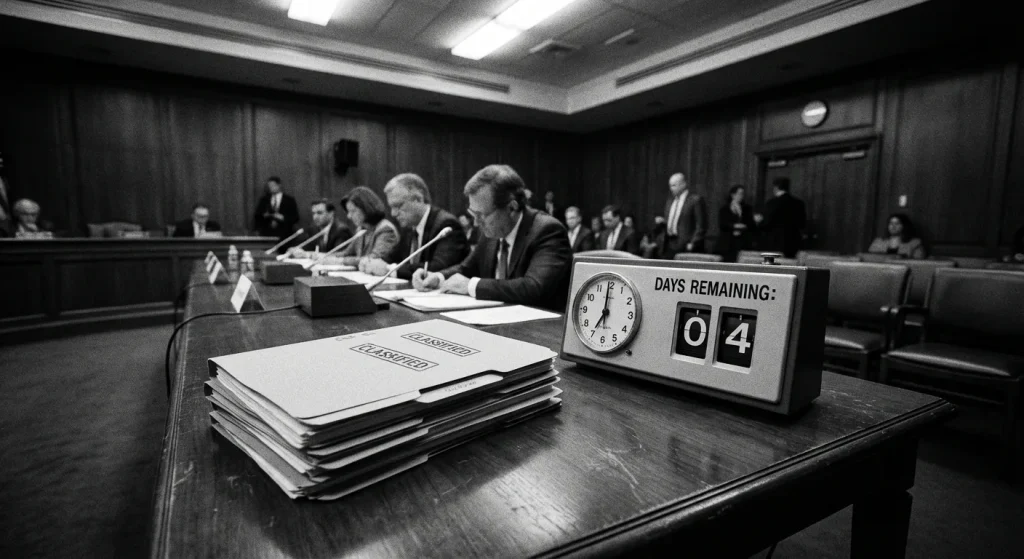
The pressure point is the clock. H.R. 1187 (119th Congress) was introduced on February 11, 2025, and its summary purpose is blunt: it requires the release to the public of all documents, reports, and other records relating to “unidentified anomalous phenomena” (UAP). The introduced bill text states, in relevant part, “Not later than 270 days after the date of enactment of this Act, the President shall direct each Executive agency to declassify and release to the public all agency records relating to unidentified anomalous phenomena.” That quoted sentence establishes both the “release to the public” obligation and the 270-day deadline, with the clock explicitly running “after the date of enactment.”
But “release” is where the real story lives. A deadline creates urgency, not magic. Agencies can still slow-walk production, lean hard on redactions, or read broad instructions narrowly. That’s why this bill matters even if you’re allergic to hype: it doesn’t guarantee a flood of clean, definitive records, but it does create a clear moment where stalling becomes easier to spot.
The timing makes sense if you remember what kicked this debate into a higher gear. The House Oversight Committee hearing titled “Unidentified Anomalous Phenomena: Implications on National Security, Public Safety, and Government Transparency” on July 26, 2023 put transparency, process, and oversight at the center of the conversation. David Grusch gave sworn testimony at that hearing, and press coverage reported he said Congress was kept in the dark. That claim isn’t “proof” of anything by itself, but it explains why lawmakers and the public keep pushing for receipts instead of rhetoric.
By the time you’re done here, you’ll know what H.R. 1187 orders, what makes its approach meaningfully different from prior attempts, and the realistic range of what could become public, so you can read the next batch of “disclosure” headlines with a sharper filter.
What H.R. 1187 Actually Requires
This bill is less a “new investigation” and more a forced paperwork reckoning on a clock. The bet behind H.R. 1187 is simple: if you put every executive-branch agency under one top-down order with a hard deadline, you create enough centralized pressure that UAP records stop living in scattered silos and start moving through an actual release pipeline.
Congress.gov’s description of H.R. 1187 centers on a direct mandate: it requires the President to direct each federal agency to declassify all agency records related to unidentified anomalous phenomena (UAP), the government’s catch-all term for anomalous objects or events that aren’t immediately identified, not just classic “UFO” sightings. The introduced bill text explicitly provides: “Not later than 270 days after the date of enactment of this Act, the President shall direct each Executive agency to declassify and release to the public all agency records relating to unidentified anomalous phenomena.” That language binds the release obligation to a 270-day period that begins “after the date of enactment.”
Congress.gov also frames the bill’s purpose around public release of UAP-related documents, reports, and records, which is the practical “why” behind the declassification push.
The 270-day clock is there to force priority and triage. Agencies that normally treat declassification as a slow, back-burner workload would have to treat UAP records as a coordinated, deadline-driven deliverable. What it does not guarantee is instant, total visibility on day 270. A deadline can force motion, but it can’t erase real constraints like review capacity, equities fights between agencies, or the need to protect legitimately sensitive sources and methods.
If you’re looking for what “all records” realistically reaches, think broadly: emails and memos, leadership briefings, analytic reports, watch officer logs, photos and video, radar and other sensor-derived products, case files, tasking messages, and contracting artifacts like statements of work or deliverables that reference UAP-related collection or analysis. The bill’s leverage comes from making agencies treat all of that as in-scope until it’s processed and accounted for.
Declassification is the official removal of classification status, not a promise that something shows up on a public website the same day. In practice, it means the agency runs the material through a classification review under the executive-branch rulebook, Executive Order 13526, which sets standards for when information can be classified and how it can be declassified.
EO 13526 draws a hard boundary around what qualifies for classification: information is classified only if unauthorized disclosure could reasonably be expected to cause specified harms to national security. That “harm” standard is why “declassify everything” never means “publish everything unedited.” Even under a directive like H.R. 1187, reviewers still apply EO 13526’s framework to decide what stays protected, what gets downgraded, and what can be cleared.
One EO 13526 point headlines often miss: public disclosure of information does not necessarily prevent initial or continued classification. So if something has been discussed publicly, that alone doesn’t force an agency to treat the underlying records as unclassified. The review still turns on the EO’s standards and any other legal protections that apply to specific categories of information.
Public release is the step where the government actually makes material available outside the classified environment, and that’s where the friction shows up. A record can be declassified in part, then released with redactions that remove still-protected details. Or agencies can stage releases, prioritizing high-demand items first while slower, more complex files take longer.
This is also where “agency equities” matter. A single document can touch multiple organizations, like a DoD report that references an intelligence collection program, a partner agency’s analysis, or a contractor’s proprietary data. Even if the lead agency wants to release, coordination can slow things down because each stakeholder gets a say in what can safely go public.
The clean mental model is two gates, not one: declassification answers “can this stop being classified,” while public release answers “what version of this can the public actually see.” H.R. 1187 is designed to force agencies to start pushing material through both gates instead of letting it sit indefinitely at the starting line.
Mandatory Declassification Review (MDR) is a formal declassification review path that’s distinct from FOIA, and it’s one reason headlines get sloppy. MDR is about reviewing classified information for possible declassification and release; FOIA is a broader access statute with its own exemptions and processing rules. H.R. 1187 sits above that day-to-day machinery by trying to impose a government-wide directive and deadline, but the actual work still gets executed through established review pathways and the same classification standards.
Here’s the practical takeaway: when you see “270 days to disclosure,” translate it into concrete compliance signals. Real compliance looks like agencies publishing processed records (even if redacted), maintaining an identifiable release channel, and showing a measurable flow of documents out the door. “Everything will be released” is a slogan. A steady, logged trail of declassified-and-published UAP records is the deliverable that matters.
How It Fits Recent UAP Legislation
That two-gate reality is also why the bill text is only half the story. The other half is how Congress routes, edits, and ultimately enforces a mandate like this once it hits the legislative machinery.
The real story is the legislative pathway – what survives and how it gets implemented. H.R. 1187’s 270-day clock is the attention-grabber, but the practical question is where its requirements land: as a standalone law with hard dates, as an NDAA amendment that gets negotiated down, or as narrower reporting language that agencies can satisfy without opening broad record sets.
H.R. 1187 distinguishes itself by trying to force two things at once: scope and timing. A fixed deadline changes behavior because it limits how long agencies can slow-walk searches, argue over custodianship, or park disclosure behind internal review queues. The catch is that “teeth” in Congress usually comes from the legislative process itself: funding levers, must-pass vehicles, and oversight pressure, not a magic enforcement switch inside a bill.
If an agency ignores a requirement, Congress’s classic backstop is contempt and subpoena enforcement, but those tools have legal and practical limits.
That’s why the Schumer and Rounds effort matters as context: they introduced a UAP declassification proposal modeled after the JFK Assassination Records Collection Act, and they pursued it through the NDAA amendment process. The model is structurally ambitious, but the NDAA route is where language gets traded, narrowed, or rewritten before it becomes binding.
| Item (status) | Timeline | Who runs review | What records | Enforcement / reporting |
|---|---|---|---|---|
| H.R. 1187 (introduced) | 270-day deadline (per bill text: “Not later than 270 days after the date of enactment”) | Not specified in the introduced bill text; the bill directs the President to direct each Executive agency to act | UAP-related records (per bill framing) | Deadline-driven compliance; practical leverage often comes via appropriations and oversight |
| Schumer/Rounds UAP declassification effort (introduced; NDAA amendment route) | Not specified in the introduced amendment text | Modeled on JFK Act-style structure (introduced concept); specific implementing authorities would depend on final text | UAP records collection approach (introduced concept) | What “survives” depends on final NDAA text and committee report direction |
| NDAA UAP provisions (enacted varies by fiscal year) | Usually recurring deadlines (reports/briefings) | Typically assigns tasks to DoD/IC components (varies by fiscal year) | Narrower slices (briefings, reporting categories) vs. full record releases | High compliance likelihood because NDAA is must-pass; requirements often phrased as reporting |
| Burlison “UAP Disclosure Act 2025” NDAA amendment (stated submission) | Not specified in the introduced amendment text; confirm via Congress.gov when amendment text is posted | Not specified in introduced amendment text | Not specified in introduced amendment text | Trackable by amendment number and disposition on Congress.gov once filed/considered |
The NDAA is where UAP language most reliably moves because it’s a must-pass authorization vehicle with a well-worn amendment pipeline. That pipeline is also the friction point: sweeping disclosure frameworks compete with classified equities, jurisdictional turf, and leadership priorities, so big “records release” ideas often reappear as narrower mandates that are easier to administer and harder to block.
That’s also why tracking matters. Rep. Eric Burlison has publicly said he submitted a “UAP Disclosure Act 2025” amendment to the NDAA, and amendments are typically traceable on Congress.gov by number and bill. A concrete example of how this tracking looks in practice is Congress.gov’s listing of a Senate amendment numbered 3111 amending S.2296 (NDAA; 119th Congress), which shows how disclosure-related concepts can be packaged, numbered, and dispositioned inside the NDAA workflow.
The takeaway for 2025 to 2026 headlines: “introduced” language is an opening bid; “NDAA amendment” language is negotiable; only the final enacted NDAA text plus committee reports tells you what agencies are actually required to do and by when.
Key Players Driving Transparency
That legislative pathway doesn’t move itself. It moves because specific committees decide what to prioritize, what to demand in closed sessions, and what to push into the public record.
This is less ‘mystery vs truth’ and more ‘which committee can ask which agency for what.’ Disclosure doesn’t move forward because the public is curious. It moves (or stalls) inside a few oversight lanes, each with its own jurisdiction, classification rules, and leverage.
Most UAP record fights are procedural: who has jurisdiction over the program, who controls the budget, and which members are allowed to see the underlying material in a secure setting.
| Lane | What it can credibly pressure | What you’ll usually see publicly |
|---|---|---|
| House Oversight | Transparency and agency accountability across the federal government | Hearings, letters, and document requests; this is why Oversight became a hub after the prior House Oversight UAP hearing |
| House Armed Services (HASC) | DoD programs, authorities, and budgets; HASC conducts oversight year-round and publishes an Oversight Plan for the 119th Congress | Budget-driven pressure and policy guardrails, often discussed in committee work that doesn’t translate into public document drops |
| Intelligence committees (HPSCI and SSCI) |
IC access and constraints; the Senate Select Committee on Intelligence is dedicated to overseeing the U.S. Intelligence Community, and the DNI oversees and directs the 18 IC elements. |
Classified briefings and tightly controlled disclosures, which is why “why isn’t it all public?” often has a jurisdictional answer |
House Oversight is also where H.R. 1187 lives in practice. Congress.gov shows the bill was referred to the House Oversight and Government Reform Committee on 02/11/2025, so this lane is positioned to set hearing agendas and demand updates.
Rep. Anna Paulina Luna is a visible catalyst here because she serves as chairwoman of the Task Force on the Declassification of Federal Secrets. Her public-facing work (hearings, requests for status updates) helps keep declassification pressure on the calendar, even when the underlying material remains locked behind classification rules. Meanwhile, public voices like Elizondo, Mellon, or Knapp don’t produce documents themselves, but they shape what members feel compelled to ask for on the record.
If you want one fast filter for the next “government UFO cover-up” headline, ask: which lane is it coming from? Oversight produces accountability theater and paper trails, Armed Services moves money and program boundaries, and Intelligence committees control access but rarely deliver public receipts.
What Could Be Declassified
Once you know which lanes apply pressure, the next question is what those lanes can realistically produce for the public: not just “answers,” but categories of records that can make it through review without burning sensitive capabilities.
Think “more documents, more context,” not “instant answers.” Even with a sweeping mandate, the most realistic outcome looks like a steady flow of paperwork, timelines, and sanitized artifacts that help you understand what the government saw and how it handled it, not a single, cinematic file dump that resolves every open question.
A good baseline for “what’s already out” is AARO’s public work. AARO published AARO Historical Record Report Volume I (March 8, 2024), and AARO has maintained public summaries and an incident dataset covering the period from May 1, 2023 through June 1, 2024. See AARO, “Historical Record Report Volume I” (March 8, 2024) for the published report and AARO’s public materials at https://www.aaro.mil/ for public summaries and dashboards. AARO’s reporting uses terms such as “unresolved” or “insufficient information to adjudicate” for incidents that remain without a conclusive explanation; where the reports use that language, this article adopts the same cautious terminology rather than broader characterizations like “hundreds of explained or unexplained cases” without attribution.
Start with the material that’s valuable for context but least likely to expose sensitive capabilities.
Historical case files and older internal correspondence are the classic low-risk bucket: closed or aged incidents, routing emails, internal “what do we call this” debates, and records that show which office owned follow-up. The friction is that names, locations, and collection details still get clipped. The actionable win is provenance: even redacted, these documents can pin down dates, chains of custody, and who briefed whom.
Analytical summaries and trend reporting are another likely release bucket, because they can be scrubbed while preserving the big picture: categorization of reports, recurring misidentifications, and which data gaps keep showing up. The catch is that a summary can clarify patterns without giving you the raw inputs that would let outsiders independently test the conclusions.
Sensor-related products are what everyone wants, and they’re exactly where redactions multiply. You can see stills, short clips, or slides, but expect cropping, blurring, and stripped metadata so the product doesn’t reveal collection geometry, platform performance, or processing techniques. When export-controlled tech is in the frame, releasability tightens further. Documents can include information whose export is restricted under the Arms Export Control Act (22 U.S.C. §2751 et seq.), and that kind of content often drives redactions rather than total silence.
The hardest categories are the ones that map directly to operational advantage: sensitive capabilities and operational details, ITAR-controlled technical data, and contractor proprietary information. ITAR-related technology often requires authorization to release at all, so even “declassified” material can stay effectively unreadable to the public. Contractor data adds another wall: pricing, design specifics, and performance parameters can be protected as proprietary even when the government acknowledges a program exists.
Releasing ITAR-related technology frequently requires authorization and formal export control processes; ITAR compliance also includes requirements like proper classification of items and technical data.
Extraordinary conclusions require extraordinary official documentation: a clear chain of custody, unambiguous sensor provenance, and enough technical context to rule out mundane explanations. Some cases remain unresolved in official reporting, but “unresolved” is not the same as “explained as something extraordinary.”
- Check the provenance: date, originating office, and who signed it.
- Read the redaction rationale: sources and methods, ITAR, proprietary, or something else.
- Compare it to AARO’s existing public reports to confirm it adds new facts, not recycled references.
Obstacles, Loopholes, and Enforcement
Those categories also hint at the choke points: anything tied to capabilities, sources, export controls, or multi-agency coordination is where the clock meets reality. That’s the gap between “a mandate exists” and “a public archive grows.”
Deadlines don’t release documents; process does. A 270-day promise grabs attention, but the real risk isn’t that “no records exist.” It’s bottlenecks, lawful carve-outs, and the gap between a review being “done” inside government systems and an actual, searchable public release you can read.
The slowest part is rarely a single agency saying “no.” It’s multiple offices arguing over “equities”: who created the record, who contributed sources, who owns a technical annex, and who has to sign off before anything moves. A clean declassification review still doesn’t equal a delivered public release, because posting requires packaging, metadata, formatting, accessibility checks, and often another round of coordination for attachments and referenced files.
Then there’s simple record-location friction. Older material can be split across legacy case systems, contractor-held repositories, and compartmented holdings that don’t show up in normal enterprise searches. Even when a document is located quickly, it can get parked in a queue behind higher-priority reviews, or re-routed for “equity” review with another component that runs on a different clock.
Redactions aren’t just about embarrassment. They protect capabilities and collection methods, active operations, sensitive relationships, and export-controlled technical details. This is also where you’ll see “sources and methods” show up: that shorthand is often the reason you get blacked-out pages even when the government confirms the document exists. Agency guidance routinely treats declassification and other withholding rationales as distinct steps, which is why “review completed” can still end in heavy redaction or partial release instead of a clean dump.
You can see this separation in how agencies describe protecting things like law-enforcement techniques while also treating “Declassification” as its own, separate review concept, which helps explain why a file can clear one gate and still be held up or trimmed at another.
Congress’s sharpest formal tool is the subpoena, and it can enforce subpoenas through contempt of Congress, including seeking criminal prosecution for noncompliance. On paper, contempt is the headline mechanism, but it’s not a simple on/off switch, and it operates within statutory and constitutional limits.
Congress has also historically used inherent contempt, alongside criminal contempt citations, as a way to compel compliance.
In practice, though, Congress more often gets results through legislative leverage: appropriations pressure, budget riders, and mandatory reporting requirements that make noncompliance costly, trackable, and embarrassing in plain text.
The easiest way to spot stalling is the paper trail. Missed or late required reports, “ongoing review” with no dated milestones, no public document portal, no release log, and no clear count of records located versus posted all point to a process that’s spinning. Progress looks boring: a standing repository, regular batch releases, consistent file naming, posted redaction justifications at a high level, and a cadence that keeps shrinking the backlog instead of redefining it.
What To Watch In 2025 And 2026
Because the failure modes are so procedural, the smartest way to follow this is procedural too. If you can’t point to an official artifact, you’re probably looking at noise.
Here’s how you track this like a grown-up: documents first, commentary second.
The news cycle rewards hot takes and viral clips. Real movement shows up in boring artifacts: committee PDFs, amendment text, posted exhibits, and audit findings you can actually quote.
- Open the Congress.gov bill page for H.R. 1187 and treat it as your master log: it’s where you’ll see actions, which committees and subcommittees have it, and any linked documents that get attached as the bill moves.
- Click the Congress.gov amendments page for H.R. 1187 and read the actual amendment text, not summaries. Amendments are where scope quietly changes, deadlines shift, and reporting requirements get rewritten.
- Scan the committees’ material tied to the bill: report filings, hearing notices, witness lists, and anything posted as “supporting” or “additional” documents.
If you want a reality check on status, Congress.gov also preserves the basic paper trail like referral and “Introduced” status, so you can separate “moving” from “talking.”
In 2025-2026, prioritize artifacts with institutional signatures: committee reports, hearing transcripts, and exhibits that get officially posted. Watch for new AARO publications as they appear (new reports, updated guidance, public data releases), and track any Inspector General or GAO audits the moment they’re announced and when the final PDFs drop.
Also watch for any official release mechanism that didn’t exist before: a dedicated reading room, a searchable database, or bulk downloads. That’s a structural shift, not a headline.
Momentum looks like: amendment text that tightens deadlines, committee documents that add enforcement hooks, and audits that name systems, repositories, and gaps. Spin looks like: “UAP sightings” compilations treated as proof, or “UFO sightings 2025/2026” chatter used to imply authenticated records exist. Sightings can be interesting leads, but they’re a different evidence category than government-validated documents.
One useful signpost: NDAA language can quietly change the plumbing. Draft FY2025 NDAA conference discussions reportedly included language directing AARO to partner with a Counter-UAS task force; that formulation was described in reporting on the FY2025 NDAA conference discussions (see reporting by Defense News for contemporaneous coverage of NDAA conference drafting activity: https://www.defensenews.com/). Such process tweaks typically appear in committee or conference text before they appear in public-facing documentation.
Cadence: do a monthly Congress.gov check-in, then re-check immediately after major hearings or NDAA drops. “Progress” is simple: more official documents, clearer obligations, and fewer unanswered “where is the record” questions.
A Test Of Government Credibility
All of this tracking collapses into one question you can actually score: did the mandate create more primary-source material you can cite, or did it just create better talking points?
The win isn’t a viral “government UFO cover-up” headline. It’s paper you can verify.
H.R. 1187 is ultimately a credibility test: either agencies produce verifiable records on a clock, or the public learns exactly where the walls still are. The bill’s “release to the public” posture, paired with the 270-day pressure you’ve already seen, sets a simple scoreboard: did anything actually get posted, in a form that can be authenticated and cited?
Even in the best-case scenario, “disclosure” will look more like a document dump than a movie reveal: memos, emails, case files, and technical attachments, often with heavy redactions. That’s also why AARO matters as the baseline. If new releases don’t materially exceed what AARO has already published, the story isn’t mystery, it’s administrative inertia.
The friction point is implementation: review is not release. Agencies can complete classification review while still slowing, narrowing, or sanitizing what reaches the public, and the enforcement levers Congress has are real but not unlimited. Add one hard stop: nuclear-related secrecy categories can override expectations, because the Department of Energy controls dissemination and declassification of Restricted Data (Atomic Energy Act), even when other records are being reviewed. Covert or ongoing intelligence operations also stay protected, and that usually shows up as redactions and withholding rationales, not dramatic admissions.
If you want a standard for “real progress,” stick to authenticated primary sources: Congress.gov for the bill text and legislative history, official AARO publications for the government’s baseline claims, and IG or GAO reports for oversight findings you can quote line by line.
Bookmark a tracker, subscribe for updates if you want the drip feed, and treat extraordinary claims as unproven until they’re backed by documents that are posted, sourced, and auditable.
Frequently Asked Questions
-
What is the UAP Transparency Act 2025 (H.R. 1187)?
H.R. 1187 is a bill introduced on February 11, 2025 (119th Congress) that requires the release to the public of all documents, reports, and other records related to “unidentified anomalous phenomena” (UAP). It directs the President to order each federal agency to declassify UAP-related records.
-
What does the 270-day deadline in H.R. 1187 actually require agencies to do?
The bill sets a fixed 270-day clock intended to force UAP records into a coordinated, deadline-driven declassification and release pipeline. The article notes the deadline creates urgency but does not guarantee instant, unredacted public access on day 270.
-
What kinds of UAP records could be included under H.R. 1187’s “all records” mandate?
The article says “all records” can include emails and memos, leadership briefings, analytic reports, watch logs, photos/video, radar and other sensor products, case files, tasking messages, and contracting artifacts like statements of work or deliverables. The bill’s leverage is treating all of those categories as in-scope until processed and accounted for.
-
What’s the difference between declassification and public release for UAP documents?
Declassification removes classification status under the executive-branch framework in Executive Order 13526, while public release is the separate step of making a version available to the public. A record can be declassified in part yet still be released with redactions, staged releases, or withheld details due to agency “equities,” sources and methods, export controls, or proprietary data.
-
How is H.R. 1187 different from NDAA UAP provisions or the Schumer/Rounds declassification effort?
The article says H.R. 1187 stands out for combining broad scope (“all” UAP records) with a specific 270-day deadline, while enacted NDAA UAP provisions more often require recurring reports/briefings rather than full record releases. It also notes the Schumer/Rounds proposal was modeled on a JFK Act-style framework pursued via NDAA amendments, where language is often negotiated down before becoming binding.
-
What are the biggest loopholes or bottlenecks that could limit UAP document disclosure even with H.R. 1187?
The article highlights multi-agency “equities” disputes, record-location friction across legacy and compartmented systems, and heavy redactions to protect sources and methods, operational details, ITAR/export-controlled technical data, and contractor proprietary information. It also notes nuclear-related secrecy can override expectations because DOE controls Restricted Data under the Atomic Energy Act.
-
How can I tell if H.R. 1187 is producing real UAP disclosure instead of headlines?
The article says real compliance looks like a measurable flow of processed records: a public repository/portal, batch releases, a release log, and counts of records located versus posted, even if redacted. It recommends using Congress.gov as the master log for actions and amendments, and comparing new releases against AARO’s existing public baseline (including the March 8, 2024 Historical Record Report Volume I).
