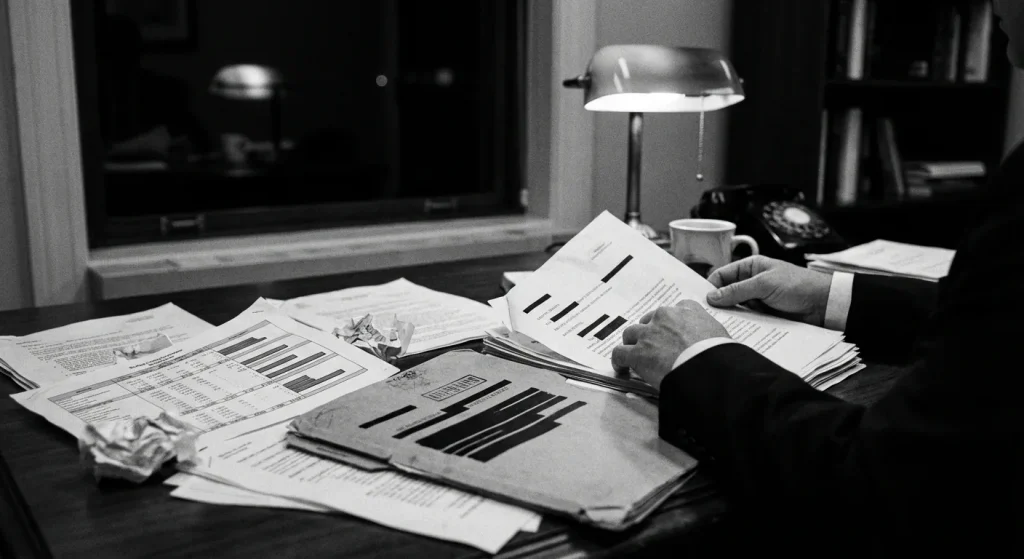
You keep seeing the “$22M UFO program” headline resurface, and the details never stay still. One retelling calls it AATIP, another swaps the office, a third insists the focus was threats, not “UFOs,” and suddenly you are left arguing over labels instead of evidence.
You are not looking for another viral summary. You want to separate what is documented from what is inference, and you want to know which claims can actually be trusted.
The story persists because it sits on two opposing forces: documented paper trail vs narrative inflation, and classification and opacity vs public certainty. The paper exists, but the missing context creates room for confident, incompatible narratives.
The modern flashpoint was a major New York Times story published Dec. 16, 2017, by Helene Cooper, Ralph Blumenthal, and Leslie Kean. See the New York Times report: “Glowing Auras and ‘Black Money’: The Pentagon’s Mysterious U.F.O. Program” (New York Times, Dec. 16, 2017). That reporting asserted the effort began in 2007 and was largely funded at the request of then Senate Majority Leader Harry Reid. It also described what reporters characterized as an analysis of unidentified airborne objects. Those three claims are the load-bearing beams of the entire “$22M program” narrative, and they keep getting repeated because they were presented as a concrete timeline with a named sponsor and a defined analytic target.
Later disputes did not kill the story because the documentation is real even when the interpretation is contested. A publicly available Reid letter from 2009 exists in government document repositories and is repeatedly treated as corroborating context for what the 2017 reporting framed as a Pentagon effort tied to anomalous aerospace concerns. See the Reid letter scan: Senator Harry Reid to Deputy Secretary William Lynn, June 24, 2009 (PDF), and the DIA FOIA reading-room entry describing that correspondence: DIA FOIA Electronic Reading Room – FileId 237611.
At the same time, the practical meaning of “secret” and the exact scope of the work remain disputed in public-facing accounts, and official engagement has not always come with full release of underlying congressional correspondence. That gap sustains the argument over what the program was called, what it actually did, and how formally it was housed.
That ambiguity lands in a moment when UAP (unidentified anomalous phenomena) is the preferred umbrella term in modern defense reporting because it covers more than a single “craft” interpretation, while UFO (unidentified flying object) remains the legacy public shorthand that drives clicks and keeps UFO news and UAP news cycles constantly refreshed.
The actionable move is simple: track a small set of anchor documents and dated claims, and treat everything else as interpretation until it is independently corroborated. That documentation-first filter is the only reliable way to read the $22M story without inheriting someone else’s conclusion.
How Reid Built the Funding Channel
The $22M story persists for a simple reason: Congress can steer national-security priorities even when the public cannot see the budget line that follows. Senator Harry Reid did that in plain bureaucratic language. On June 24, 2009, Reid sent a letter to Deputy Secretary of Defense William Lynn requesting the Department of Defense establish or support the Advanced Aerospace Weapon System program (AAWSAP/AATIP). The contemporaneous primary source is available: Sen. Reid, June 24, 2009 (PDF), and DIA’s FOIA catalog entry describing the correspondence is at DIA FOIA FileId 237611.
That is the mechanism-level insight. When senior leadership signals “fund and formalize this,” the next moves happen inside normal defense management: program elements, classified annexes, restricted briefings, and small, fenced efforts that never need a public, itemized “UAP” line for the money to exist.
The 2009 Reid letter itself is publicly available and commonly cited, which is why it anchors serious discussion better than secondhand recollections. It shows intent and senior-level sponsorship in a form that survives politics: written congressional correspondence. See the Reid letter scan: Letter by Senator Harry Reid, June 24, 2009 (PDF).
Contemporaneous reporting also ties that sponsorship to a specific purpose: the funding was requested by Reid to probe military pilot encounters with unexplained aircraft. That matters because it frames the program as a defense-intelligence question, not a pop-culture curiosity.
Language such as “secretly funded” is often used colloquially, but the public record in this case better supports phrasing such as “low-visibility or classified handling” of funds routed through obscured budget structures. Special Access Programs (SAPs) impose additional access controls and distribution restrictions that make reconstruction from public documents difficult. For an authoritative primer on SAP handling and special security controls, see the CDSE student guide on SAPs: CDSE – SAP overview. The DoD and oversight bodies use different terminology than “black program,” and the colloquial phrase “black budget” has no precise DoD regulatory definition; the CDSE guide helps distinguish formal SAP controls from informal characterizations.
The same dynamic explains why paper can exist without being widely shareable: reporting on the Pentagon’s posture indicates DoD responded to Reid’s 2009 memo while declining to release the underlying correspondence. In other words, the bureaucracy acknowledges the interaction, but the supporting artifacts are not broadly distributable.
DIA is built to handle threat questions that do not fit neatly inside a single service’s operational lane. If the problem statement is “unexplained aerospace objects reported by military aircrew,” it naturally maps to intelligence work: collecting reports, assessing credibility, characterizing capabilities, and producing threat-informed analysis for decision-makers. DIA also has an institutional culture of compartmented work, where distribution is restricted by mission need, not public interest.
That is where access practices generate lasting ambiguity. A Special Access Program (SAP) is a national-security program where access is restricted beyond normal classification, typically to a smaller set of cleared personnel with a specific need to know. Whether or not any given effort is formally a SAP, the access model is common: limited briefings, tight distribution lists, and innocuous naming conventions that keep the work from being discoverable through casual searches or routine oversight touchpoints.
The result is predictable. Outsiders hear “secret,” assume “nonexistent,” and then treat gaps in the public record as proof of a cinematic cover-up. Inside the system, the same gaps are just what compartmentalization produces: fewer people read in, fewer documents shared, and fewer durable references that survive a staff turnover cycle.
- Look for named requests in dated letters to senior officials that ask DoD to “establish” or “support” a program and use consistent program naming (even if the acronym shifts).
- Track administrative homes by identifying the agency or office referenced in correspondence, solicitations, or funding documents, then asking whether that organization’s mission plausibly matches the stated problem.
- Identify access language such as “need to know,” restricted distribution, special security handling, or compartment references; these are the fingerprints of controlled access, not proof of fantasy.
- Find oversight hooks including references to briefings, responses to congressional inquiries, or budgetary notifications; legitimate programs leave governance traces even when details stay classified.
Readers who anchor on those markers can evaluate future “hidden program” claims with discipline: documented sponsorship plus bureaucratic trace points signal compartmented reality, while stories with no paper trail and no governance references collapse under basic scrutiny.
Even when the funding pathway is clear, the public record still leaves a practical problem: the same effort is described under different acronyms depending on whether you are reading letters, FOIA entries, or media coverage. That naming friction is where many $22M arguments start, because labels can drift faster than the paperwork.
AATIP or AAWSAP: What Was Funded?
The naming fight persists because public shorthand and contracting reality do not line up cleanly in the surviving record. The label AAWSAP (Advanced Aerospace Weapon System Applications Program) shows up as the program name tied to a contracted Defense Intelligence Agency effort, while AATIP (Advanced Aerospace Threat Identification Program) dominates public accounts as the name for a Pentagon-linked UAP analysis effort discussed by officials, participants, and reporters. When readers treat those labels as interchangeable, headlines start implying funding and authorities that the contracting artifacts do not automatically prove.
One of the cleanest anchors is that official correspondence uses the names together, not as neatly separated boxes. A DIA FOIA reading-room entry describes a June 24, 2009 letter from Sen. Harry Reid to Deputy Secretary of Defense William Lynn requesting action on “Advanced Aerospace Weapon System” efforts and explicitly pairing the AAWSAP and AATIP labels in the same breath. See the DIA FOIA entry: DIA FOIA – FileId 237611.
The same period’s paper trail includes Reid’s 2009 letter concerning the AATIP/AAITP program as preserved in a publicly hosted copy: Sen. Reid, June 24, 2009 (PDF). Whatever internal naming was used day-to-day, the congressional-facing documentation demonstrates that senior stakeholders themselves used “AATIP” as a recognizable handle when pushing the topic through the Department.
Public reporting about the Department’s handling of that memo describes an official response while noting that the supporting correspondence was not made available. That combination matters because it shows the label moving through an official workflow, while still limiting what outsiders can confirm by document request alone.
The most consequential disputed claim is about which name tracks the funded work. In the sourcing used for this article, AAWSAP is described as the official program label for the contracted effort, while AATIP is described as an informal DoD effort that had no separate funding line. In that same sourcing, Reid and James Lacatski are specifically cited as saying AATIP had no separate funding. Treat that as an attribution, not as a contracting fact, unless a contract modification, funding document, or budget line is produced that uses “AATIP” as the funded entity.
Complicating this further, major media reporting has widely framed the effort as “AATIP” and described it as funded at Reid’s request, which is why the public vocabulary often collapses the whole episode into that acronym. That public framing is real and influential, but it is not the same thing as showing which program name appears on the award instrument and invoice trail.
The friction here is practical, not mystical. Journalists need a stable label, officials use shorthand in memos, and participants describe what they experienced, not what a contracting officer typed into a procurement system. If the contracted DIA effort had a formal name (AAWSAP) while internal analysis or follow-on discussions were referred to conversationally as “AATIP,” two honest descriptions can coexist and still produce incompatible reader assumptions about what was funded, by whom, and under what authority.
That ambiguity is also why downstream speculation grows fast: if “AATIP” becomes the household name, every later claim about “AATIP activities” gets mentally backdated into the period of the documented contract, even when the only hard artifacts available to the public are contracting-adjacent.
A DIA FOIA record documents award details and points readers to the contracting instrument. See the DIA FOIA reading-room entry for the award: DIA FOIA – FileId 170018, and the DIA FOIA request log: DIA FOIA Request Log (2022). The FOIA materials and contemporaneous contracting references identify the contractor as Bigelow Aerospace Advanced Space Studies (BAASS) and list the contract number as HHM402-08-C-072. The FOIA summary references a “TOTAL AWARD AMOUNT” entry; the public FOIA index points researchers to FileId 170018 for the full award documentation, though an explicit line-item obligated amount is not reproduced in every public FOIA index entry. Use the FOIA file to request the specific award instrument and any modifications tied to HHM402-08-C-072.
Contract language also required that each individual assigned to the contract be identified, cleared, and approved through DIA/DAC-3 prior to being granted access. That control explains two things at once: first, why participation claims are checkable in principle (there is a gate list), and second, why public detail is structurally limited (access is tied to approvals, not open distribution). When a claim about “who worked it” is made without reference to those approval controls, it is not anchored to the way the work was actually governed.
- Demand a contract identifier (contract number, award date, obligated value) before accepting any statement that a named program was “funded.”
- Request the FOIA log reference tied to the award details, then use it to trace the underlying instrument and scope language.
- Separate “people said” from “documents show,” especially when a popular acronym (AATIP) is doing more work than the paperwork supports.
Once those acronyms entered the public conversation, the dispute stopped being purely about contracting labels and started turning on personalities, public statements, and institutional walk-backs. That shift is why the same set of documents can fuel different narratives, depending on whose account a reader treats as authoritative.
The Cast Behind Modern UAP Disclosure
The modern UAP disclosure controversy is sustained less by new facts than by conflicting authoritative voices describing the same events differently. The friction is not just between “believers” and “skeptics”; it is between a small set of named advocates and a large institution whose public statements have shifted over time, leaving readers to reconcile incompatible-sounding accounts of the same program names (AATIP, AAWSAP) and the same set of claims.
The timeline spine starts in 2017, when the existence of AATIP (Advanced Aerospace Threat Identification Program) became a public story alongside mainstream media Department of Defense video footage of an encounter. That pairing mattered: it fused a program name with visual military imagery, so later disputes over scope or leadership were never going to stay abstract.
The complication came from subsequent Department of Defense messaging. The Pentagon at one point stated AATIP “wasn’t about UFOs” and denied that Luis Elizondo led the program, while also acknowledging that it investigates reports of unidentified aircraft encountered by U.S. military aviators through normal procedures. Those positions are not interchangeable, and the gap between them is where durable disagreement grows: critics hear “not UFOs” as a walk-back, while advocates hear “normal procedures” as confirmation that the underlying issue was always real even if labels were contested.
Harry Reid sits at the origin as sponsor and advocate in the documentary record. In a June 24, 2009 letter to the Deputy Secretary of Defense, Reid pressed for action related to AAWSAP/AATIP, pushing the Department to treat the effort as serious enough to resource and protect. That letter does not settle every later naming dispute, but it does anchor a key point: a senior lawmaker was actively urging DoD leadership to engage the topic through formal channels, not rumor. See the Reid letter: Sen. Reid, June 24, 2009 (PDF).
Reid also stayed publicly engaged after leaving leadership. In one public quote, he framed UAP research as being “in its infancy,” signaling that, in his view, the government had not closed the book on the subject. That posture matters because it reinforces why later advocates kept treating the story as unfinished business rather than a closed historical footnote.
Luis Elizondo is the public association point: he has been identified as tied to AATIP and he has contested characterizations of what the work was. The article previously referenced an “internal records memorandum dated October 4” but no verifiable public citation for that specific memorandum was identified in the provided source set, so that item has been removed from this narrative pending a verifiable source. Christopher Mellon functions as the pressure node: he amplified the national-security framing and pushed for oversight and process changes, which raises the cost of vague answers. George Knapp functions as the media amplifier: he provided a channel where personalities and claims reached a mass audience quickly, which rewarded clarity but also punished nuance, especially when DoD language shifted.
Institutional constraints generate contradictions even when nobody is “lying.” Classification rules force public affairs to speak in narrow lanes. Compartmentalization means sincere officials can have partial pictures. Program naming and ownership can change as offices reorganize, and later spokespeople often inherit records that were never built for external scrutiny. The result is predictable: advocates speak in narrative continuity, while DoD spokespeople speak in bounded, document-defensible fragments. Those two styles collide, then harden into camps.
David Grusch is a later amplifier. He testified under oath before a House Committee on Oversight and Accountability, which intensified demands for document production and forced more members of Congress to treat UAP claims as oversight issues rather than internet lore. His testimony raised stakes; it did not retro-prove the 2007 funding story. Sworn testimony is evidentiary, but it is not a substitute for contemporaneous budget documents, tasking memos, or signed directives tied to the original funding channel.
Use an evidence hierarchy. First, prioritize contemporaneous documents created for internal decision-making. Second, treat sworn testimony as serious, but separate what was said under oath from what is documented in the record. Third, look for consistent corroboration across independent sources that do not share incentives. Treat single-source anecdotes as provisional until they cash out into paperwork or formally attributable, on-the-record confirmations.
That evidentiary tension-public claims colliding with partial records-is also what pushed the fight into Congress. When executive-branch messaging shifts, oversight tends to respond by formalizing reporting requirements and creating offices whose outputs can be audited.
Congress, AARO, and the New Transparency Fight
The 2007 funding controversy left a durable lesson for Congress: money can move faster than accountability. After 2017, the argument stopped being “do you believe the stories?” and became “what are agencies required to report, and to whom?” That shift matters because oversight is enforceable in a way that speculation is not. A classified program can hide behind compartmentalization; a reporting mandate forces an interface with Congress, inspectors general, and eventually the public record through hearings, letters, and released documents.
AARO (All-domain Anomaly Resolution Office) is the Pentagon office Congress tasked with standardized collection, analysis, and reporting on UAP across domains, specifically to replace ad hoc, stovepiped handling inside separate commands and agencies. The statutory authorization and related provisions trace to the FY2022 NDAA. See the FY2022 statutory text and related enactment: National Defense Authorization Act for FY2022 (text). The practical point is not that a single office “solves” the issue; it’s that Congress created a single intake and synthesis mechanism that can be audited. Standardization is the lever: common definitions, consistent case intake, and repeatable analytic workflows produce a record that can be briefed, compared year over year, and challenged when gaps appear.
The friction is obvious. A mandate creates a process, not instant disclosure. AARO’s output is constrained by classification rules, competing equities (intelligence sources and methods, operational security), and the fact that it depends on other organizations to share data. Congress’s response has been to tighten the reporting and briefing requirements rather than to assume cooperation.
One concrete tool is statutory direction that AARO provide expanded congressional briefings on UAPs. The Schumer-Rounds amendment text, published on Democrats.Senate.gov, is explicit about its goal: expeditious disclosure of unidentified anomalous phenomena records. See the amendment text: Schumer-Rounds UAP Disclosure Act amendment (uap_amendment.pdf). The stated purpose sets a policy north star, but it does not erase the hard part: implementation. “Disclosure” language can exist while agencies still fight over what qualifies as a UAP record, what must be reviewed, what can be declassified, and what stays locked due to sources-and-methods claims. Readers should treat the amendment as a mechanism proposal and an intent signal, not proof that a specific fact pattern has been confirmed.
Congress also recognized that some claims will never surface through normal reporting chains. The House Oversight resource titled “Unidentified Anomalous Phenomena (UAP) Whistleblowing under the James M. Inhofe NDAA for FY2023” provides guidance and procedures for protected disclosures. See: House Committee on Oversight and Accountability – Whistleblower resources. The key oversight value is procedural: a defined route for protected disclosures and committee handling. The limit is equally important: a whistleblower channel authenticates that someone made a protected report, not that the underlying claim is true, complete, or declassifiable.
Track official transparency by artifacts, not vibes: briefing references in committee materials, released PDFs of introduced legislative text, and hearing records that pin claims to dates and jurisdictions. Then ask a disciplined question each time: is this new authority (a reporting requirement, a briefing direction, a whistleblower pathway) or new facts (verifiable records, declassified data, or sworn testimony corroborated by documents)? Oversight tools can force the government to account; they cannot, by themselves, guarantee what the accounting will reveal.
Those tools also set the standard for what counts as a meaningful update: not a recycled acronym, but a traceable record. That is why the most useful signals in the next cycle are the procedural artifacts that show who asked, who answered, and what was actually released.
Key Timeline at a Glance
| Date / Event | Type of evidence | Sources and identifiers |
|---|---|---|
| 2007 – AATIP start year claim | Media-attributed claim | “Glowing Auras and ‘Black Money'” (New York Times, Dec. 16, 2017) – the Times reported the program began in 2007; treat as media-attributed until matched to contemporaneous budget/tasking documents. |
| June 24, 2009 – Reid letter | Document-backed | Senator Harry Reid letter to Deputy Sec. William Lynn, June 24, 2009 (PDF); DIA FOIA catalog entry: DIA FOIA – FileId 237611. |
| Contract award period / value (AAWSAP) | Document-backed but partial public disclosure | DIA FOIA index and FOIA request log point to the award instrument: DIA FOIA – FileId 170018 and DIA FOIA Request Log (2022). FOIA records identify contractor as Bigelow Aerospace Advanced Space Studies (BAASS) and contract number HHM402-08-C-072; the FOIA file points to total award references, though an explicit public line-item obligated amount is not reproduced in every index entry. |
| 2017-2020 – DoD public messaging and follow-up reporting | Official statements and media reporting; partly disputed | Department statements and media follow-ups (see New York Times follow-ups and DoD public affairs clarifications summarized in reporting). Treat individual statements as attributable unless supported by contemporaneous internal documents. |
| FY2022 and later – statutory oversight and AARO creation | Document-backed (statute and office) | FY2022 NDAA statutory text and AARO establishment: FY2022 NDAA (text); AARO official page: AARO. |
What to Watch in 2025 and 2026
Instead of relying on unverified social-media dates, monitor categories of official hearings and posted committee materials where durable records are created. Use the committees’ official calendars and hearings pages to confirm notice dates, transcripts, and posted materials before treating a claim as tied to formal oversight. Useful tracking pages include:
- House Committee on Oversight and Accountability – Calendar
- House Armed Services Committee – Calendar
- Senate Armed Services Committee – Hearings
- Senate Select Committee on Intelligence and House Permanent Select Committee on Intelligence – Hearings
- AARO – Congressional and Press Products for AARO briefings and reports
Monitor these categories rather than hard dates: posture hearings and domain-specific posture reviews (Air Force, Navy), oversight hearings on transparency and whistleblower handling, intelligence-oversight briefings, and GAO or inspector general audits that reference UAP reporting chains. When a committee posts a hearing notice, transcript, or an official QFR or brief, that creates a durable record you can cite.
A spike in “UFO sightings” posts is not evidence of validated defense reporting. Credible pipelines have provenance: sensor source (radar, EO/IR), chain of custody (who held the data, when), official acknowledgment (on-record, attributable), and corroboration (multiple sensors or independent witnesses aligned to time and location). Viral narratives rarely provide any of that.
- Pull primary materials (hearing video, transcript, posted statements, PDFs) before reacting to summaries.
- Verify dates and venue (committee calendars and hearing notices) so you are not chasing miscaptioned clips.
- Demand provenance for any “leaked” imagery: sensor type, timestamp, custody, and whether it was ever briefed officially.
- Check oversight touchpoints (IG, GAO, or committee correspondence) for a formal reference to the claim.
- Refuse label-driven conclusions; classify the claim by evidence quality, not by “UAP” versus “alien.”
Conclusion
The $22M episode is a case study in how national security programs become public controversies: a few hard documents plus many confident interpretations. The central lesson is simple: documentation is real, but interpretation is optional, and the gap between the two is where certainty gets manufactured.
The firmest public anchor remains the 2017 New York Times reveal that put a “$22 million” Pentagon-linked effort into mainstream view. See: New York Times, Dec. 16, 2017. The second anchor is a primary document you can read yourself: Sen. Harry Reid’s publicly available June 24, 2009 letter requesting Pentagon support tied to AAWSAP and AATIP. See: Sen. Reid letter, June 24, 2009 (PDF).
That letter’s value is not symbolic-it is operational for readers, because it gives you a dated, attributable starting point that can be checked against later claims about names, scope, and sponsorship.
The unresolved friction is labeling. Some sources frame AAWSAP as the official contract-backed vehicle, while AATIP is described as informal or not separately funded. That dispute persists because FOIA logs, contract control markers, and amendment language are unevenly available, and because DoD messaging has shifted over time, including disputes about AATIP’s focus and Elizondo’s role.
Today’s oversight tools exist to narrow this gap: AARO briefings, NDAA disclosure language, Schumer-Rounds-style mechanisms, and protected whistleblowing pathways. The thin 2025 to 2026 public calendar of verifiable releases is the point: track records, not vibes.
- Read the June 24, 2009 Reid letter itself, not paraphrases. See the Reid PDF: Sen. Reid, June 24, 2009.
- Collect any released PDFs of contract modifications or amendment text that explicitly tie dollars to program labels; start with the DIA FOIA index for the award: DIA FOIA – FileId 170018.
- Verify claims against hearing transcripts and written QFRs, then cross-check them with FOIA log references and case numbers. The DIA FOIA request log is here: DIA FOIA Request Log (2022).
- Use GAO-24-106911 as an integrity baseline: GAO-24-106911, “Federal Contractors: Actions Needed to Improve Quality of Performance and Integrity Data”. That GAO report assesses gaps in contractor integrity reporting systems and recommends steps for OMB, DOD, and GSA to improve reporting and compliance; it is relevant here because tracing contractor award records, modifications, and integrity reporting is central to reconstructing who received funds and how reliably those records are maintained.
- Keep asking the same discipline questions: What document proves the label? What document proves the money trail? What changed in official messaging, and when?
If you want more reporting built on primary records, subscribe for updates.
Frequently Asked Questions
-
What was AATIP and why is it called the “$22 million UFO program”?
AATIP (Advanced Aerospace Threat Identification Program) became widely known after a Dec. 16, 2017 New York Times report that described a Pentagon-linked effort starting in 2007 and associated it with roughly $22 million in funding. The article explains the headline persists because a real paper trail exists, but the program name, scope, and how the money was routed remain disputed in public accounts.
-
What document proves Senator Harry Reid pushed the Pentagon to fund a UAP/UFO-related program?
A publicly available June 24, 2009 letter from Sen. Harry Reid to Deputy Secretary of Defense William Lynn requests the Department of Defense establish or support the “Advanced Aerospace Weapon System” program and links AAWSAP/AATIP. The article treats this dated congressional correspondence as the strongest public anchor for senior-level sponsorship.
-
What’s the difference between AAWSAP and AATIP in the public record?
AAWSAP (Advanced Aerospace Weapon System Applications Program) is described as the official name tied to a contracted Defense Intelligence Agency effort, while AATIP is described as a Pentagon-linked analysis effort that may not have had its own separate funding line. The article notes a DIA FOIA reading-room entry that references Reid’s June 24, 2009 letter and pairs the AAWSAP and AATIP labels together.
-
Did AATIP actually have its own budget line, or was the funding under AAWSAP?
The article states that in its cited sourcing, AAWSAP is presented as the contract-backed vehicle while AATIP is described as informal and not separately funded. It specifically notes Reid and James Lacatski are cited as saying AATIP had no separate funding, and advises treating that as attribution unless contract or budget documents explicitly label “AATIP” as the funded entity.
-
What does “black budget” or “secretly funded” mean in the $22M AATIP story?
In this context, “secretly funded” refers to low-visibility but lawful funding routed through classified or obscure budget structures rather than an openly itemized public line. The article emphasizes that “secret” does not mean “unappropriated” or “off-the-books,” but spending that is hard to reconstruct from public budget documents.
-
What specific details should I look for to verify a claim that a UAP program was funded?
The article says to demand contract identifiers such as a contract number, award date, and obligated value, and to use a FOIA log entry to trace the underlying instrument. It also recommends looking for dated letters requesting DoD action, restricted-access language (need-to-know or special handling), and oversight hooks like briefings or responses to congressional inquiries.
-
If I want to follow credible UAP disclosure updates in 2025-2026, what should I watch instead of viral UFO news?
The article says the strongest signals are procedural artifacts like hearing transcripts, posted PDFs, oversight letters, and audit trails showing who asked, who answered, and what was released. It points to scheduled oversight venues such as the House Armed Services Committee Air Force FY2026 posture hearing on June 5, 2025, and stresses verifying dates/venues and pulling primary materials before trusting summaries.
