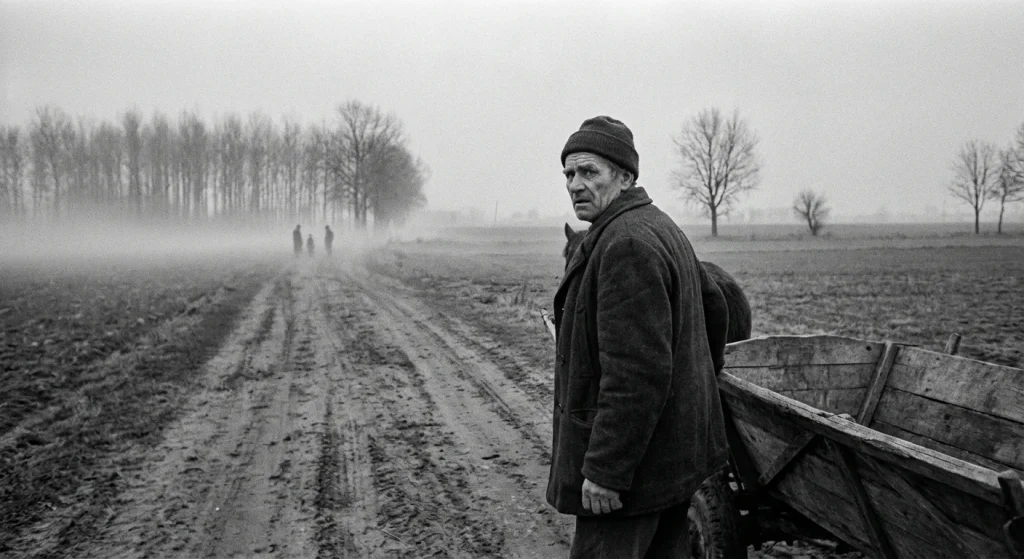
Emilcin endures in UFO talk for a simple reason: it is not just a floating story. It is a place-anchored alleged abduction claim tied to a named experiencer, a specific date, and a physical marker you can stand in front of.
Methodology note: This article summarizes what can be supported by the sources cited below, which include travel and culture coverage, encyclopedic summaries, archived photos, and a small set of contemporary and retrospective treatments (not all contemporaneous primary documents). Where claims could not be confirmed from those sources, the text says so and lists which sources were checked (for example, Atlas Obscura, English Wikipedia, Culture.pl, Wikimedia Commons, Apple Maps, and related links cited in-line).
If you are trying to separate durable UAP cases from internet noise, Emilcin is the kind of name that keeps resurfacing even when contemporaneous documentation is sparse. The frustration is familiar: the story is compelling enough to revisit, but the verification problem never fully goes away.
The core tension is psychological and practical. Local memorialization makes a claim feel more concrete than it is on paper: stone and metal have a way of implying closure, even when the underlying record is incomplete. That is why Emilcin is repeatedly treated as a “real” case in casual retellings long after other one-off anecdotes fade.
Here are the identifiers that keep it pinned to the calendar and the map: Emilcin, in Opole Lubelskie County within Lublin Voivodeship, is linked to the claimed abduction of farmer Jan Wolski dated May 10, 1978, and a UFO monument known as the Emilcin UFO memorial exists in Emilcin, Poland and is associated with that claim (Atlas Obscura, Wikipedia).
“Alleged” matters here as a reporting label, not a wink or a dare: it signals the event is widely reported and culturally repeated, but not independently verified to a standard that would settle it. Emilcin’s staying power comes from that mix of specificity and ambiguity, amplified by a familiar trope in UFO lore: retellings frequently frame notable cases as involving multiple witnesses, which boosts perceived credibility even when the supporting details are uneven.
The takeaway is straightforward: evaluate Emilcin by separating what is documented, what is only reported, and what the memorial itself contributes to the story’s persistence.
What happened in Emilcin
The timeline most people repeat about Emilcin reads like a scene-by-scene narrative, but the sources cited here do not anchor that narrative with contemporaneous documentation, direct quotations, or a verified time and route reconstruction. At the level these sources can support, the case reduces to three identifiers that anchor most retellings: May 10, 1978; Jan Wolski; Emilcin.
Reported in later retellings: Secondary summaries identify the experiencer as farmer Jan Wolski and place the alleged incident in Emilcin on 10 May 1978. In these retellings, the day begins as an ordinary rural routine that becomes an encounter narrative, but the sources cited here do not preserve the step-by-step setup in a form we can quote or timestamp (Wikipedia, Culture.pl).
What we can’t verify from the sources cited here: There is no source among those checked that reconstructs where Wolski started, where he was headed, which road or field edge he took, or what time of day any “pre-encounter” observations occurred. The longer documents consulted are about related cultural context and retrospective coverage rather than contemporaneous primary records, so they cannot be used to supply missing timestamps, geography, or first-person wording.
Reported in later retellings: The core allegation is consistent across the summaries in these sources: Wolski is said to have encountered non-human beings and to have been abducted, with the date commonly given as 10 May 1978. The public memorial text and travel-style summaries treat the event as an alleged abduction case tied to his name and that specific day (Atlas Obscura).
What we can’t verify from the sources cited here: None of the materials checked supply direct quotations attributed to Wolski preserving the beings’ physical details, quoted dialogue, or a time-coded sequence. That means no verifiable lines about the beings’ appearance, number, behavior, communication method, craft interior, or exact duration that can be robustly timestamped from contemporaneous records.
Reported in later retellings: A social-posting reference and later media pieces point to short-form media covering the Emilcin encounter. Examples of retrospective multimedia treatments include a podcast episode titled “The Emilcin Abduction: A Farmer’s Encounter with the Unknown” (Mysteries at Bedtime on Apple Podcasts) and a YouTube video summary “Don’t Follow These Children Into The Woods – The Emilcin Abduction” (Apple Podcasts episode, YouTube video).
What we can’t verify from the sources cited here: Those media items are secondary or retrospective summaries; transcripts or time-coded interview materials from 1978 are not included among the checked sources, so they cannot serve as contemporaneous primary documentation for specific quoted wording or minute-by-minute reconstruction.
Reported in later retellings: The existence of public commemoration is itself a later-stage claim that the story persisted: travel and culture coverage note a statue in Emilcin commemorating an alleged 1978 UFO-related event (Atlas Obscura).
What we can’t verify from the sources cited here: The materials examined do not include dated contemporaneous notes from May 1978 such as police reports, medical records, or same-day interview transcripts attributable to Wolski and signed or archived at the time.
Reported in later retellings: Later public attention is part of the case’s cultural footprint: several accounts credit researcher Zdzisław Blania (also referenced as Zbigniew Blania-Bolnar in some sources) with investigating and publicizing the incident shortly after 10 May 1978. That publicity reportedly coincided with additional alleged sightings in nearby locations such as Przyrownica and Golina (Culture.pl on Blania and the incident, Wikipedia).
A defensible reconstruction of May 10, 1978 needs contemporaneous materials that can be dated and checked: an interview record that preserves Wolski’s words, a mapable route and time-of-day estimate tied to identifiable landmarks, and preserved first-disclosure details (who heard what, when, and under what circumstances). It also needs basic statement-handling discipline: separating witness memory from interviewer prompts, documenting who was present, and maintaining a clean chain of notes, which is exactly the kind of procedural rigor best-practice guides emphasize even when they do not supply case-specific facts.
| Timeline element | Safe to repeat (as “reported/claimed” from the sources cited here) | Requires sourcing before treated as fact |
|---|---|---|
| Date and named experiencer | Claimed: Jan Wolski; 10 May 1978; Emilcin | Any precise hour, duration, or dated contemporaneous statement |
| Core event type | Claimed: encounter described as “aliens” and an alleged abduction | Beings’ appearance, number, behavior, communication method, craft description, interior details, quoted dialogue |
| Route and locations | Only the general setting “Emilcin” is supportable here | Origin, destination, road/field path, exact encounter point, exact return point, mapable coordinates |
| Immediate aftermath | No documented immediate-actions timeline exists in the sources cited here | Who he told first, medical visit, report to authorities, dated notes, first investigator contact, any same-day corroboration |
| Later public footprint | Claimed: later commemoration and later publicizing by named individuals | How and when those later accounts were built from primary testimony |
Witnesses, records, and early investigators
The timeline limits above point directly to the next question readers usually ask: was anyone else in a position to corroborate the account, and is there a preserved record of what they said? The Emilcin story keeps its cultural weight because it is routinely presented as corroborated, not merely vivid: the implication is that other people also saw something connected to the event. Corroboration is the hinge here. In the sources cited here, the supporting layer readers expect to find—named people, dated statements, and preserved records—is not actually present in contemporaneous form.
Some secondary summaries and retrospective treatments have described Emilcin as one of Poland’s best-known alleged abduction claims in English-language UFO literature. For example, Culture.pl’s English-language treatment frames Emilcin as a prominent Polish encounter in international discussions, and encyclopedic summaries on Wikipedia similarly treat it as a notable Polish case in the literature (Culture.pl, Wikipedia). Other characterizations that call it “Poland’s only notable alien abduction” were not found among the authoritative sources checked; instead, travel and cultural coverage emphasizes the memorial and the case’s prominence in English-language retellings (Atlas Obscura).
Without contemporaneous specifics, multi-witness framing functions more like rhetoric than verification. It tells you how the story is positioned inside Polish UFO lore, not how much of it can be independently tested.
The story’s reach is also tied to who amplified it. The case was investigated and publicized early on by researcher Zdzisław Blania (also cited in some sources as Zbigniew Blania-Bolnar), who reportedly traveled to Emilcin shortly after the alleged incident and interviewed Jan Wolski; retrospective accounts credit his early role in documenting and circulating Wolski’s account (Culture.pl, Grokipedia). Later alleged sightings in nearby places such as Przyrownica and Golina are discussed in secondary reporting and community posts, but those later reports require separate sourcing and timeline checks to assess independence (Culture.pl, Wikipedia).
Three concepts determine what is checkable in an older case. A primary source is original material created close to the time of an event, and it matters in Emilcin because it locks details to a date rather than to decades of repetition. A secondary witness is a person other than the main experiencer who reports seeing related events or objects, and named secondary witnesses are the fastest route to independent corroboration. A documentation trail is the chain of preserved materials supporting what can be checked over time, and cases from the 1970s live or die on that trail.
The materials checked for this article include cultural coverage and encyclopedic summaries, but do not include a preserved cache of dated, contemporaneous witness transcripts or official police or medical files from May 1978. That gap does not disprove anything; it does limit what can be verified from the sources cited here.
Actionable takeaway: treat “multiple witnesses” as evidentiary only when three items are available together, named individuals, preserved statements or recordings, and proximity in time to the event. If any one of those is missing, read the claim as an assertion of support, not support you can independently verify.
The memorial that made it real
That evidentiary gap is exactly why the Emilcin monument matters so much in practice: it supplies a tangible reference point even when contemporaneous records are thin. The Emilcin story has plenty of contested details, but it has one publicly accessible anchor: a physical memorial. A monument changes a case from something you read about to something you can point to on a map. That shift does not prove the underlying event, but it reliably increases attention, hardens the story into local lore, and gives the claim a durable place in public memory.
A statue or monument in Emilcin commemorates the alleged UFO and abduction claim dated to May 10, 1978. The memorial’s existence and its association with that date are documented in travel and encyclopedic coverage: Atlas Obscura records the memorial and dates its installation to 2005, and Wikipedia’s Emilcin page and related category listings also note the monument and the association with the 1978 incident (Atlas Obscura, Wikipedia).
Confirmable details and limits after checking available sources:
- Installation/unveiling year: Sources consulted report the monument was installed/unveiled in 2005 (Atlas Obscura, Wikipedia).
- Designer/sculptor and commissioning body: I could not find a reliable, authoritative credit for a sculptor or a stated commissioning organization in the sources checked. Relevant sources examined for this information included Atlas Obscura, the Emilcin Wikipedia entry, and Wikimedia Commons photo pages (Atlas Obscura, Wikipedia, Wikimedia Commons image). Other mentions (poster artwork credit) do not establish the monument’s sculptor.
- Inscription text: I could not locate a verified full transcription of any inscription on the monument in the travel and reference sources checked (Atlas Obscura, Wikipedia, Wikimedia Commons). Photographs exist on Commons but a full, authoritative transcription was not found among those items (Wikimedia Commons, Atlas Obscura).
- Location/address/coordinates: Multiple mapping sources and travel pages place the monument at Emilcin; Apple Maps lists a Pomnik UFO at Emilcin 43, 24-300 Opole Lubelskie with coordinates in the map URL (coordinate=51.1341373,22.0386386), and mapy.com also lists the monument and related gallery information (Apple Maps: Pomnik UFO, mapy.com listing).
In short: the installation year (2005) and the monument’s existence at Emilcin are supported by the cited travel and reference sources, while the monument’s sculptor, commissioning agency, and a full, authoritative inscription text were not found in those sources and therefore cannot be confirmed here without additional local or archival records (Atlas Obscura, Wikipedia, Wikimedia Commons, Apple Maps).
Use the memorial as a reading rule: it is strong proof of cultural impact and sustained interest, not proof that the 1978 claim occurred as described.
Competing explanations and open questions
The memorial clarifies what endured, not what occurred. With no stable, early documentation among the sources cited here, the Emilcin story cannot be adjudicated on decisive, case-specific proof. Explanations compete on plausibility and testability, not on a provable reconstruction of what happened minute by minute.
A hard constraint sits under every interpretation: the materials cited here contain no direct quotations and no stable early-versus-late account comparisons for entity descriptions, duration, or any interior-craft details. That means “inconsistencies” cannot be responsibly itemized from these sources, because the sources do not preserve the kind of checkable, time-stamped testimony that would allow comparison.
The non-human intelligence model explains one thing cleanly in principle: a coherent narrative with purposeful agents, structured behavior, and an encounter that feels “designed” rather than random. It also fits why the case persists culturally, including the later public marker, because narratives framed as contact events tend to acquire durable meaning.
What blocks a firm conclusion here is not philosophy, it is missing instrumentation and primary testimony. To strengthen this model, you need early, verbatim witness statements with dates; independent corroboration from additional witnesses recorded close to the event; and physical documentation that can be evaluated without relying on memory alone. Without documented timings, unambiguous location specifics, and contemporaneous records of what was observed, the non-human intelligence hypothesis remains structurally possible but empirically underdetermined.
A folklore or symbolic reading explains persistence without requiring extraordinary causes. It accounts for why a rural incident can become a stable local reference point: stories compress, acquire motifs, and become vehicles for community identity, anxiety, or pride. That framework also predicts why a narrative can feel vivid even when the verifiable record is thin.
The limitation is that pattern matching is not causation. To make a cultural-patterning argument rigorous, you need specific, early textual artifacts to analyze: first publications, earliest recorded phrasing, and documentation of which motifs entered when. The sources cited here do not supply those materials, so the model can describe how stories behave, but it cannot be used to demonstrate that the Emilcin account originated as symbolism rather than report.
Misperception explains high-strangeness reports with ordinary inputs: distance errors, brief visibility windows, glare, unfamiliar equipment, wildlife, or aircraft seen under poor conditions. It also explains why a single witness account can feel internally consistent while still being wrong about what caused the perception.
The missing data is basic scene context. The sources cited here do not document Wolski’s detailed health status, medications, or local weather conditions for the date in a way that allows a full environmental reconstruction. To test misperception, you need time of day, cloud cover, sun angle, wind, precipitation, estimated viewing distances, and a map-accurate location. Without those inputs, “ordinary stimulus” remains an unfalsified alternative, not a demonstrated solution.
Hoaxing explains stories that spread efficiently, especially when they produce attention, status, or material benefit. It also fits scenarios where concrete claims proliferate in the absence of primary documentation, because the narrative can evolve without being pinned to an early record.
What would strengthen or weaken the hoax model are traceable incentives and traceable production: evidence of planning, rehearsed messaging, coordination among participants, or financial or media arrangements documented at the time. The sources cited here contain no such contemporaneous documentation.
Psychophysiological explanations cover a wide range: acute stress responses, sleep disruption, dissociation, seizure activity, migraine aura, intoxication, or medical events that can produce vivid perceptions and time distortion. This framework is powerful because it does not require any external trigger beyond the person’s state and context.
The constraint is documentation. The materials consulted do not include clinical records or contemporaneous health observations that would permit a medical-level assessment.
- Secure the earliest verifiable document trail: dated notes, first publication, first investigator file, and archival scans.
- Capture verbatim testimony: full quotations with provenance, not paraphrases, and record who asked what questions.
- Pin the timeline to clock time: start and end estimates, travel times, and who observed the witness at known times.
- Reconstruct conditions: weather, visibility, lighting, and an exact location suitable for independent checking.
- Corroborate independently: statements from additional witnesses recorded close to the event, plus any contemporaneous records (work logs, calls, medical visits).
- Preserve physical and administrative traces: photographs with metadata, chain-of-custody notes, and clear sourcing for every artifact.
Why Emilcin resurfaces in disclosure era
That checklist also explains why Emilcin is repeatedly pulled back into view: the modern conversation prizes documentation, while the case is remembered largely through repetition and commemoration. Older cases like Emilcin resurface during UFO disclosure and UAP disclosure cycles for two concrete reasons: stigma drops, and archives get easier to search. The result is a visibility engine. A story that once lived in local memory or specialist circles becomes discoverable in the same feeds as current UAP news, so it gets re-shared as if it is new, even when the underlying documentation has not changed.
Modern attention is fueled by a mainstreamed curiosity about “non-human intelligence” claims, plus a broader academic and public appetite for revisiting well-known UFO and alien disclosure narratives. That cultural shift changes what people feel comfortable discussing in public, which is why a decades-old, under-documented rural report can suddenly be treated as part of the day’s news cycle.
Official terminology also reframes the conversation. “UAP” functions as the modern umbrella term for observations that remain unexplained after review, and that label encourages people to refile older “UFO” stories into a contemporary category. The All-domain Anomaly Resolution Office (AARO) is the U.S. government office associated with collecting and analyzing UAP reports. Two recent, relevant unclassified U.S. documents are: the AARO Historical Record Report, Volume I (2024) and the UAP Annual Report, 2024 (covering incidents from May 1, 2023 to June 1, 2024). The unclassified AARO Historical Record Report, Volume I (2024) is available from AARO’s site here: AARO Historical Record Report, Volume I (2024). The All-domain Anomaly Resolution Office Annual Report on Unidentified Anomalous Phenomena for the 2024 period is posted on the Office of the Director of National Intelligence site as “UAP Annual Report, 2024” (UAP Annual Report, 2024 — DNI).
Those dated, scoped products create an impression of forward motion even when a specific historical case has no new primary records in the public domain.
Emilcin is not proof of modern allegations, and it is not evidence of a government UFO cover-up. It is a lens on how societies process anomalous reports when documentation is thin and interpretations compete. Track “disclosure” with a simple rule: separate renewed attention from new evidence, and prioritize primary documents, unclassified reports, and clearly bounded reporting windows over viral retellings.
What the Emilcin case leaves us
Seen end-to-end, Emilcin persists because it is culturally fixed in place, while empirically unsettled.
What we can state confidently is narrow but durable: the story is tied to Emilcin, Poland, centers on Jan Wolski, and is anchored to an alleged event date of May 10, 1978. A separate, verifiable cultural marker also exists: an Emilcin UFO memorial stands as a public touchpoint for how the case has been remembered (Atlas Obscura, Wikipedia, Wikimedia Commons).
What remains unresolved is the part that would turn a memorable account into a documented one. In the sources cited here, there are no direct quotes or a verified reconstruction of what was said, when, and to whom, and there are no named secondary witnesses supplied to close the corroboration gap. The memorial’s presence is meaningful as a local and national anchor, but it does not answer those evidentiary questions, and the cited sources do not confirm the memorial’s current condition or access status.
UAP and AARO-era attention changes the conversation by raising expectations for recordkeeping, not by retroactively strengthening legacy cases, and better reporting standards plus transparent, scoped disclosure processes are how future cases avoid Emilcin’s same gaps.
Frequently Asked Questions
-
What is the Emilcin abduction case?
The Emilcin case is an alleged UFO/alien abduction claim tied to farmer Jan Wolski in Emilcin, Poland. It is most often dated to May 10, 1978, and it remains culturally prominent despite thin verifiable documentation in the provided research set.
-
When and where did the Emilcin UFO abduction allegedly happen?
Later retellings place the alleged incident on May 10, 1978 in Emilcin, Opole Lubelskie County, within Lublin Voivodeship, Poland. The story is anchored to that date, the village name, and Jan Wolski as the named experiencer.
-
Is there a UFO monument in Emilcin and what does it commemorate?
Yes-an Emilcin UFO memorial (a statue/monument) exists in Emilcin, Poland. It commemorates the alleged May 10, 1978 abduction claim associated with Jan Wolski.
-
What specific details about Jan Wolski’s encounter can’t be verified from this article’s research set?
The provided set does not supply direct quotations from Wolski, a checkable minute-by-minute timeline, or a route/location reconstruction beyond the general setting of Emilcin. It also lacks verifiable details like beings’ appearance, number, communication method, craft/interior descriptions, or exact duration.
-
Were there multiple witnesses or official records for the Emilcin abduction?
In the provided research set, no named secondary witnesses and no preserved witness statements are supplied. It also contains no contemporaneous police, medical, or dated interview documentation for the immediate aftermath.
-
Why does the Emilcin UFO story keep resurfacing in modern UAP disclosure discussions?
The case resurfaces because it is tied to specific identifiers (Emilcin, Jan Wolski, May 10, 1978) and has a physical memorial that keeps it visible. The article adds that disclosure-era attention and easier archive searching increase sharing, even when the underlying documentation has not changed.
-
What should you look for to judge whether the Emilcin abduction claim is well-documented?
The article says to prioritize primary sources recorded close to the event: dated notes, verbatim testimony with provenance, and a pinned timeline with mapable locations. It also recommends independent corroboration from named additional witnesses plus preserved records (audio, signed statements, photos with metadata, and chain-of-custody).

