You keep seeing viral UFO news packaged as “disclosure,” but most famous cases stop at stories: no invoices, no filings, no consequences that land on a judge’s desk. Cash-Landrum keeps resurfacing because it is repeatedly summarized as something rarer: an encounter followed by immediate illness claims and a later federal lawsuit.
The Cash-Landrum incident is described in public summaries as a 1980 unidentified flying object sighting in the United States in which witnesses claimed subsequent health effects. That combination, a specific night plus specific injuries, is why it gets pulled into today’s UAP disclosure debate. It is also why the case invites a higher standard than retellings: if health effects were real and tied to an identifiable source, there should be a traceable documentary trail somewhere in medicine, government, or court records.
Here is the friction: most people encounter Cash-Landrum through secondhand summaries that compress years of claims, investigations, and legal moves into a paragraph. This article treats that gap as the main issue to solve. “Reported” or “claimed” means the point appears in consistent public accounts but is not proven inside the publicly available materials reviewed for this article. “Documented in primary records” means it is anchored to a date-stamped document such as a contemporaneous publication, an affidavit, a medical record, or an actual court filing.
One early waypoint in the public paper trail is fixed and retrievable: a MUFON UFO Journal item referencing the Cash-Landrum case appeared in the September 1983 issue (MUFON UFO Journal, Sept 1983, issue scan available). See the scanned issue here: MUFON UFO Journal, September 1983 (scan) (issue number 187 per available listing). Secondary compilations and resource guides referencing MUFON and later MUFON-related listings are at Blue Blurry Lines resource guide and an archived reference mirror at archive.ph.
The research gap is equally concrete: the publicly available materials reviewed for this article do not supply the lawsuit’s exact caption or citation, and key primary records were not located in those materials. Specifically, contemporaneous court filings, original medical chart copies, and authenticated flight logs or dispatch records were not located in the sources reviewed for this article. You will walk away with an evidence-graded understanding of what is asserted about the night, what is asserted about the medical aftermath, what a lawsuit could and could not establish, and which records would actually settle the central questions.
The night on the Texas road
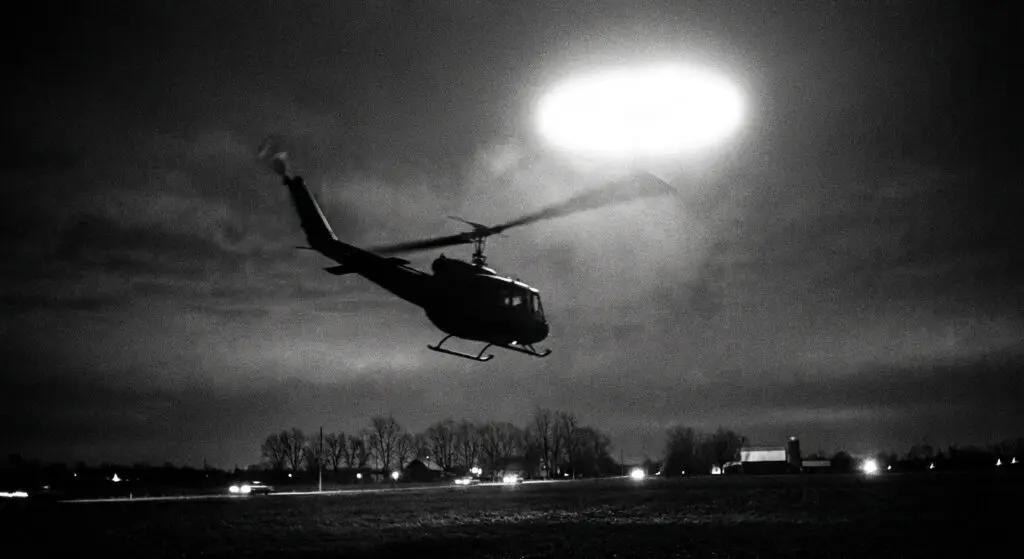
The Cash-Landrum controversy starts with a single roadside encounter narrative: three civilians said they met an unusual, intensely bright object at close range on a Texas road, and then described seeing “many helicopters” in the area afterward. That helicopter detail is the hinge later retellings use to frame government involvement, even though, in the publicly available materials reviewed for this article, it stands only as a reported and testified element rather than a documented flight record.
Public summaries consistently place the incident on the evening of December 29, 1980, and consistently name the same three Texans: Betty Cash, Vickie Landrum, and Vickie’s grandson, Colby Landrum. The core timeline claim is simple: the three were traveling by car at night, encountered something unusual on or near the roadway, and then continued on after the encounter ended.
The friction point is that many later write-ups expand the “before and after” with extra timestamps, origins, and destinations. None of that can be pinned down from the publicly available materials reviewed for this article. For this section, the disciplined version is the one the public narrative repeats most often: one evening, one car, three identified witnesses, one encounter that they described in concrete sensory terms.
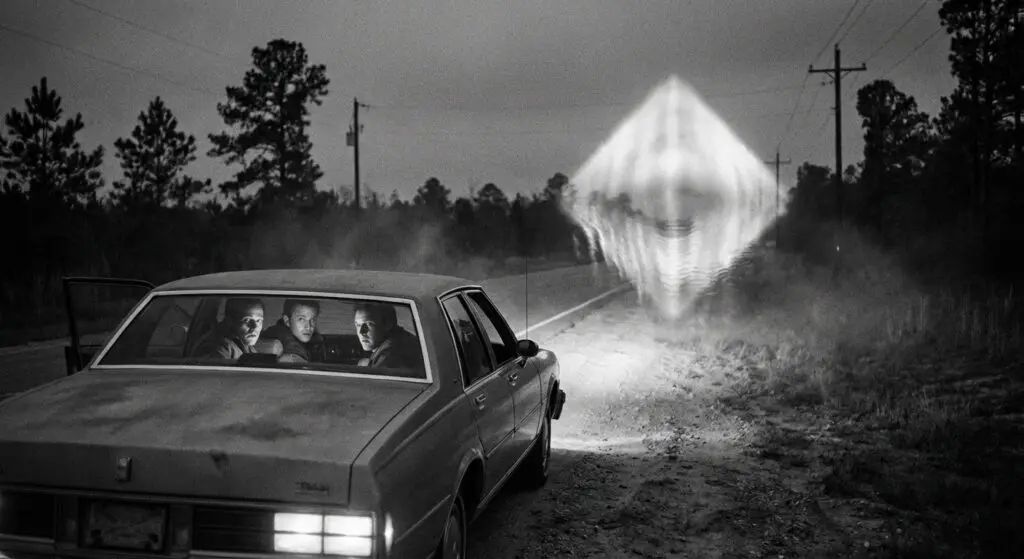
The reported observation is not framed as a distant light on the horizon. In public summaries, the witnesses describe an object or craft close enough to dominate the road scene, bright enough to overwhelm normal night driving, and forceful enough to be experienced physically rather than merely seen. The account is defined by three sensory claims: intense light, intense heat, and strong noise.
Heat is the detail that separates this narrative from the broad category of UFO sightings that never progress beyond “we saw something odd.” In their retelling, the heat is immediate and environmental, described as radiating into the vehicle and making continued proximity unbearable. The complication is that “heat” is easy to over-read into technical conclusions. The actionable reading is narrower: the witnesses emphasized a physical sensation that, in their view, came from the object during the encounter, not from an illness that developed later.
Noise and brightness are described the same way: as dominating, close-range effects that changed what the occupants could do in the moment. The consistent “minimum” here is not the object’s exact geometry or altitude, which vary across later retellings, but the claimed intensity: bright enough to be described as blinding or overwhelming, loud enough to register as more than ordinary traffic or weather, and hot enough to be treated as a threat while they were still on the roadway.
After the encounter, public summaries also report that the witnesses later said they felt ill. That handoff matters, because it is where a night-drive sighting becomes an alleged injury case and where documentation starts to matter more than description.
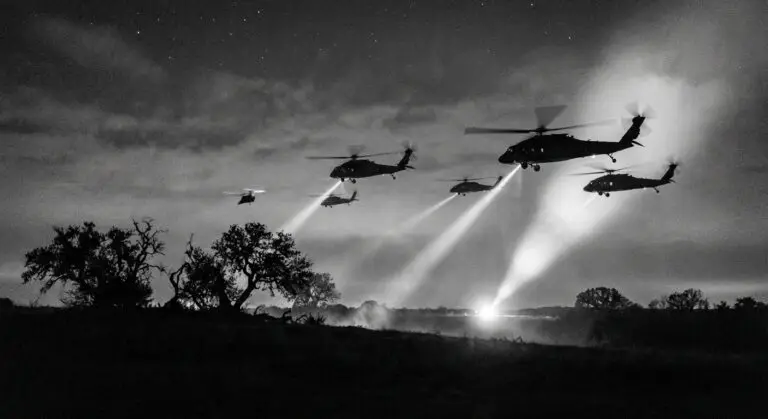
The most consequential add-on to the encounter narrative is the helicopter element. In public summaries and in later testimony accounts, the witnesses describe the presence of “many helicopters” in the area after the roadside encounter. In some retellings, those helicopters are described as accompanying, surrounding, following, or otherwise being connected to the object’s movement.
Here, the uncertainty is not stylistic. The publicly available materials reviewed for this article do not include corroborating operational records, verified counts, or contemporaneous third-party documentation that would convert “many helicopters” from a reported observation into an established fact. The correct way to handle this in a reconstruction is to state it plainly: the helicopters are part of what the witnesses said they saw, and they are not independently corroborated in the materials reviewed here.
That restraint still leaves the key point intact: the helicopter claim is the hinge for later government-involvement arguments. An unidentified light is one category of claim; an unusual aerial event paired with a reported formation of military-style aircraft becomes a different kind of allegation. This section does not argue that inference. It only fixes what the public narrative treats as central: “many helicopters,” as reported, is the detail that later writers lean on when they shift from “mysterious encounter” to “official activity.”
Location is the part of the story most vulnerable to drift, and the publicly available materials reviewed for this article do not pin it down. Those materials do not give road names, route numbers, or a verifiable start-to-finish path for the drive. Later retellings often attempt to anchor the encounter to specific towns or specific stretches of roadway, but that specificity is not corroborated in the sources reviewed here.
The practical result is that readers should treat precise route claims as optional extras unless a source cites primary documentation. If a retelling confidently supplies a road designation, an exact intersection, or a tightly timed itinerary, it is adding detail beyond what is supported here. The disciplined reconstruction keeps the location at the level the evidence supports: a nighttime drive on a Texas road, with later retellings varying and sometimes conflicting on exactly where.
The takeaway for evaluating any retelling is three checkpoints: (1) Does it keep the date consistent with the commonly repeated “evening of December 29, 1980” framing, without quietly moving it? (2) Does it keep the witness identities consistent, naming Betty Cash, Vickie Landrum, and Colby Landrum without substitution or embellishment? (3) Does it clearly label the “many helicopters” element as reported or testified, and distinguish that from documented flight activity that is not corroborated in the publicly available materials reviewed for this article?
Those checkpoints establish what the story claims happened on the road. The next question is whether the reported physical aftermath is equally supported by primary medical documentation, or whether it remains an interpretive layer added in later retellings.
Illness, burns, and disputed radiation claims
The case’s staying power comes from a familiar trap in exposure medicine: a symptom pattern that sounds like radiation injury also fits thermal and chemical insults. The decisive issue is not the vibe of the story, but the presence or absence of objective exposure documentation that can anchor timing, dose, and mechanism.
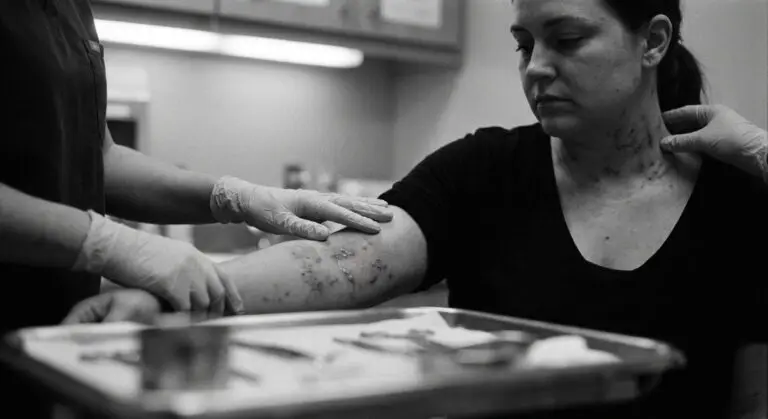
Public accounts describe an abrupt, early cluster dominated by systemic upset and mucous membrane irritation: nausea and vomiting, pronounced eye irritation, and a “sunburn-like” skin reaction described as redness with possible blistering. Fatigue and generalized weakness are also repeatedly described as early problems, consistent with an acute toxic or stress response pattern rather than any single diagnosis.
Later-reported effects in public accounts expand from “felt sick” into “stayed sick”: ongoing fatigue, hair loss, and lasting complications described as persistent health problems after the event. That longer tail is part of why the medical framing keeps resurfacing in UFO and alien disclosure discussions, but the timeline alone cannot identify a cause.
Claims of ionizing radiation, radiation energetic enough to damage tissue and DNA, rise or fall on documentation: dosimetry, survey results, and clinical lab patterns tied to time since exposure. Without those anchors, the word “radiation” is functioning as an interpretation layered on top of symptom resemblance.
The overlap problem is straightforward. Nausea, vomiting, eye pain or tearing, and erythematous skin can follow multiple exposures, including heat, irritant chemicals, or combustion byproducts. Even blistering, if present, is not a radiation signature by itself. A radiation mechanism can only be argued confidently when the medical findings align with objective exposure data and expected biologic trajectories.
Clinicians reserve labels like acute radiation syndrome (ARS), a pattern of illness after a high dose over a short period, for cases where the timing of symptoms, laboratory trends, and exposure evidence converge. Within that framework, some of the reported symptoms map onto ARS phase descriptions in a way that is recognizable but not specific.
Nausea and vomiting are characteristic early (prodromal) symptoms of ARS, and fatigue or malaise is also commonly reported early. Diarrhea can occur in the prodromal phase and may become more prominent or severe in the manifest gastrointestinal phase, commonly discussed around days 6 to 9 in GI-phase descriptions for some presentations. Early skin findings in ARS can include a short period of skin reddening (erythema) during the prodromal phase. Those correspondences explain why “radiation poisoning” entered the public vocabulary around the case, but they do not prove it.
What would move an ARS claim from resemblance to substantiation is the paper trail that radiation medicine depends on. Accurate radiation dose estimates are critical for determining eligibility for therapies and for triaging exposed individuals after large-scale events, which is why serious evaluations are built around recorded exposure estimates, contamination checks, and time-linked lab data rather than symptom description alone.
The publicly available materials reviewed for this article do not contain documented dosimetry, Geiger survey results, radiation badge data, cytogenetic testing results, or recorded dose estimates specific to Cash-Landrum. In that evidentiary posture, “radiation poisoning” has to be treated as an attributed claim from witnesses and secondary discussions unless primary records are produced.
- Contemporaneous clinical notes with timed symptom onset, physical exam details (eyes and skin), and clinician impressions.
- Serial CBC results with collection dates and times, allowing evaluation of expected post-exposure blood count trends.
- Exposure estimates recorded by qualified personnel, including assumptions and uncertainty (not just a narrative conclusion).
- Radiation survey documentation (instrument type, calibration status, locations checked, readings) plus contamination checks of clothing and belongings.
- Dosimetry records such as film badges or TLDs tied to identified individuals, with chain-of-custody and reporting dates.
Once you frame the medical question this way-what documents exist, when they were created, and what they show-the pivot to litigation is easier to understand: lawsuits are built to force attribution and records, but they also punish missing proof.
From MUFON files to federal court
The medical records and witness statements put weight behind the Cash Landrum narrative, but the moment a claim moves into federal court the story stops being about what sounds plausible and starts being about who, legally, can be held responsible and what proof is admissible.
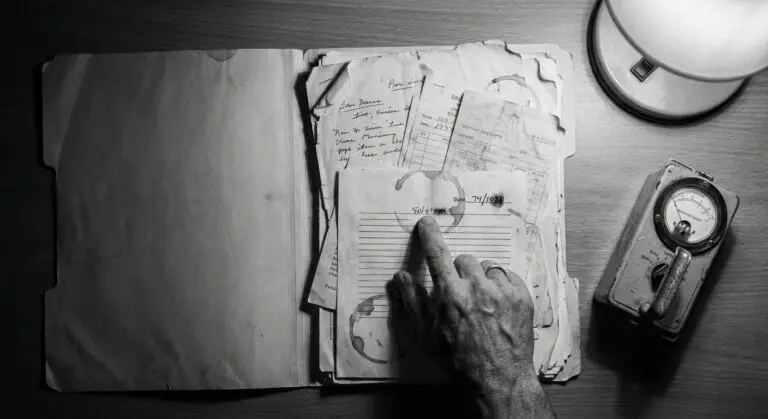
The case persisted because it did not stay at the level of campfire retelling. MUFON, a civilian UFO investigation organization that collects witness reports and publishes case material, referenced Cash-Landrum in its UFO Journal by September 1983. That dated publication matters because it is a retrievable marker: it shows organized documentation existed early enough to be checked against later paraphrases rather than absorbed only through internet-era summaries. See the MUFON Sept 1983 issue scan: MUFON UFO Journal, September 1983 (scan) and resource listings noting issue references: Blue Blurry Lines.
For archival work, the September 1983 journal item is the retrieval target, not a rhetorical flourish. A serious researcher should pull the issue scan, locate any investigator notes referenced in the item, and track down whatever exhibits it points to (attachments, correspondence, medical summaries, or diagrams). The practical test is simple: can you put your hands on the contemporaneous documents, or are you working from later paraphrases that drift with each retelling?
Turning the story into a claim against the United States forces a different kind of specificity. Congress passed the Federal Tort Claims Act (FTCA) in 1946 to permit certain suits against the federal government, but only on the terms Congress set.
In plain English, an FTCA-style case is not “the government investigated and confirmed it.” It is a negligence pathway: the statute authorizes plaintiffs to obtain compensation from the United States for torts of its employees, meaning you must tie an injury to a responsible federal employee acting within the scope of employment, within statutory limits. The FTCA allows recovery on a broad range of cases for persons injured by government negligence, and its exceptions and exclusions can bar other claims entirely. The legal frame rewards tight attribution and punishes gaps, even when witnesses appear sincere.
Most “government UFO cover-up” allegations collapse here, because the litigation problem is attribution, not intrigue. Sovereign immunity, the rule that the government cannot be sued without its consent, is why the FTCA’s waiver matters and why it is narrow. If the plaintiff cannot show a qualifying federal actor and a qualifying tort theory, the courthouse door stays closed regardless of how compelling the narrative feels.
Linking reported helicopters to federal actors is especially difficult without overreaching. Identification comes first: what aircraft, what markings, what unit, what base. Agency control comes next: even if a craft resembles military equipment, you still need evidence that a specific federal agency controlled the operation, not a contractor, state entity, or unrelated federal component. Mission records matter because a negligence claim lives or dies on whether an employee was acting within the scope of duty. Jurisdiction and statutory exceptions matter because even a well-supported account can be blocked by limits Congress wrote into the FTCA.
A federal case can fail for jurisdiction, sovereign-immunity constraints, or proof deficiencies without any court making a factual finding that the underlying event was proven false. A dismissal can be a legal conclusion about the court’s power to hear the dispute or the plaintiff’s ability to meet statutory prerequisites, not a historical verdict on what happened on the road.
As noted at the outset, do not claim specific docket numbers, captions, or holdings unless you have the court records in hand; any such particulars belong in the category “not located in the publicly available materials reviewed for this article.”
The shortest path from a reported military presence to an actionable federal claim is a tight, date-specific evidence bundle:
- Authenticate flight logs or air tasking records tied to the exact date window and location.
- Identify the operating unit with unit rosters, maintenance logs, or duty officer records that put named personnel on the mission.
- Corroborate dispatch records, radio logs, or base operations notes that connect the aircraft to a defined tasking.
- Lock witness statements to timestamps and directions, ideally as sworn statements, so they can be evaluated against records rather than floated as general recollection.
Without that chain, the story can remain culturally durable and well-documented in civilian files, yet still be legally unprovable against the United States. That is also why later discussion often shifts away from courtroom outcomes and back toward competing explanations that try to satisfy the same reported features.
Helicopters, hardware, and alternative theories
Competing explanations only earn ground here if they cover the same stubborn trio of reported features: (1) apparent intense heat and brightness, (2) the helicopter presence, and (3) subsequent illness claims. The problem is structural: the publicly available materials reviewed for this article still do not include the decisive primary records that would let one theory collapse the uncertainty.
The heat and brightness reports set a physical constraint, not a storytelling one. If the source was genuinely hot enough, for long enough, at close enough range, to produce burn-like effects, then the relevant variables are estimable: standoff distance, exposure duration, emitting area, and surface temperature or radiant heat flux. Any explanation that cannot plausibly generate high radiant output at the claimed geometry leaves a gap.
The helicopter issue is a documentation problem. Helicopters do not have to imply anything exotic, but they do imply operators, crews, airframes, and missions, which in turn implies dispatch records, flight logs, maintenance entries, or after-action paperwork. The publicly available materials reviewed for this article do not establish whether those logs ever surfaced, which keeps this feature unresolved rather than disproven.
The illness claims are a second-order constraint. They do not identify a cause by themselves, but they do force each theory to specify an exposure pathway that fits the timeline and symptoms. Heat exposure, smoke and combustion products, chemical irritants, and stress reactions are all different mechanisms and would be reflected differently in contemporaneous medical notes.
A secret military test or mishap is the cleanest fit for the helicopter feature because helicopters are routine assets for range safety, transport, perimeter control, and quick reaction response. A training or escort scenario also explains why multiple aircraft could cluster in a short window without public notice. Where this theory strains is not physics but proof: without authenticated unit-level records, the claim remains an inference built on reported aircraft behavior.
The records that matter are specific. “Military” is not a recordkeeping entity; a squadron, Guard unit, Coast Guard air station, or law enforcement aviation unit is. The discriminators are mundane but decisive: which agencies had aircraft available that night, which crews were on duty, what the dispatch timestamps were, and whether any mission descriptions align with the location. None of that is answered by the publicly available materials reviewed for this article, so the helicopter feature stays contested rather than settled.
An industrial or chemical event is a strong candidate for the heat-brightness feature because open flames and high-energy combustion produce high radiant output. High-temperature accelerant fires are characterized by intense radiant heat and can present as bright white flames; higher light intensity tracks higher thermal radiation. If the source was a flare, burn-off, or short-lived chemical fire, the core question becomes whether the reported distance and duration are consistent with the radiative heat load needed to cause burn-like injury.
This is also the most “checkable in principle” pathway because pipeline and hazardous materials systems sit inside a culture of mandatory reporting and recordkeeping. Federal materials reference pipeline safety reporting and recordkeeping requirements, which frames a concrete research path: a contemporaneous incident in southeast Texas should leave paperwork trails across operators and regulators.
The practical research move is not guessing which facility “must have” done it, but pulling the incident ecosystem that would capture it: operator logs, emergency response calls, and spill or release investigations. EPA guidance for petroleum-related investigations explicitly points investigators toward identifying product sources and evidence of accidental spillage, which is the same kind of documentation trail a flare-related or release-related event would generate.
Misidentified conventional aircraft or routine operations can cover parts of the report, especially if the visual impression was formed under glare, low contrast, or unfamiliar lighting. A bright source viewed through haze, windshield glare, or smoke can inflate perceived size and motion. The tradeoff is coverage: perception-error theories tend to explain the “what did it look like” component better than they explain why helicopters were reportedly present and why specific illness claims followed.
Rare atmospheric or optical phenomena have a similar profile. They can produce surprising apparent brightness, halos, or distortions, but they do not naturally generate rotorcraft activity, and they do not supply a straightforward exposure mechanism that maps onto burn-like effects. To make them competitive, they would need independent corroboration in contemporaneous weather observations tied to the exact place and time, plus an alternate explanation for the helicopter reports that survives records scrutiny.
The “non-human intelligence” hypothesis only becomes the best fit if the conventional buckets fail on records, not if they simply feel less satisfying. It still has to cover the same trio: a source of intense heat and brightness that is physically coherent, a reason helicopters were involved, and a causal pathway consistent with the illness claims. The absence of primary records that decisively confirm or eliminate military involvement, industrial incidents, or verified aviation activity is exactly what keeps this claim unconfirmed.
- Authenticate helicopter activity: dispatch tapes, flight logs, maintenance entries, or mission paperwork identifying operator, tail numbers, crew, and timestamps for any aircraft operating in the relevant corridor.
- Pull contemporaneous industrial incident records: operator incident logs, regulator notifications, spill or release reports, and emergency response call records for southeast Texas facilities and pipelines for the date window.
- Obtain primary medical documentation: chart copies created closest to the event, including clinician notes on observed burns, exposure history, and any differential diagnosis that distinguishes heat injury, chemical irritation, or other causes.
Those are the same kinds of records modern UAP oversight claims to prioritize: provenance, custody, and accountability. Cash-Landrum remains a useful stress test precisely because it mixes an extraordinary narrative with practical questions about what was recorded and who can be held responsible for producing it.
Legacy case in the disclosure era
Cash Landrum still matters in the disclosure era for one reason: it is framed as an alleged harm case, not just an odd sighting. Harm claims force oversight questions that pure mystery stories can dodge, namely what was tracked, what was recorded, who had custody of those records, and what was disclosed later. That is why official language increasingly uses unidentified anomalous phenomena (UAP), a government-preferred umbrella term for unresolved observations pending identification, because it keeps the inquiry centered on accountable process instead of premature conclusions.
The modern benchmark is not a viral clip or a confident narrator. It is formal oversight. The House Oversight Committee scheduled a hearing titled “Restoring Public Trust Through UAP Transparency and Whistleblower Protection” for September 9, 2025 at 10:00 am in HVC-210; see the committee announcement and hearing details at the House Oversight release: oversight.house.gov release and the Congress.gov event entry: Congress.gov event listing (last checked 2026-03-01).
A lot of UAP news is built on the assumption that there is a definitive “AARO report 2025.” As of the materials reviewed for this article, AARO published a workshop report titled “2025 UAP Workshop: Narrative” and related records; the AARO-hosted records and UAP materials are available on AARO’s official pages at AARO UAP Records. A secondary host provides a mirrored summary and context: AUI release on AARO report. AUI is the organization that convened the academic symposium and hosted the public announcement of the workshop output; that is why AUI’s website mirrors or summarizes the AARO workshop product (AARO is the primary source; AUI provides an institutional mirror and context). See also a participant note at NUFORC workshop participation note (last checked 2026-03-01).
Use the same filter Congress uses: document releases with provenance, scoped investigations with named authorities, and clear statements separating unresolved questions from substantiated findings. Legacy injury cases stay unresolved when records are missing, custody is unclear, or testimony is unprotected. That is the accountability gap modern oversight is designed to close, even when the underlying incident remains disputed.
What we can say with confidence
The stable public record is narrow: the encounter is consistently summarized as happening on Dec 29, 1980, and it is anchored to three named witnesses, not a single anonymous narrator. The clean way to keep this case testable is an evidence-inventory approach that separates primary documents (court filings, affidavits, contemporaneous media, medical chart copies) from later retellings, using MUFON’s September 1983 UFO Journal item as an early documentation waypoint (see MUFON scan: Sept 1983 MUFON issue scan and resource guide listing: Blue Blurry Lines).
The hinge remains the helicopters: they sit at the center of the narrative, but the publicly available materials reviewed for this article do not include authenticated flight logs, dispatch records, or mission paperwork that would verify who was flying, from where, and under what tasking. The medical framing stays contested for the same reason: the sources reviewed lack decisive exposure documentation such as dosimetry or survey data. The court route adds heat but not certainty because a case can fail on proof or jurisdiction without proving the underlying story false.
That is why Cash-Landrum keeps outlasting the usual viral “disclosure” cycle: it invites exactly the kind of traceable documentary trail the intro standard demands, yet the publicly available materials reviewed for this article still show gaps at the points that matter most. Use the Freedom of Information Act (FOIA requests), the federal law for requesting agency records, to target the next-best evidence: authenticated flight and dispatch logs; unit or agency mission records; contemporaneous medical chart copies; contemporaneous media; sworn affidavits with dates. Follow standard FOIA practice by specifying the exact records sought and the likely custodian agency before you file.
Frequently Asked Questions
What was the Cash-Landrum incident?
It is a widely cited UFO/UAP case described as a roadside encounter followed by illness claims and a later attempt at a federal lawsuit. Public summaries consistently place it on the evening of December 29, 1980, in Texas.
Who were the Cash-Landrum witnesses?
Public accounts consistently name three witnesses: Betty Cash, Vickie Landrum, and Vickie’s grandson, Colby Landrum. The article treats those identities as a stable part of the public narrative.
What did the witnesses say they experienced on the road that night?
The core reported features are an intensely bright object at close range accompanied by intense heat and strong noise. The witnesses also reported seeing “many helicopters” in the area afterward, which later retellings use to argue government involvement.
What symptoms were reported after the encounter, and why are radiation claims disputed?
Public accounts describe nausea/vomiting, pronounced eye irritation, and a “sunburn-like” skin reaction with redness and possible blistering, followed by longer-term issues like fatigue and hair loss. The article says the provided packet contains no documented dosimetry, Geiger survey results, radiation badge data, cytogenetic testing, or recorded dose estimates, so “radiation poisoning” remains an attributed claim rather than verified exposure.
What specific medical and exposure records would you look for to evaluate an acute radiation syndrome (ARS) claim?
The article lists key items: contemporaneous clinical notes with timed symptom onset, serial CBC results with collection dates/times, and documented exposure estimates by qualified personnel. It also calls for radiation survey documentation (instrument type, calibration status, locations checked, readings) and personal dosimetry records (film badge/TLD) with chain-of-custody.
What are the best checkpoints for deciding whether a Cash-Landrum retelling is evidence-based or embellished?
Use the article’s three checkpoints: keep the date as the commonly repeated December 29, 1980; keep the witness identities as Betty Cash, Vickie Landrum, and Colby Landrum; and clearly label “many helicopters” as a reported/testified element unless backed by authenticated flight or dispatch records. The article also points to MUFON’s September 1983 UFO Journal reference as an early, retrievable documentation waypoint.