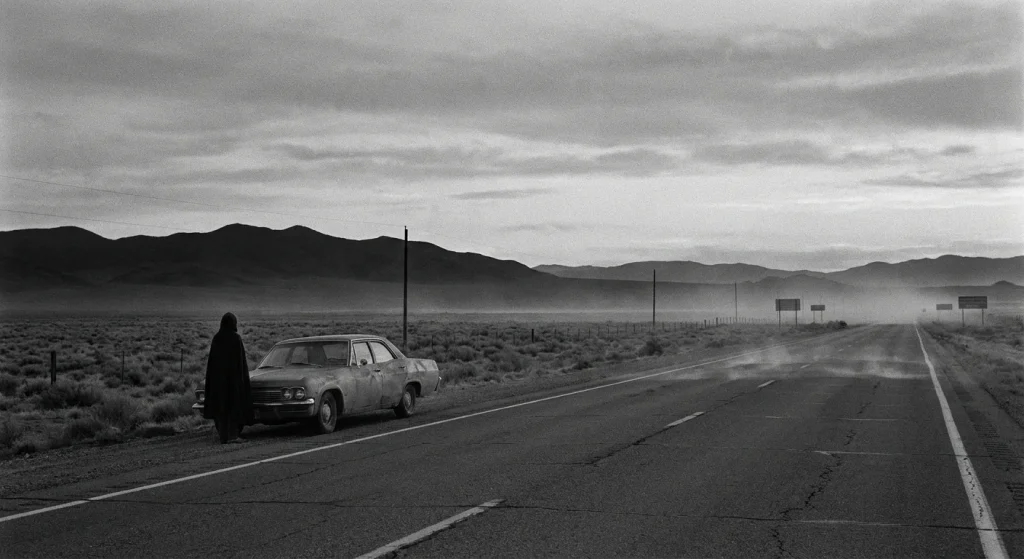
Background: Area 51, Groom Lake, and “S-4” in the public imagination
By the late 1980s, Area 51—an Air Force test site at Groom Lake in Nevada—was already the subject of intense speculation. Aviation enthusiasts had long associated the region with classified aircraft development, aided by sightings of unusual planes and the site’s remote location and restricted airspace. Against that backdrop, the name “S-4” entered popular lore as an alleged facility south of Groom Lake near Papoose Lake. In Bob Lazar’s account, S-4 was a separate installation from Area 51 where sensitive work was conducted out of view, including hangars built into a hillside. No publicly verified documentation has established S-4 as Lazar described it, but the term became a fixture in UFO/UAP discussions as shorthand for “a hidden program inside an already secret place.”
What Lazar claimed in 1989
Lazar said he was recruited into a secret government program to work on the propulsion system of recovered craft at S-4. He described seeing multiple “disc”-like vehicles in hangars and asserted that the project’s goal was reverse-engineering—understanding and replicating technologies not developed by known human aerospace programs. He also claimed briefings suggested the craft originated from a non-human source and that the propulsion operated through principles beyond conventional jet or rocket thrust.
Two recurring technical elements in Lazar’s story are his description of a “gravity wave”/field-based propulsion concept and his emphasis on a then-obscure “Element 115” as a fuel or power source. Years later, element 115 was synthesized in laboratories and named moscovium, but its known properties in published science do not match the stable, high-energy material Lazar described. This mismatch is often cited by critics as a major problem, while supporters argue that a stable isotope could hypothetically exist outside current production methods—an argument that remains speculative and unverified.
How the story became famous: early broadcasts, anonymity, and rapid amplification
Lazar’s claims first gained wide attention through Las Vegas-area media in 1989, initially with his identity obscured. In early appearances, he was presented anonymously (including with his face partially hidden) while discussing alleged work at or near Area 51 and describing the “S-4” facility. His story spread quickly through syndicated replays, interviews, and word-of-mouth in UFO communities, where it was treated as an insider account of a crash-retrieval and reverse-engineering effort.
The timing mattered: secrecy around Groom Lake, a growing public appetite for “black project” revelations, and increasing mainstream exposure to UFO topics created a receptive environment. Lazar’s narrative also provided vivid details—locations, procedures, and technical-sounding descriptions—that made the claim easy to retell and debate. Over time, the story became a template for later allegations about compartmentalized programs, limited-access briefings, and hidden facilities.
Criticisms, disputed credentials, and the lack of verifiable evidence
Central criticisms of Lazar’s account focus on verification. Skeptics note the absence of independently confirmed evidence that he worked on a reverse-engineering program, saw non-human craft, or accessed the facilities as described. A major point of contention has been his educational and employment background, which has been disputed in public debate for decades. Critics argue that key aspects of his resume are not corroborated by available records and that some details of the story have shifted or relied on claims that are difficult to test.
Additionally, no physical samples, documentation, or technical demonstrations have been publicly validated to support the extraordinary claims. The “Element 115” component remains a focal issue: while the element exists as moscovium, it is highly unstable in known forms, and no stable, energy-dense version has been produced or verified in a way that substantiates Lazar’s description. To many investigators and scientists, the absence of testable evidence keeps the story in the realm of allegation rather than proof.
Why the claim persists: narrative power, secrecy, and media ecosystems
Lazar’s story persists because it offers a compelling explanation for enduring mysteries: if unusual craft exist, a hidden program at a hidden base feels like a plausible mechanism to some audiences. Area 51’s real role in classified aviation creates a “plausibility halo” that can make unrelated claims feel more believable, even without documentation. The narrative also includes memorable, repeatable motifs—“S-4,” “reverse-engineering,” “briefings,” “Element 115”—that function like anchors in public conversation.
Media cycles have further reinforced the story. Documentaries, podcasts, and frequent re-tellings keep the details in circulation, often blending Lazar’s account with other claims about crash retrievals or secret aerospace projects. In online spaces, debates over Lazar’s credibility can also strengthen the story’s visibility: rebuttals and defenses alike drive attention, keeping it prominent regardless of whether new evidence emerges.
How people connect Lazar to modern UAP discourse (without relying on future-year claims)
In contemporary UAP discussions, Lazar is often referenced as an early “whistleblower-style” figure whose narrative resembles later claims about compartmented programs and restricted access. People draw parallels between his descriptions—alleged non-human craft held by the government, reverse-engineering efforts, limited briefings—and broader themes that appear in modern UAP debates, including calls for transparency, oversight, and clearer definitions of what governments may know or possess.
Whether or not Lazar’s story is true, it has helped shape the vocabulary and expectations around UAP discourse: the idea that evidence might be hidden behind classification, that insiders may leak partial information, and that public proof may remain elusive. As a result, Lazar’s account is frequently invoked as a cultural reference point when new UAP claims, documents, or interviews circulate.
-
Who is Bob Lazar and what did he claim in 1989?
Bob Lazar is a figure who became publicly known in 1989 after claiming he was hired to work at a site he called “S-4,” near the Area 51/Groom Lake region, where he said teams were attempting to reverse-engineer non-human craft and their propulsion technology.
-
In what broadcast/interview context did Lazar’s story first reach a wide audience?
His claims reached a broad audience through Las Vegas-area media in 1989, first with anonymity measures (such as obscuring his face) and then in subsequent interviews where his identity became widely known. Those appearances were rapidly amplified through replays, UFO community networks, and later documentary-style coverage.
-
What are the key technical elements Lazar described in the alleged reverse-engineering program?
He described disc-like craft stored in hangars and said the propulsion involved field-based or “gravity” effects rather than conventional thrust. He also emphasized “Element 115” as a crucial material for powering the system, a claim that remains unverified in the form he described.
-
What are the biggest rebuttals or verification problems with Lazar’s account?
Major rebuttals include the lack of independently verifiable evidence for the core claims (no validated documents, materials, or demonstrations) and long-running disputes over his educational and employment history. Critics also point to scientific issues with the “Element 115” narrative, since moscovium as known is unstable and does not match the properties he attributed to it.
-
Why has Lazar’s story had such a large cultural impact on UFO/UAP discussion?
It fused a real, highly secretive location associated with advanced aerospace testing (Area 51/Groom Lake) with a vivid insider narrative about recovered craft and reverse-engineering. The specific motifs—“S-4,” hidden hangars, briefings, and exotic propulsion—became enduring reference points that media and online communities repeatedly revisit and debate.
-
If I’m following UFO/UAP news, what topics tend to be discussed alongside Lazar’s 1989 claim?
Commonly linked topics include allegations of crash retrievals and reverse-engineering programs, debates over classification and government secrecy, disputes about the credibility of insider accounts, and claims about non-human technology. Lazar’s story is often used as a comparison point when new interviews or allegations echo themes like compartmentalized programs and limited-access briefings.
