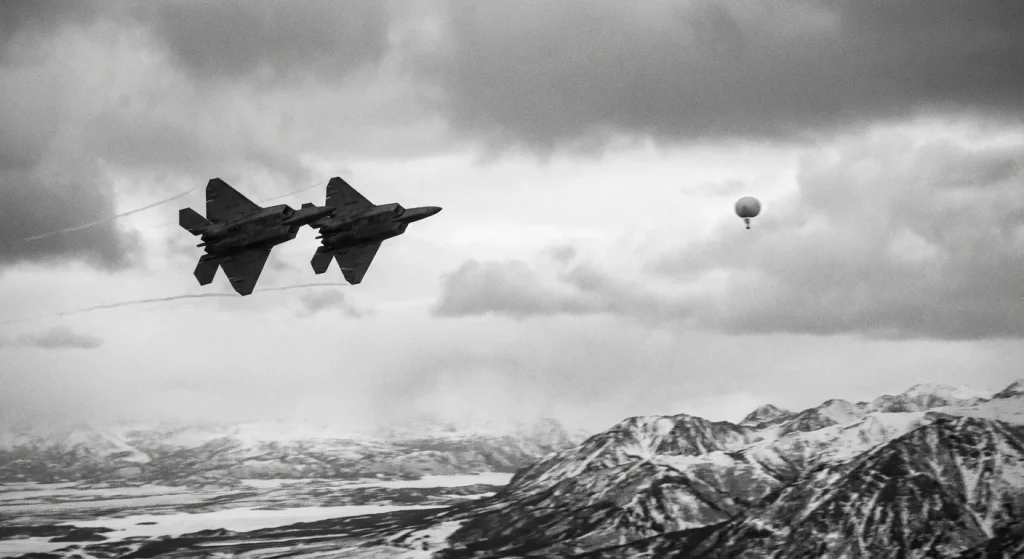
In February 2023, you probably felt the whiplash: one day it was a headline about a shootdown, then suddenly it was three more, and the official wording got noticeably careful. That wording shift is the story. On Feb. 4, 2023 the Department of Defense (DoD) and North American Aerospace Defense Command (NORAD) said in public statements and a DoD press release that a “high-altitude surveillance balloon” was shot down off the coast of South Carolina (DoD press release, Feb. 4, 2023; NORAD statement, Feb. 4, 2023). After that, the next three incidents were publicly described as involving “unidentified object(s),” which is exactly why the episode stuck to “UFO news” and “UAP news” cycles. When you see “UAP (Unidentified Anomalous Phenomena)” show up in this conversation, treat it as a government category for things that aren’t identified yet, not as a coded claim about aliens.
The non-obvious part is that “unidentified” is an administrative knowledge state, and governments often speak that way on purpose when details are incomplete or still being verified. You can see that precision even in NORAD’s own phrasing, like “Following the identification of the larger high-altitude surveillance balloon,” which explicitly separates the Feb. 4 balloon from the later events without overcommitting on what those objects were. Early labels can also be extremely broad in real-world reporting: Canadian aviation officials’ pilot-report “possible IDs” have included “balloon, meteor, rocket, UFO.” That range tells you how messy first-pass information can be, especially when the military acts fast but releases little.
This piece gives you a simple way to read the language without jumping straight to “government UFO cover-up.” I’m going to separate the confirmed labels (“high-altitude surveillance balloon” vs “unidentified object”), the contemporaneous official statements that shaped public understanding, and the questions that stayed unanswered. You’ll walk away knowing what was actually said in real time, what still isn’t publicly nailed down, and how that ambiguity feeds into today’s UAP disclosure debate.
Four Shootdowns in Eight Days
Four in eight days wasn’t just dramatic. It marked a visible shift in how confidently officials labeled what they were tracking, starting on Feb 4, 2023, when the U.S. downed what DoD and NORAD identified in their Feb. 4, 2023 releases as a “high-altitude surveillance balloon” off the South Carolina coast (DoD, Feb. 4, 2023; NORAD, Feb. 4, 2023).
That Feb 4 language did a lot of work. “Balloon” is a concrete category with an implied explanation, and it let officials speak with unusual certainty in public. In the days that followed, the wording tightened up in the opposite direction: less identification, more caution.
On Feb 10, the Department of Defense said in a Feb. 10, 2023 press release and Pentagon briefings that an “unidentified object” was downed near Deadhorse, Alaska (DoD, Feb. 10, 2023). The date and broad location are clear, but the label is the tell: it’s not presented as a balloon, and it’s not characterized with the same confidence as Feb 4.
News outlets and official briefings at the time framed this as the first of the later-weekend downings that followed the Feb. 4 balloon incident. Once tracks cross borders or sit near shared airspace, NORAD became the public channel for binational statements and coordination.
The practical wrinkle is that detection is not just “what’s out there,” it’s also “what your sensors are set to notice.” Sensor filtering and configuration affect which tracks appear in briefings and how cleanly they can be characterized.
On Feb 11, the Department of National Defence/Canadian Armed Forces and the Royal Canadian Mounted Police issued statements about an “unidentified object” downed over the Yukon (Canadian Armed Forces statement, Feb. 11, 2023; RCMP statement, Feb. 11, 2023) (Canadian Armed Forces, Feb. 11, 2023; RCMP, Feb. 11, 2023).
That difference isn’t trivia, especially if you follow UFO or UAP coverage and you’re trying to separate signal from noise. In official language, “identified” is a confidence claim. “Unidentified object” is a status update: tracked well enough to respond to, not characterized well enough to name in public.
On Feb 12, the fourth downing occurred over Lake Huron. Public briefings from the Pentagon described it as the fourth in the series and used the “unidentified object” label for that event. In follow-up Pentagon briefings the Department of Defense indicated search efforts for the Lake Huron object were suspended after a short period without recovering debris (Pentagon briefings and DoD statements, Feb. 15-16, 2023) (DoD, Feb. 15-16, 2023).
As the immediate burst of activity settled, DoD and Canadian agencies reported that searches did not recover debris for the later incidents. That absence of recoverable material pairs with the earlier language choice: when officials can’t examine what was brought down, public characterization tends to stay at “unidentified” rather than hardening into a specific category.
The shift after Feb 4 was a communication posture change, not a sudden embrace of mystery. The first event was briefed with a confident noun, “high-altitude surveillance balloon.” The next three were briefed with a holding label, “unidentified object(s),” and often through NORAD’s binational voice. Read the dates as a confidence signal: “identified” means officials believed they could name it; “unidentified” means they were still working the problem. In practice, that leaves the public leaning hard on whatever evidence can be recovered and shown.
What Was Known and What Wasn’t
The mystery around the three “non-balloon” incidents wasn’t created by wild stories. It was created by missing material evidence. Once you take away recovered debris, publicly released imagery, and a clear identification, you’re left with short official descriptors and cautious language, and that vacuum gets filled fast.
What DoD and NORAD described: In its Feb. 10, 2023 press release and associated Pentagon briefings, the Department of Defense characterized the Alaska object as an aviation safety risk and said that risk was the reason for the shootdown (DoD, Feb. 10, 2023) (DoD, Feb. 10, 2023).
What stayed unknown: “Unidentified” often meant the object did not, in the moment, match the appearance and behavior of known balloons or aircraft based on what crews and sensors could characterize. That is an operational, not a metaphysical, description.
Why recovery mattered: DoD briefings and Canadian agency statements in the days after the incidents indicated searches concluded without finding debris for the Alaska and Lake Huron events, and RCMP and Canadian Armed Forces statements noted recovery conditions in the Yukon were extremely challenging. If nobody can point to wreckage, show a photo of components, or walk reporters through a physical chain of custody, the public is left to argue over adjectives like “object” versus “balloon” rather than evaluating hardware (DoD, Feb. 15-16, 2023; Canadian Armed Forces, Feb. 11, 2023; RCMP, Feb. 11, 2023).
What Canadian agencies described: The Yukon shootdown was framed in Canadian statements as an airborne object considered a potential threat to civil aviation; the Canadian Armed Forces and RCMP described recovery challenges and assisted in search efforts (Canadian Armed Forces, Feb. 11, 2023; RCMP, Feb. 11, 2023) (Canadian Armed Forces, Feb. 11, 2023; RCMP, Feb. 11, 2023).
What we still don’t have: There is no publicly released debris set tied to the Yukon object or the Alaska and Lake Huron objects, which means outside experts cannot evaluate construction, lift method, or payload type. That absence is much more consequential than the speculative narratives that fill the gap.
Why recovery mattered (and why it didn’t happen): RCMP and Canadian Armed Forces statements cited harsh terrain and limited access in the Yukon as reasons searches were constrained, and Pentagon briefings in mid-February noted DoD suspended the Lake Huron search after a short operation without recovering debris (RCMP, Feb. 11, 2023; DoD, Feb. 15-16, 2023) (RCMP, Feb. 11, 2023; DoD, Feb. 15-16, 2023).
What DoD described (and why the details stuck): In Pentagon briefings regarding the Lake Huron event, officials described observers reporting an “octagonal” object and referenced a radar track originating over Montana before the shootdown. Those surface details can be vivid in public reporting, but they are not identifications in themselves (DoD Pentagon briefings, Feb. 2023) (DoD, Feb. 15-16, 2023).
The complication: Those hooks also turbocharge speculation, because they feel like enough information to draw conclusions. A radar track and a reported shape are useful leads, but without recovered parts you cannot validate assumptions about propulsion, payload, or origin.
Why recovery mattered (and what the follow-ups did and didn’t add): The DoD suspension of the Lake Huron search after three days was publicly reported in Pentagon briefings and press statements; that operational decision constrained the availability of physical evidence and left the incidents unresolved in public view (DoD, Feb. 15-16, 2023) (DoD, Feb. 15-16, 2023).
Across Alaska, Yukon, and Lake Huron, the pattern is consistent in official messaging: cautious labels, constrained searches, and no publicly released debris set. That is why “we don’t know yet” hardened into a longer-term information gap.
- Check for debris: If DoD or Canadian agencies say the search ended without finding debris, treat confident public claims about what an object “was” as provisional.
- Check whether the search was called off: Once operations are suspended, the odds of later public clarity drop sharply if nothing was recovered early.
- Check what imagery was released: If narratives advance with minimal photos, videos, or physical evidence, public certainty is low and speculation is inevitable.
Why 2023 Hit the Disclosure Nerve
That evidence gap would have been noisy in any year, but February 2023 landed at the exact moment “UAP transparency” had become a mainstream expectation. So when officials stuck to careful, limited language about what they did and didn’t know, the story didn’t stay in the lane of air defense for long.
The temperature was already rising because Congress had dragged the topic into formal oversight. In 2022, the U.S. held its first public congressional hearings on UFOs in over 50 years, and senior officials testified, including Scott Bray (then deputy director of Naval Intelligence). That detail matters: once uniformed and senior intelligence leaders are answering UAP questions on the record, the subject stops being “internet lore” and becomes something the government itself treats as reviewable and answerable.
That public posture also shifted expectations. The hearings weren’t framed as “here’s the final answer,” they were framed around transparency, data collection, and gaps in understanding. And the transparency theme didn’t stay confined to one committee. A House Oversight Committee task force held a hearing that addressed transparency issues regarding UAP and UFO matters, reinforcing the idea that secrecy, classification, and oversight were now part of the mainstream conversation, not a side debate.
Once you’ve got public oversight and a transparency drumbeat, open questions invite someone to supply an explanation. That’s where David Grusch landed in the narrative. Grusch testified publicly at a congressional hearing and publicly alleged that the U.S. recovered alien spacecraft and bodies and kept those recoveries secret for decades. Those are sworn allegations, not documented official conclusions, and treating them like the same category as declassified confirmation is where a lot of people get misled.
Then the media ecosystem does what it always does: it routes compelling claims through recognizable hubs and repeating loops. Names like Lue Elizondo, Christopher Mellon, and George Knapp function less as “the story” and more as high-velocity distribution points, where hearings, leaks, interviews, and secondhand assertions get clipped, re-posted, and interpreted. In that environment, an official “we don’t know yet” reads like a wink to some audiences, and the lack of details becomes lighter fluid rather than a normal feature of classified operations.
The practical takeaway is simple: in disclosure-era narratives, separate (1) what happened in official hearings, (2) what was alleged under oath, and (3) what has actually been declassified or confirmed by the government. If you don’t keep those buckets distinct, every ambiguous statement around incidents like the February 2023 shootdowns becomes “proof,” even when it’s just uncertainty.
AARO, the Pentagon, and the Paper Trail
Once the conversation shifts from headlines to accountability, the question becomes less “what did people think they saw?” and more “what record exists that can be checked later?” That’s where AARO comes in.
The real battle in UAP reporting is usually paperwork and data handling, not Hollywood secrets. AARO (All-domain Anomaly Resolution Office) is the Department of Defense office established in 2022 to lead U.S. government efforts to address UAP, which means it’s supposed to turn scattered sightings and sensor hits into a trackable, auditable case file that can be reviewed across the Pentagon and the intelligence community (AARO website).
That matters because “what happened” and “what can be proven later” are different problems. The central theme is paper trail vs public certainty: AARO is built to create the first even when the second stays out of reach.
AARO can’t do much with vibes and viral clips; it needs inputs that can be time-synced and cross-checked. In practice, the most useful packets are sensor records (radar tracks, electro-optical/infrared video, telemetry), pilot and crew narratives, air defense logs, and any recovered material that can be cataloged and tested.
One underappreciated input is routine aviation reporting: AARO receives UAP-related Pilot Reports (PIREPs) via the FAA, and AARO has stated it is improving data collection and retention for UAP reporting. The friction is obvious if you’ve ever dealt with incident data: information lives in different systems, with different retention clocks, and you only find the “missing” piece after it’s already rolled off.
AARO does publish, but it publishes on a leash. Because releases have to go through declassification and national security review, you’ll often see conclusions without the raw sensor detail that would let outsiders independently replay the event.
Even the cadence is built around what can be cleared. AARO’s 2024 annual report examined cases from May 2023 to June 2024 and states it resolved 118 cases. And AARO’s 2025 mission brief states only a very small percentage of UAP reports display anomalous signatures and most demonstrate ordinary explanations. That’s not a “case closed” stamp on any specific headline incident; it’s a reality check on what their total inbox looks like (AARO annual reporting and mission briefs, AARO).
February 2023 is the perfect example of how something dramatic can stay publicly unresolved: the DOD officially suspended the Lake Huron search after a three-day operation, as reported in DoD briefings in mid-February 2023 (DoD, Feb. 15-16, 2023) (DoD, Feb. 15-16, 2023).
If recovery fails, you lose the best chance at definitive identification. If key tracks, imagery, or intelligence context remain classified, public answers lag behind internal casework for months or years, sometimes indefinitely.
- Check AARO’s annual reports and official postings for the most durable updates, because those survive staff turnover and news cycles (AARO).
- Interpret “resolved” as “matched to an explanation with enough supporting data,” not “all underlying evidence is public.”
- Wait for declassification-driven releases if you’re looking for sensor specifics; the timeline is set by national security review, not curiosity.
Congress Pushes for UAP Transparency
AARO is the executive-branch side of the paper trail. Congress is the part that tries to force that trail to exist in the first place-and to make sure it doesn’t disappear into a classified drawer forever.
Congress’s approach to UAPs is less “prove aliens” and more “force a records and reporting pipeline.” The practical goal is to turn vague frustration, “we want answers,” into oversight tools that create paper trails, compel briefings, and give insiders safer ways to report what they’ve seen. The catch is that these tools move in increments, while public expectations about fast clarity after headline events can run far ahead of what Congress can pry loose quickly.
Some of the clearest oversight signals are the low-glamour moves: caucuses, letters, and hearings that put agencies on notice and create deadlines for responses. Rep. Tim Burchett launched a UAP Caucus and led a letter to the Intelligence Community Inspector General; his office published a press release dated Aug. 22, 2023 describing those steps (Rep. Tim Burchett press release, Aug. 22, 2023) (Rep. Tim Burchett press release, Aug. 22, 2023). A letter like that does not declassify anything by itself, but it routes concerns to an office built for oversight and pressures the system to answer in writing under inspector general processes.
Hearings are the other visible lever, not because they guarantee “the truth” on a schedule, but because they force testimony into the congressional record and clarify what Congress thinks it can demand next. Members including Reps. Tim Burchett, Eric Burlison, Anna Paulina Luna, and Jared Moskowitz have publicly discussed upcoming House Oversight hearings and briefings, signaling that oversight is being treated as ongoing work.
The biggest “process, not punchline” concept was the Schumer-sponsored UAP Disclosure Act (UAPDA), introduced as a Senate amendment in the 118th Congress with the stated purpose of expediting the review and potential disclosure of UAP-related records. Reporting and Senate materials described it as designed to accelerate the inventory and review of U.S. government records associated with UAP reports. Mechanically, the idea is that forcing records collection and review narrows opportunities to answer questions with a blanket classification response.
Alongside records, Congress has circulated whistleblower-related efforts aimed at making disclosures less career-ending. Legislative summaries and bills describe proposals and provisions in this lane, including bills like H.R.10111 and Senate Intelligence references to whistleblower matters. Treat these as scaffolding: they’re designed to increase the flow of credible inside information to inspectors general and to Congress, even when the public can’t see the underlying documents yet.
If you don’t want to memorize bill numbers, watch for four signals that actually move the needle: new hearing dates that lock in testimony, mandates that force agencies to inventory and report records, strengthened whistleblower channels and protections, and any mechanism that creates a predictable declassification pathway. That’s what turns abstract expectations into measurable oversight steps instead of wishful thinking.
What to Watch After the Shootdowns
Put all of this together-the careful labels, the lack of debris, the disclosure-era attention-and you get the same outcome: decisive action up front, and a long tail of unresolved questions afterward.
The story that won’t die is the gap between decisive action and public resolution: one confirmed high-altitude Chinese surveillance balloon recovery (DoD announced recovery operations successfully concluded in mid-February 2023), followed by three “unidentified object” downings where the language stayed cautious and the public never saw debris to close the loop. Add sticky details like the reported octagonal shape and radar references, then layer in the fact that U.S. and Canadian authorities called off searches for those three objects, and you get a mystery that keeps resurfacing in UFO and UAP coverage, especially around future news-cycle spikes.
Even on the record at the time, the recovery friction was real: the DoD suspended the Lake Huron search after three days, and Canadian officials described Yukon conditions as extremely challenging (DoD, Feb. 15-16, 2023; RCMP, Feb. 11, 2023) (DoD, Feb. 15-16, 2023; RCMP, Feb. 11, 2023).
- Declassification moves that release sensor context or recovery records without turning into speculation bait.
- AARO updates at aaro.mil, plus its annual reporting.
- Credible congressional oversight signals like formal requests for briefings, hearings, and sustained follow-up across committees.
The responsible inference today is straightforward: one balloon was recovered; three objects were not publicly resolved, and in Pentagon briefings the Chairman of the Joint Chiefs of Staff and other senior officers said the objects had not been recovered and that access conditions constrained recovery efforts. That loops back to the core February lesson from the beginning: “unidentified” is a knowledge state, and when recovery fails, that state can linger. Uncertainty isn’t proof, but it’s still policy-relevant, so keep your attention on verifiable records and official updates if you want the next real change in the story.
Frequently Asked Questions
-
What happened during the 2023 balloon shootdowns over North America?
Four aerial objects were shot down in eight days in February 2023. On Feb. 4, officials called it a “high-altitude surveillance balloon” off South Carolina, followed by three later shootdowns publicly labeled “unidentified object(s)” on Feb. 10 (near Deadhorse, Alaska), Feb. 11 (over Canada’s Yukon), and Feb. 12 (over Lake Huron).
-
What does “unidentified object” mean in the February 2023 shootdowns?
The article explains “unidentified” as an administrative knowledge state, not an implied claim about aliens. It means the object was tracked well enough to respond to but not characterized confidently enough to name publicly.
-
What is the difference between UAP and UFO in government language?
The article describes UAP (“Unidentified Anomalous Phenomena”) as a government category for things that aren’t identified yet. It emphasizes UAP is not a coded statement about “non-human intelligence” or aliens.
-
Where were the three “unidentified object” shootdowns in February 2023?
Officials said an unidentified object was downed near Deadhorse, Alaska on Feb. 10, another over the Yukon on Feb. 11, and a third over Lake Huron on Feb. 12. The article highlights that all three were publicly described with the same cautious label: “unidentified object.”
-
Why did the February 2023 objects stay “unidentified” after being shot down?
Follow-up reporting noted searches for Alaska, Yukon, and Lake Huron ended without finding debris, and the DoD suspended the Lake Huron search after three days. Without recovered material to examine, officials’ public characterization tended to remain at “unidentified” rather than a specific category like “balloon.”
-
What details were reported about the Lake Huron object, and why didn’t they identify it?
The article says officials described the Lake Huron object as “octagonal” and reported it was detected on radar over Montana before the shootdown. It also states those details don’t identify construction, lift method, payload, or origin, and no debris was publicly recovered to confirm what it was.
-
What should I look for to judge claims about the February 2023 shootdowns (UFO/UAP disclosure claims)?
The article gives three checks: whether debris was recovered, whether the search was called off, and what imagery was released publicly. It states that if searches ended without debris and there’s minimal photo/video evidence, certainty stays low and speculation rises.
